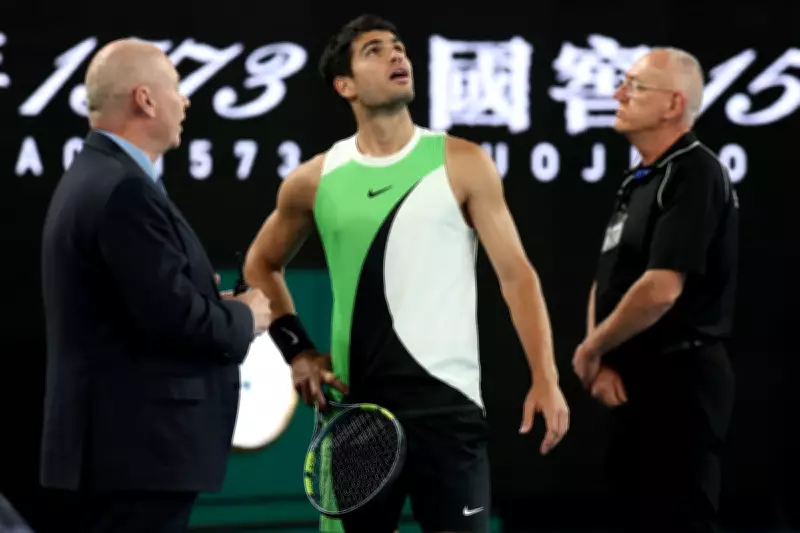
Spanish tennis sensation Carlos Alcaraz found himself embroiled in a significant dispute with tournament officials during the seismic Australian Open final, expressing clear frustration over their decision to partially close the roof on Rod Laver Arena. The controversy emerged despite a complete absence of rain at the time, creating an unexpected subplot to the championship match against Novak Djokovic.
Roof Closure Sparks On-Court Controversy
The situation unfolded during the high-stakes final where Alcaraz initially struggled, dropping the first set 6-2 to an inspired Djokovic. The Spaniard managed to regain his composure in the second set, levelling the match at one set apiece with an impressive 6-2 performance of his own. However, it was during the interval following this set that the roof controversy truly ignited.
As Djokovic left the court to regroup after being pegged back, Alcaraz directed his concerns towards both umpire John Blom and tournament referee Wayne McKewen. The young champion appeared visibly perturbed by the decision to keep the roof partially closed, a move that several observers noted could significantly alter playing conditions.

Pundits Side with Frustrated Champion
The decision became even more contentious when organisers opted to close the roof further before the commencement of the third set, despite maintaining a partly open configuration. Multiple tennis experts and former champions voiced their agreement with Alcaraz's position, arguing that as a predominantly outdoor tournament, the Australian Open should maintain outdoor conditions whenever possible.
Former Wimbledon champion Pat Cash offered strong support during his BBC Radio 5 Live commentary, stating emphatically: "I agree with Carlos - if it's not raining, open it. Carlos is very upset about it." Meanwhile, Tim Henman questioned the logic behind the decision during his TNT Sports analysis, pondering: "If it's going to rain, why have they closed it so significantly?"
Tactical Implications of the Decision
The strategic dimension of the roof closure cannot be overlooked in this controversy. A more open roof configuration would naturally create windier conditions within Melbourne's premier showcourt, conditions that many analysts believe would favour Alcaraz's dynamic playing style over Djokovic's precision-based approach. This tactical consideration added another layer to Alcaraz's visible frustration, as the decision potentially altered the competitive balance at a crucial juncture in the championship match.
The incident highlights the ongoing tension between tournament organisers' desire to manage potential weather disruptions and players' preferences for maintaining consistent, traditional outdoor playing conditions. As the match continued with the roof partially closed, the controversy remained a significant talking point, demonstrating how administrative decisions can sometimes overshadow the athletic drama unfolding on court during tennis's most prestigious events.