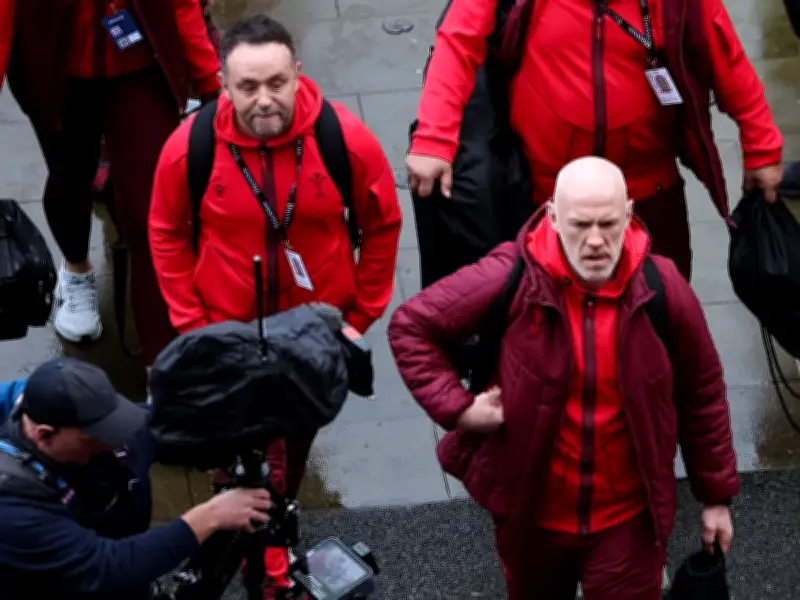
South Africa's victory over Wales came as no surprise, but the scoreline told only part of the story. Wales left Durban with a second successive defeat to South Africa, beaten 43-0 in a match that underlined both the Springboks’ depth and the scale of the challenge facing the visitors in the Nations Championship.
South Africa led 19-0 at half-time and went on to score seven tries in a dominant home performance.
Wales knew the challenge that awaited them. The Springboks remain the benchmark in world rugby and, for long periods, they demonstrated exactly why they are world champions. Their ability to squeeze the life out of a contest once they gained momentum continues to set them apart from everyone else.
For Wales, the most obvious disappointment was not simply the margin of defeat, but the fact that they never seriously threatened the scoreboard.
Set-piece struggles
One of the genuine positives from the opening rounds of the Nations Championship had been Wales' improvement at the set piece. The scrum and, in particular, the line-out had provided a solid platform, giving the side quality possession and the opportunity to build pressure in the right areas of the field.
However, against South Africa there is a considerable difference between securing your own possession and denying the Springboks the dominance they crave. The driving maul, which had served Wales so well earlier in the competition, was met by the masters of that particular art.
South Africa's organisation and power around the set piece repeatedly turned territorial pressure into points, while their defence ensured Wales had precious little room in which to build sustained attacks. Their lineout faltered, handling errors piled up and repeated pressure forced them into defending for long stretches without ever establishing a foothold in the contest.
Wales were comprehensively outplayed, unable to match South Africa's physicality, intensity or skill levels for any sustained period. The Springboks controlled the collisions from the outset, dominated the set piece and dictated both territory and possession, leaving Wales on the back foot for much of the afternoon.
The scrum, which had shown encouraging signs during the opening rounds of the Nations Championship, came under immense pressure. Both Rhys Carre and Dillon Lewis were taught a severe scrummaging lesson and neither had any answer to South Africa's power and technique.
The scrum may have been the worst part, but both players failed to make any impact around the field. Carre, alongside Jac Morgan, was responsible for Jasper Wiese's try after the pair failed to complete what would have been a try-saving tackle. Lewis’ discipline deserted him, with a succession of penalties allowing South Africa to gain momentum. It became almost impossible to build any meaningful progress.
In truth, the greasy conditions probably prevented the Springboks from turning their dominance into an even heavier scoreline. However, the problems extended well beyond the scrum.
Defensive and attacking shortcomings
Wales' defensive shortcomings were again exposed, but the greater concern was an attack that never looked capable of troubling one of the world's best defensive sides. There was little fluency, even less penetration, and almost no sustained pressure. Wales rarely challenged the South African defensive line, while the back three were repeatedly starved of quality possession in space.
That inevitably brings the midfield into focus. Even before kick-off, several former internationals, including myself, questioned the balance of Wales' centre partnership, and the performance did little to change that view. Wales continue to struggle to generate gain-line success through midfield, making life increasingly difficult for the players outside them.
Modern Test rugby demands an inside centre capable of committing defenders and creating quick front-foot ball. At present, Wales lack that directness. For me, Eddie James increasingly looks the natural long-term option at inside centre. His ability to carry over the gain line would create opportunities further out and allow the debate to focus on who is best suited to partner him at outside centre.
Selection should always be pragmatic. Players should be chosen because they possess the qualities the team requires, not because they fit a preferred ideology. The pattern indicates that the attack coach, Matt Sherratt, prefers a ball-playing number 12. However, Wales need greater power and penetration through midfield if they are to make better use of the attacking talent they possess in the back three.
Coaching changes needed?
Ultimately, responsibility rests with the coaching group. The attack has struggled throughout the opening rounds of the championship and there has been little evidence that the current approach is capable of consistently troubling the world's leading sides. If the coaching team are unwilling or unable to adapt their attacking philosophy to make better use of the players available, then changes in coaching personnel become more appropriate.
There have been encouraging signs from the forward pack despite the punishment they received against South Africa, but unless Wales develop an attacking structure capable of consistently asking questions of opposition defences, they will continue to work exceptionally hard for very little reward.
The demanding journeys to Argentina and South Africa have provided some painful lessons for a relatively inexperienced squad. Steve Tandy’s side will know they were outgunned physically and outclassed in key areas, but they will also know that the real value of such a fixture lies in the weaknesses that it uncovers. Those lessons have also highlighted the standards required at the highest level.
The challenge now is to ensure these experiences become the foundation for future progress rather than simply another difficult chapter in Wales' rebuilding process.
Three matches into the Nations Championship, Wales have experienced the full range of emotions. There was the encouraging victory over Fiji, followed by the sobering defeats to Argentina and South Africa. Taken together, the opening rounds have provided a realistic assessment of where this Welsh side currently stands.
Progress will not be measured solely by results. It will be measured by improved decision-making, and an ability to remain competitive against the game's leading nations for longer periods. If Wales can achieve those objectives, the Nations Championship will have served a valuable purpose in accelerating the development of a squad that is clearly operating below its potential.