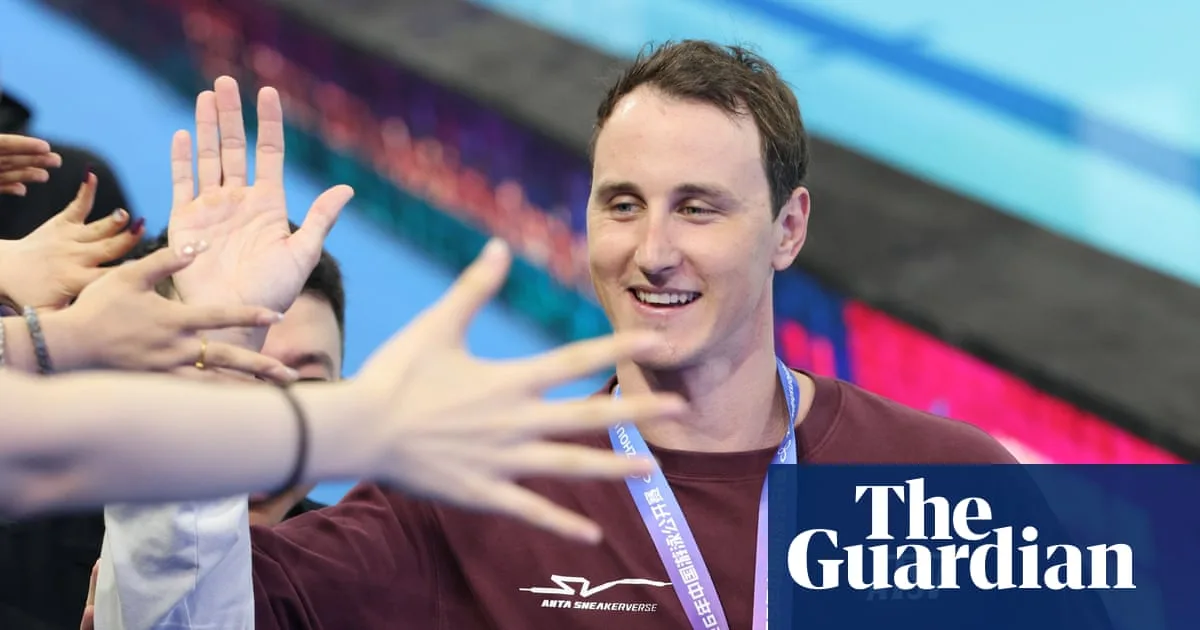
Cameron McEvoy has stunned the swimming world by breaking the long-standing 50m freestyle world record at the China Open on Friday, clocking 20.88 seconds. The 31-year-old Australian surpassed the previous mark set by Brazil's César Cielo in 2009 by three hundredths of a second, a record that had stood since the era of now-banned super-suits.
McEvoy, who made his Olympic debut as a teenager in 2012, has reinvented his training in recent years. He abandoned traditional long pool sessions in favour of strength training and short, explosive sets. This year, he adopted an even more radical approach, focusing almost entirely on gym work and barely swimming since the World Championships in August.
“I’ve barely done much swimming since the World Champs last year, up until this comp,” McEvoy said on his return to Brisbane. “This comp was meant to be the transition door into going into more of a sprint-focused regime, but because I got the world record, the idea is just to double down on this and not change it.”
The record was a lifelong goal for McEvoy, who won his first Olympic gold in the 50m freestyle at Paris 2024 at age 30, an age considered past the peak for sprinters. Cielo congratulated him on social media, praising his innovative approach.
McEvoy plans to continue his extreme training method, focusing on strength development rather than increasing swimming volume. He has received interest from elite athletes and former swimmers who have returned to the sport after seeing his results. “Hopefully the result in China proves that people in their 30s can definitely sprint,” he said, adding that he has his sights set on the 2028 Los Angeles Olympics and the 2032 Brisbane Games.