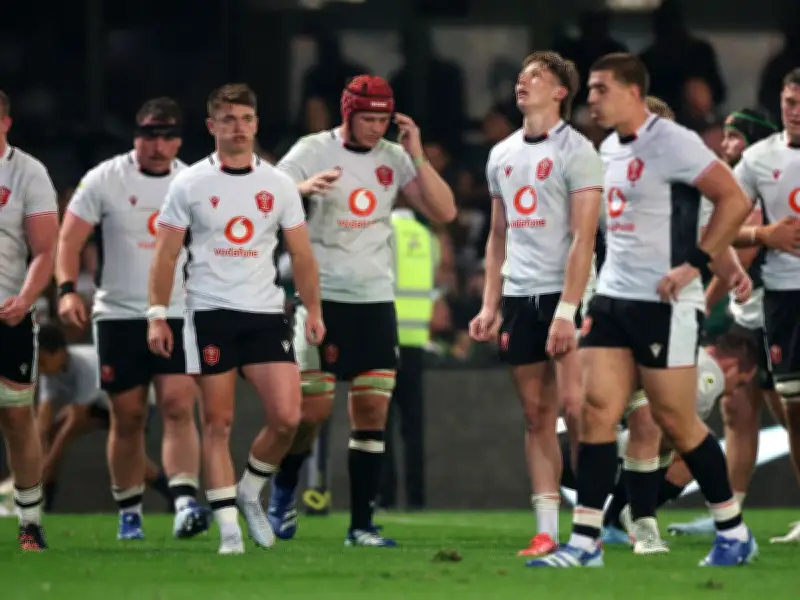
Wales brought their season to a painful conclusion with a 43-0 defeat by South Africa in Durban. Steve Tandy's side were comprehensively outplayed by the world champions, who exposed the gulf in physicality and quality between the two teams. After a difficult campaign, there will be few complaints from the players about seeing the end of it.
Winners
If we are being honest, there were precious few positives to take from this performance. Steve Tandy will point to the value of the experience gained and, in time, some of these players may well benefit from this tour. At present, however, the positives are difficult to identify. Wales were comprehensively outplayed, unable to match South Africa's intensity or physicality for any sustained period. The set-piece struggled throughout and the defensive frailties that have become an unwelcome hallmark of this Wales side were again laid bare. In attack, Wales offered virtually no threat. This tour of the southern hemisphere, featuring Tests against Argentina and South Africa, ultimately proved a bridge too far for a young and inexperienced squad.
Losers
Rhys Carre and Dillon Lewis
The Wales scrum got annihilated by the Springboks throughout the game. Both Carre and Lewis were taught a severe lesson at scrum time and neither had any answer to South Africa's power. The scrum was the worst part, but both players struggled to make any impact around the park. Carre, alongside Jac Morgan, was culpable for Jasper Wiese's try after the pair failed to complete what should have been a routine tackle. The loosehead also squandered a promising attacking opportunity early in the second half, spilling possession in a dangerous position. Lewis fared little better around the park. He failed to leave a meaningful imprint on the game and his discipline deserted him, with a succession of penalties handing South Africa momentum.
Adam Beard and Teddy Williams
There is no blueprint for beating South Africa without first winning the physical battle. If you are second best up front, the contest is effectively over before it begins. As Wales' starting locks the onus was on both Beard and Williams to impose themselves on proceedings but both failed to make any impact. They were bullied by their opposite numbers Cobus Wiese and Ruben van Heerden who was making his Test debut. Physically they got blown off the park and Wales really needed a lot more from both second-rows in Durban.
Peter Murchie
There are mitigating circumstances. This summer represented his first campaign at the helm and, as a result, he has had only a limited amount of time to implement his ideas with the Wales squad. But he has a tough job on his hands turning Wales into a difficult side to beat once more. Wales' defence has been shocking at times over the past couple of weeks. They missed 26 tackles out of 126 with an 83% success rate. If they want to kick on this will have to be improved significantly.
Matt Sherratt
Any attack was always likely to labour behind a pack that was repeatedly overpowered, but that alone cannot explain Wales finishing the afternoon scoreless. Failing to trouble the scoreboard was an indictment of an attack that never found fluency or conviction. Sherratt remains a popular figure within the playing squad and retains considerable goodwill from his work at Cardiff, as well as his spell as interim head coach following Warren Gatland's departure in 2025. But Wales' attack has been poor over the past two weekends and they are arguably not getting the best out of the players they do have behind the scrum.
The midfield selection came under scrutiny before kick-off, with former Wales internationals, Jonathan Davies among them, expressing doubts over Sherratt's preferred centre partnership. Sherratt prefers a ball playing 12 like Ben Thomas or Joe Hawkins but there are many who would argue they lack penetration in midfield. Wales have struggled to generate consistent gain-line success through midfield and could arguably benefit from the presence of a powerful, direct ball-carrier in the mould of Jamie Roberts. Eddie James increasingly looks like a natural fit at inside centre, while Bryn Bradley has also shown enough at club level for Harlequins to merit a sustained opportunity at Test level. More broadly, Wales' attack continues to lack fluency and incision. As the coach overseeing that area, Sherratt cannot escape responsibility for a system that has too often failed to challenge opposing defences sufficiently.