Scotland's Rugby Identity Crisis Looms Over Six Nations Campaign
As the Six Nations Championship approaches, Scottish rugby finds itself grappling with a profound identity crisis that threatens to define their campaign before a single ball has been kicked. The central question haunting Murrayfield is whether this much-discussed generation of players represents a genuine golden era that consistently underperforms, or whether initial assessments of their quality were simply overoptimistic from the outset.
Undeniable Talent Meets Inconsistent Delivery
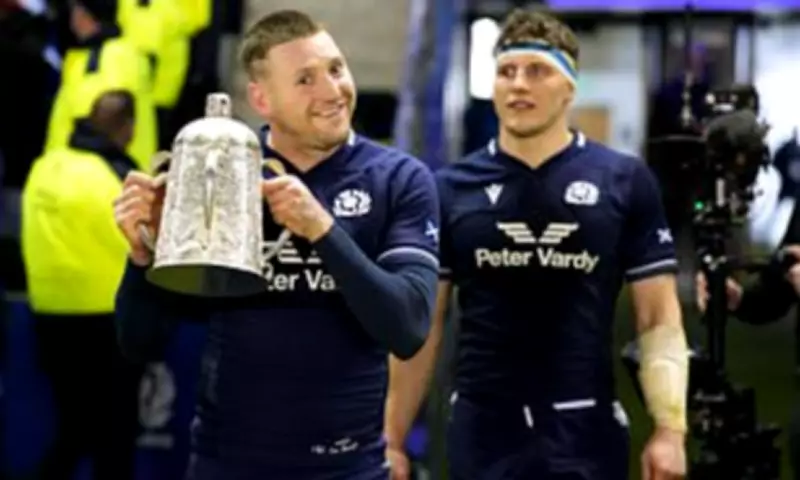
The raw talent within Gregor Townsend's squad is beyond dispute. Observers need only watch Sione Tuipulotu, Huw Jones, and Jack Dempsey dominating for Glasgow Warriors to witness their capabilities. Finn Russell continues to orchestrate play with brilliance for Bath, while Blair Kinghorn has seamlessly integrated into Toulouse's star-studded backline. Recent emphatic victories over England and Australia demonstrate precisely what this group can achieve when operating at their collective peak.
Yet herein lies the fundamental problem: those exceptional performances emerge far too infrequently. A squad possessing the individual quality to rank among the world's top six and challenge annually for the Six Nations title has repeatedly failed to produce the necessary consistency to realise that potential. In a curious inversion of sporting wisdom, this Scottish team represents the rare instance where the sum of impressive parts somehow amounts to less than the whole.

A Pattern of Promising Collapses
This performance instability manifests in frustratingly indifferent results. Scotland have demonstrated they can seriously test rugby powerhouses like the Springboks, All Blacks, and occasionally Ireland, yet invariably finish on the losing side. Their electrifying back-play can dismantle opponents repeatedly, only for composure to evaporate during crucial later stages of the same match.
This maddening split personality creates a wearying sense of déjà vu that has generated palpable ambivalence around the team as they approach Saturday's challenging opener against an improving Italian side in Rome. With Townsend embarking on his ninth championship in charge, many struggle to envision this campaign unfolding differently from the eight preceding it.
Honest Assessments from Within the Camp
Glasgow captain Kyle Steyn has emerged as a refreshingly candid voice, acknowledging the public's growing frustration. "I think the people of Scotland are sick of us talking about whatever it is we have been talking about," admitted Steyn. "Unfortunately, we haven't been able to deliver results against top teams on a consistent enough basis. I think they deserve to see us doing something as opposed to just carrying on talking about it."
Steyn referenced particularly disappointing autumn performances against New Zealand and Argentina as catalysts for difficult conversations. "Those results were well below par, well below where we wanted and what the people of Scotland want. We had some really raw and honest conversations off the back of that," he revealed.
The Psychological Challenge Ahead
Much analysis has focused on Scotland's tendency to establish strong starts before fading when opponents mount comebacks, suggesting mental rather than physical deficiencies. Steyn acknowledged this requires urgent attention, beginning at Rome's Olympic Stadium this weekend.
"We've just got to be better under pressure," he emphasised. "In both the New Zealand and Argentina games, we put ourselves in a position to win the game. And we didn't win the game, which is just... unacceptable is a strong word, but I think that's kind of how we feel."
The wing elaborated on the psychological dimension: "I think we had to be really honest with ourselves about the fact that we probably didn't have the tools in the chest to get it done under pressure. It starts with the psychological side because the teams that have been able to do that really well, they do the basic rugby things really well under pressure."

Selection Puzzles and Competitive Spirit
Steyn's character and athletic prowess make him a strong contender for the starting wing position against Italy, with competition coming from Darcy Graham and Jamie Dobie. This represents just one selection dilemma Townsend must resolve in coming days.
"His big message this week has just been to make training competitive," Steyn noted regarding Townsend's approach. "And that's exactly what it's been like in the back three. It's fairly well documented now, the level of competition there is in that position. We're all good mates with each other, all a good bunch of boys, so we understand the fact that there needs to be competition and we're all pretty hungry for that."
As Scotland enter another Six Nations campaign, the question remains whether this talented but inconsistent squad can finally translate individual brilliance into collective, sustained success, or whether another championship will pass with promise unfulfilled.