England's Grand Slam Ambitions Derailed in Edinburgh Nightmare
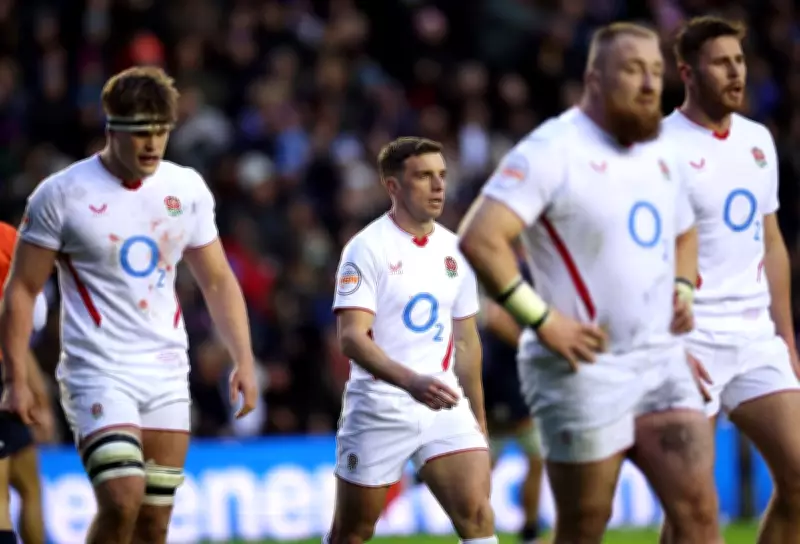
England's aspirations for a Six Nations grand slam were decisively halted during a Valentine's evening encounter that will linger painfully in memory. The 12-match winning streak that had defined Steve Borthwick's developing squad came to an abrupt conclusion against a resurgent Scottish side at Murrayfield, prompting serious reflection about England's championship credentials.
A Familiar Script of Frustration Returns
Centre Fraser Dingwall's post-match interview became emblematic of England's collective mindset, with the word "frustrating" repeated seven times within two minutes as he attempted to articulate the disappointment. "It is frustrating," Dingwall stated, capturing the mood of a team that recognized their shortcomings but struggled to explain their recurrence.
The statistical evidence highlighted England's deficiencies: aerial inferiority, red-zone inefficiency, and high-profile errors that proved costly throughout the contest. Scrum half Alex Mitchell acknowledged Scotland's quality while reflecting on England's historical struggles in Edinburgh: "We've not got a result here in however long, but it's one of them. It's tough to take."

Foundation Stones Crumble Under Pressure
What made England's performance particularly jarring was the failure of their established strengths. The tactical pillars that had supported their 12-match winning run faltered simultaneously:
- Contestable kicking game became ineffective
- Breakdown accuracy diminished significantly
- Tactical discipline wavered at crucial moments
- Edge defence showed uncharacteristic vulnerabilities
England's attack struggled to convert opportunities, with 12 entries into the Scottish 22 producing just two tries. George Ford's decision to attempt a drop goal from the pocket backfired spectacularly when Matt Fagerson's block created a 10-point swing, with Scotland returning the blocked kick for a try.
Selection Questions Resurface After Setback
The defeat has reignited debates about England's strategic direction and personnel choices. Several key areas now demand reconsideration:
- Fly half position: While England have been developing Fin Smith, Marcus Smith's potential impact from the bench appears increasingly valuable
- Backline composition: Henry Arundell's disciplinary issues and Immanuel Feyi-Waboso's absence create selection dilemmas
- Long-term strategy: Potential recalls for Ollie Lawrence and Tommy Freeman would represent tactical shifts
Mitchell defended Ford's decision-making while acknowledging the outcome: "It's definitely a tactic to go to, drop it in the pocket and go into the drop goal or go into a kick in the air. But, yes, it just didn't go our way. That's obviously frustrating. He's normally fantastic at that."
The Road Ahead: Recovery and Reflection
England now face immediate challenges with Ireland awaiting in the next round, followed by a summer tour to South Africa. The Springboks will have observed England's vulnerabilities with particular interest ahead of July's Johannesburg encounter.
Dingwall emphasized the importance of honest assessment: "I always will try and review a game from a neutral standpoint. I think that after a win or a loss, you've got to be incredibly honest so you kick on and grow and develop, irrespective of the result."
The statistical reality provides sobering context: England have now gone six years without beating Ireland, France, or Scotland away from home in the Six Nations championship. Despite fielding what many consider their strongest squad during this period, this away-day vulnerability continues to undermine their championship ambitions.
While England's progress won't be entirely discarded following one defeat, the Calcutta Cup loss has exposed fundamental questions about their capacity to achieve greatness. The team that had learned how not to lose must now remember how to win crucial away matches against championship rivals.