Crawley's Colombo Comeback Ends Swiftly as England's ODI Woes Deepen
In a match that evoked echoes of recent Ashes struggles, England's one-day international team slumped to a series-opening defeat against Sri Lanka in Colombo on Thursday. The loss extended their dismal away record in ODIs to 11 consecutive defeats, with the curious case of Zak Crawley's recall at the top of the order summing up broader cracks in English cricket's selection framework.
A Familiar Dismissal in Unfamiliar Surroundings
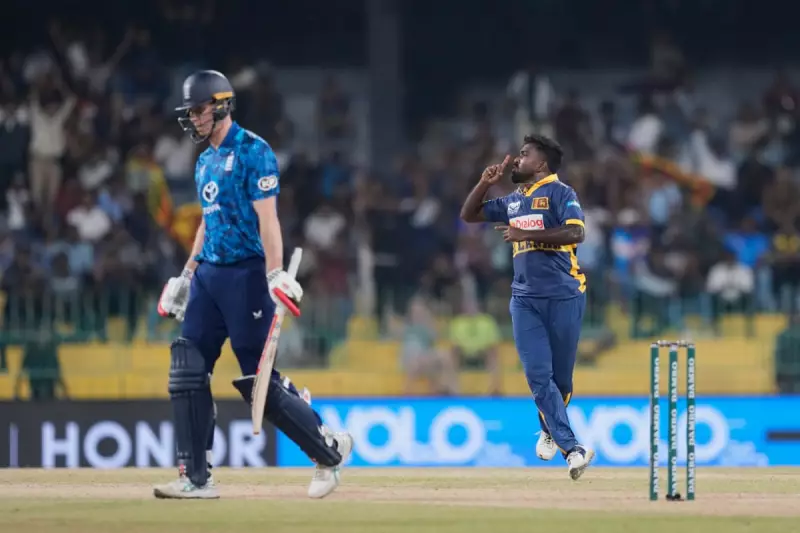
The flashbacks to Australia were immediate. Asitha Fernando, the Sri Lankan quick, celebrated the wicket of England's Zak Crawley with gusto after luring the opener into edging behind for just six runs. It was a dismissal that felt hauntingly familiar to those who watched England's Test struggles, yet it occurred in a format Crawley had not played for over two years. His last ODI appearance was in December 2023, making his selection for this tour a decision based more on instinct and gut feeling than recent 50-over form.
England's batting lineup mirrored their Test top five, with only Jacob Bethell and Joe Root swapping positions at three and four. The opening partnership with Ben Duckett was brief, reminiscent of their difficulties during the Ashes where they managed five single-figure stands in eight innings. The hope that a change of scenery and the absence of Mitchell Starc might reignite their partnership quickly faded in the Colombo heat.

Systemic Failures in Domestic Cricket Exposed
The closer one examines Crawley's inclusion, the more it reveals the structural problems plaguing the English game. Like many of the country's cleanest strikers, Crawley has been deprived of opportunities to play List-A cricket domestically. The scheduling of the One-Day Cup alongside the Hundred means that players of his calibre are often required for the franchise tournament, leaving the 50-over format to decorate outgrounds with less star power.
"He has been rehired without being allowed to make a proper case," noted analysts, pointing to a selection process that increasingly relies on intuition over evidence. Harry Brook, England's white-ball captain, attempted to justify the decision by emphasising that "runs are your currency as a batter" and highlighting the perceived benefits of Crawley's left-right combination with Duckett. However, this reasoning rings hollow given their average of just 19 as a pair during the Ashes and Crawley's inconsistent Test record, which has seen his average stagnate in the low 30s for over two years.
A Glimpse of Hope Amidst the Gloom
There was a solitary positive for England amidst the collapse. Ben Duckett, battling both Sri Lanka's spin and his own recent form, ground his way to a determined 62. His pedigree in this format remains impressive, arguably bolstered by his experience playing substantial one-day cricket in the pre-Hundred era. For Duckett, at least, this was no repeat of the Ashes nightmares.
Yet, the contrast with England's glorious ODI past is stark. Between the 2015 and 2019 World Cups, openers like Jason Roy, Alex Hales, and Jonny Bairstow averaged above 40 with strike rates nearing 100, providing dependability and regular centuries that propelled the team to greatness. Crawley, described by head coach Brendon McCullum as someone whose "skill set is not to be a consistent cricketer," represents a shift away from that model.
Looking Ahead: Questions Without Easy Answers
As England reflect on this defeat, the questions mount. Can a player be effectively selected for ODIs based on performances in the Hundred and Blast, as Crawley's strong 2025 returns in those tournaments suggest? Or does the absence of a robust domestic 50-over competition undermine the entire selection process? The tourists' reliance on promise and aesthetics—Crawley's straight lines and unique beauty when in flow—highlights a gamble that has yet to pay off consistently.
With Luke Wright set to leave his role as a selector amid the fallout from the Ashes, the timing of this series loss adds urgency to the debate. England's ODI side, once the envy of the world, now finds itself searching for answers in a system that no longer prioritises the format that made them great. The curious case of Zak Crawley is merely the latest symptom of a deeper malaise.