
Wallabies' Inconsistency Proves Costly in Udine Defeat
The question haunting Australian rugby has never been more pressing: is it better to produce occasional moments of brilliance or maintain consistent, steady performance? After the Wallabies' 26-19 loss to Italy at Udine's Friuli stadium, the answer appears painfully clear for Joe Schmidt's side.
This defeat marks Australia's second consecutive loss on their European tour, leaving them stranded in seventh place in World Rugby's rankings. The implications are significant: if this position holds, the hosts of the 2027 World Cup would face a formidable opponent in the group phase, complicating their path through the tournament.
Flashes of Greatness Amid Costly Collapses
Observers of Australian rugby over the past 18 months have witnessed a team capable of breathtaking performances. Their remarkable 38-22 comeback against South Africa in Johannesburg showcased slick interplay and courage with ball in hand. Similarly, their dogged 22-12 victory against the British & Irish Lions demonstrated their potential when firing on all cylinders.
When at their best, the Wallabies present a fluent attacking unit that spreads play wide, attacks breakdowns with intensity, and strikes from first-phase opportunities. They display composure in recycling possession and building methodically toward their objectives. This is the team that suggests a genuine revival under Schmidt's pragmatic guidance.
The Other Side of the Coin: Inexplicable Lapses
Yet between these high points lie performances that undermine the narrative of resurgence. The loss to Italy served as a perfect microcosm of Australia's broader struggles. Despite scoring two first-half tries through front-rowers Matt Faessler and Angus Bell, and showing improvement under the high ball compared to their England performance, crucial errors proved decisive.
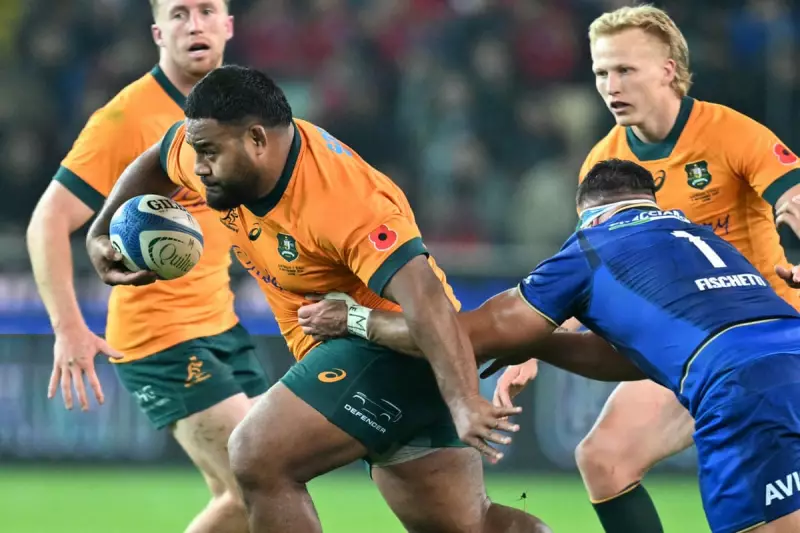
The match turned on moments like Taniela Tupou's surging run just before half-time. After collecting a pass at pace, evading one defender and riding another challenge, the Wallabies were poised to capitalise on unstructured play. Then, inexplicably, the ball spilled forward, the opportunity vanished, and Australian frustration mounted.
This pattern repeated in the second half when, trailing after Monty Ioane's try, Australia hammered the Italian line through multiple phases only to be held up over the line. The lack of cutting edge beyond one-up runners and short passes highlighted their creative limitations when under pressure.
Searching for Rhythm in Schmidt's System
Joe Schmidt has undoubtedly provided the Wallabies with structure and direction. His influence has steadied a previously leaking ship and brought improved results. The recruitment of talent from rival codes, including returning Carter Gordon – who scored with a neat side-step – shows positive development.
However, as the Italy defeat demonstrated, plans require execution, and execution demands habit formation. The world's best teams make exceptional play seem routine, while the Wallabies too often make routine play appear extraordinary.
With the outlines of a competitive team visible – an improving set-piece, better defensive organisation, and genuine match-winners in the squad – the challenge now is converting potential into consistent performance. Until Australia finds that crucial rhythm, they risk remaining a team remembered for flashes of brilliance rather than finished products.