Ukrainian Star to Test Olympic Rules with Banned War Tribute Helmet
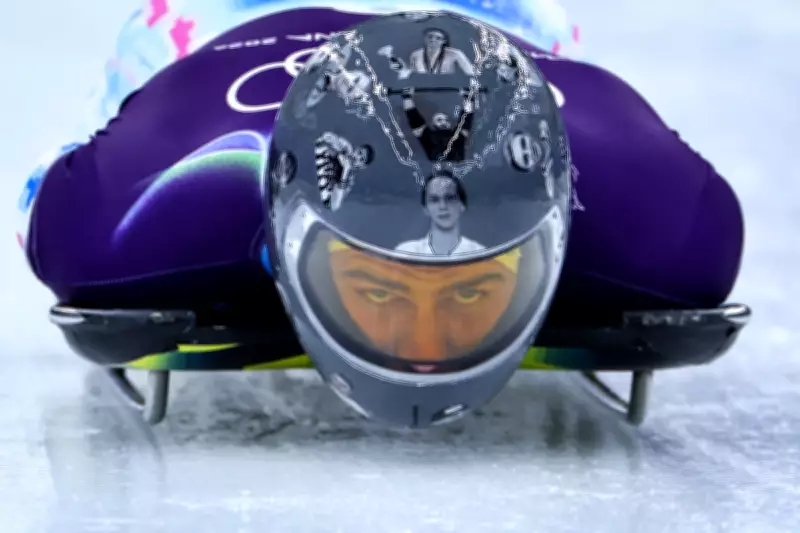
As the Olympic men's skeleton competition commences on Thursday, global attention will be intensely focused on Ukrainian athlete Vladyslav Heraskevych, whose planned act of defiance presents a significant challenge for the Milan Cortina Winter Games. Heraskevych, one of the event's top favourites, appears willing to risk his chance at a medal by competing while wearing a helmet dedicated to Ukrainian athletes and coaches killed during the ongoing conflict with Russia.
IOC Rules and Potential Sanctions
This heartfelt tribute has been deemed a violation of the International Olympic Committee's strict rules against political statements and inappropriate displays during competition. Should Heraskevych proceed with his plan, he faces potential sanctions including disqualification from the Olympics entirely. This situation places the IOC in a particularly precarious position, as expelling an athlete for honouring war victims would almost certainly provoke widespread international criticism and controversy.
The IOC has previously shown leniency toward Heraskevych. When he displayed a "No war in Ukraine" sign after his fourth and final run at the 2022 Beijing Olympics, the IOC determined he was simply calling for peace and did not find him in violation of the Olympic charter. This precedent adds complexity to the current situation.

Visible Tributes and Personal Connections
Visible on the helmet are portraits of teenage weightlifter Alina Perehudova, boxer Pavlo Ischenko, ice hockey player Oleksiy Loginov, actor and athlete Ivan Kononenko, diving athlete and coach Mykyta Kozubenko, shooter Oleksiy Habarov and dancer Daria Kurdel. "Some of them were my friends," Heraskevych, who is serving as his country's flag bearer, told reporters after his training session at the Cortina sliding centre.
IOC spokesman Mark Adams expressed the committee's position on Wednesday, stating: "We want him to compete. We really, really want him to have his moment. That's very, very important. We want all athletes to have their moment and that's the point. We want all our athletes to have a fair and level playing field."
Historical Context of Olympic Protests
There have been numerous incidents over the years where athletes protested on the field of play or during medal ceremonies. The most famous case dates back to the 1968 Summer Olympics in Mexico City when US sprinters Tommie Smith and John Carlos raised black-gloved fists during the 200 metres medal ceremony to protest racial injustice in their country. That led to their expulsion from the Games, although Smith kept his gold medal and Carlos his bronze.
More recently, at the 2024 Paris Olympics, Afghan breakdancer Manizha Talash, a member of the refugee Olympic team, was disqualified after wearing a cape with the slogan "Free Afghan Women" during a pre-qualifying competition.
However, there have also been cases where athletes and teams escaped punishment when their action was not deemed explicitly political. Australia's women's football team unfurled a flag of the first peoples of Australia at the Tokyo Olympics in 2021 but, while not one of the recognised flags of participating nations at the Games, the team were not sanctioned. Similarly, two Chinese cycling medallists who wore badges featuring the head of their country's former leader Mao Zedong on the Tokyo Olympics podium escaped with only a warning.
Competition Schedule and Medal Prospects
The first two runs of the skeleton race are scheduled for Thursday, with the final two runs taking place on Friday night. Heraskevych is a legitimate medal hopeful in the event, and he's evidently willing to risk his chance at Olympic glory for his tribute to those he considers heroes. This creates a dramatic tension between athletic achievement and personal conviction that will unfold as the competition progresses.