Ukrainian Skeleton Racer Issues Final Ultimatum Over War Memorial Helmet
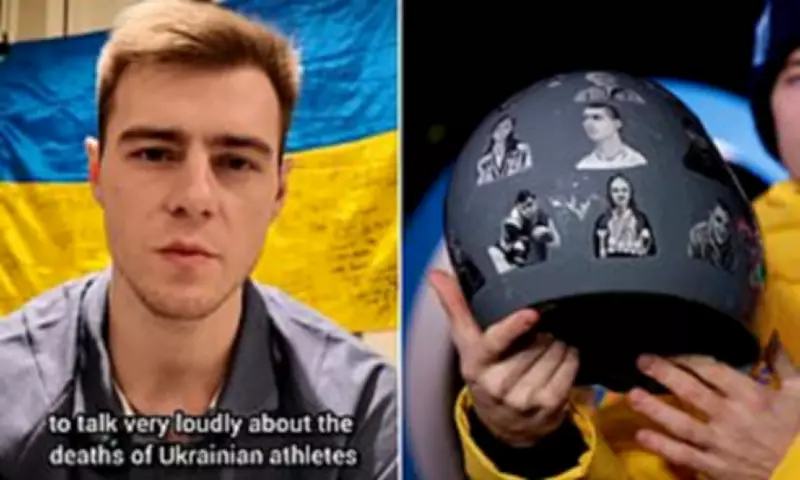
Ukrainian skeleton athlete Vladyslav Heraskevych has delivered a final, impassioned demand to Olympic authorities, urging them to withdraw their threat of disqualification over his use of a helmet that pays tribute to his compatriots killed since Russia's invasion. With just two hours remaining before the skeleton competition commenced at 9:30 AM local time on Thursday, the 27-year-old took to social media to firmly declare he will not back down from his principled stance.
Olympic Committee Faces Impossible Dilemma
This defiant position leaves the International Olympic Committee in an extraordinarily difficult predicament. They must either relax their strict regulations on political messaging within Olympic venues or eject a Ukrainian national hero from the competition. The latter option represents potentially catastrophic public relations for the Games' organizers, who had likely anticipated Heraskevych's compliance following a week of increasingly stern warnings.
Despite posting the fastest practice time on Wednesday and emerging as a serious medal contender, Heraskevych has demonstrated his willingness to risk disqualification over this profoundly evocative matter of principle. The administration of any potential disqualification remains unclear, with sources suggesting it could be triggered following his first run wearing the controversial helmet. However, other figures within the Games organization have indicated they do not expect Heraskevych to even reach the starting line, highlighting the desperately fraught nature of this situation.

Heraskevych's Three Demands to Olympic Authorities
Neither party appears willing to compromise. Heraskevych reiterated his position in a social media post at 6:51 AM on Thursday, presenting three specific demands to Olympic officials:
- An immediate lifting of the ban on his "Memory Helmet"
- A formal apology for the pressure exerted upon him over recent days
- Funding from the IOC to provide electric generators for Ukrainian sports facilities damaged by Russian shelling
In his statement, Heraskevych wrote: "I never wanted a scandal with the IOC, and I did not create it. The IOC created it with its interpretation of the rules, which many view as discriminatory. Although this scandal has made it possible to loudly speak about Ukrainian athletes who have been killed, at the same time the very fact of the scandal distracts a tremendous amount of attention away from the competitions themselves and from the athletes participating in them."
He concluded with a plea for resolution: "That is why I propose to end the scandal. I very much hope for a response before the start of the skeleton competitions."
Olympic Officials Attempt Diplomatic Resolution
Speaking in Milan on Wednesday, IOC spokesman Mark Adams stated: "We will contact the athlete today and we will reiterate the many, many opportunities that he has to express his grief. We will try to convince him. We want him to compete."
When questioned directly about the possibility of disqualifying Heraskevych, who served as Ukraine's flag-bearer during the opening ceremony, Adams responded cautiously: "I don't think it's helpful in this situation to look at hypotheticals, particularly since we are actually trying to get to a place where we can get him to take part. But obviously there are rules and regulations and they will ultimately be enforced."
Broader Implications for Olympic Protocol
The IOC's evident reticence should not be underestimated, yet this remarkable scenario has inadvertently placed them between a rock and a hard place. Their underlying concern is that permitting Heraskevych to display images of fallen Ukrainian athletes on his helmet could establish a precedent, potentially encouraging athletes from other nations to make similar displays, possibly in support of controversial regimes or political causes.
This confrontation represents a critical test of the Olympic movement's ability to balance its longstanding tradition of political neutrality with contemporary realities of global conflict and humanitarian expression. As the clock ticks toward competition time, the world watches to see whether principle or protocol will prevail in this high-stakes Olympic drama.