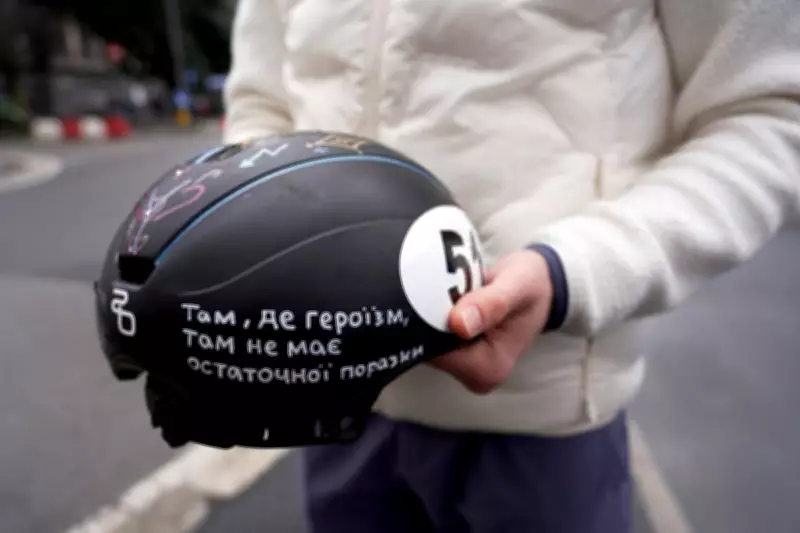
Ukrainian short track speed skater Oleh Handei has disclosed that Olympic officials ordered him to cover up a motivational message on his helmet, labeling it as "war propaganda" linked to the ongoing conflict with Russia. This revelation emerges just days after his compatriot, skeleton racer Vladyslav Heraskevych, was ejected from competition for wearing a "helmet of remembrance" honoring athletes killed since Russia's invasion.
Inspirational Quote Deemed Political
Handei, who is scheduled to compete in the 1500 metres at the Milano Cortina Games, had adorned his helmet with a powerful quote from Ukrainian writer Lina Kostenko: "Where there is heroism, there can be no final defeat." He intended this as a personal source of inspiration to perform at his peak during the prestigious event.
Strict Olympic Rules Enforced
However, the International Olympic Committee's stringent regulations, which prohibit athletes from making political statements at Olympic sites or venues, led officials to intervene. In a television interview with Reuters, Handei recounted, "They saw my sentence and they said to me, 'Sorry but it's war propaganda'." He confirmed his intention to comply with the ruling to ensure his participation, despite his initial hesitation to speak out.

Handei was emboldened by Heraskevych's example, who publicly defended his helmet design after being disqualified. Heraskevych called the decision a victory for "Russian propaganda" and accused the IOC of making a "terrible mistake." Handei echoed this sentiment, asserting, "It's not propaganda, it's not." He explained that Heraskevych's intent was to remind the world of Ukraine's existence and humanity, seeking support and understanding.
Solidarity Amid Competition
Despite the controversy, Handei expressed hope of finding a way to show solidarity with Heraskevych while remaining focused on his upcoming competition. "I hope I can focus on my competition," he concluded, highlighting the delicate balance athletes must strike between personal expression and adherence to Olympic protocols.
This incident underscores the ongoing tensions at international sporting events, where athletes' messages of resilience and remembrance clash with policies aimed at maintaining neutrality. As the Games proceed, the debate over where to draw the line between political statements and personal motivation continues to simmer, affecting competitors from nations embroiled in conflict.