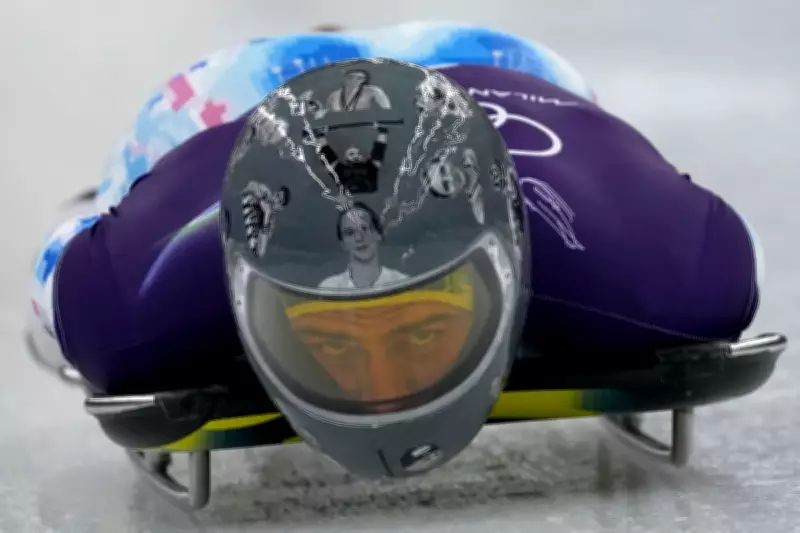
Ukrainian Skeleton Racer Banned from Winter Olympics Over War Tribute Helmet
The International Olympic Committee has enforced a controversial ban on Ukrainian skeleton racer Vladyslav Heraskevych, preventing him from competing at the 2026 Winter Games in Milan-Cortina. The decision follows Heraskevych's insistence on wearing a helmet displaying images of Ukrainians killed during Russia's invasion, a direct violation of Olympic neutrality regulations.
Rule 50.2 and the IOC's Stance
IOC President Kirsty Coventry defended the organisation's position, emphasising that the ban was not a political judgement but a strict application of Rule 50.2 of the Olympic Charter. This rule explicitly prohibits "any kind of demonstration or political, religious or racial propaganda" within Olympic venues. The regulations, developed by the IOC Athletes' Commission, outline a comprehensive list of prohibited actions including political messages on equipment and gestures of protest.
IOC spokesperson Mark Adams clarified the committee's perspective: "He can, and we would encourage him, to express his grief, but in the end let me be clear. It's not the message, it's the place that counts. There are 130 conflicts going on in the world. We cannot have 130 different conflicts featured, however terrible they are, during the field of play."

The Failed Compromise and Emotional Standoff
Earlier in the week, the IOC attempted to negotiate a compromise, offering Heraskevych permission to wear a black armband instead of the controversial helmet. When the 27-year-old athlete signalled his determination to defy this arrangement, President Coventry personally intervened in a last-minute meeting at the competition venue.
Heraskevych remained resolute, declaring: "I will not betray these athletes. These athletes sacrificed their lives, and because of this sacrifice, I am able to be here, so I will not betray them. An Olympic medal would be huge. Since my childhood, it's my big dream. But in this time, in time of full-scale war, some things are really more important than medals."
The Aftermath and Criticism
Following the formal ban announcement, Heraskevych expressed his profound disappointment, suggesting the IOC had made a "terrible mistake" that played into Russian propaganda narratives. He revealed he had proposed an alternative solution: wearing the memorial helmet while simultaneously organising generator donations for Ukraine, a gesture he believed would demonstrate solidarity while diffusing the controversy.
The Ukrainian athlete argued that the IOC's actions had overshadowed the competition itself, stating: "Because of this scandal, now all you (the media) are here, you're not watching the race, and I believe it's a terrible mistake made by the IOC."
President Coventry described the situation as an "emotional morning" but maintained the decision was necessary to preserve the Olympic Charter's integrity. She emphasised that athletes had specifically requested in 2020-2021 that all messaging be prohibited on the field of play, while allowing expression in designated areas like press conferences and mixed zones.