Tears and Drama Amid Snowboard Cross Chaos at Winter Paralympics
Emanuel Perathoner and Cécile Hernandez maintained their composure to clinch gold medals on a day filled with incidents at the San Zan course during the Winter Paralympics. From a spectator's viewpoint south of the track, the initial glimpse of snowboard cross competitors involves figures emerging dramatically over the horizon. After navigating a left-hand turn, racers become visible as they execute the first in a series of jumps, a section paradoxically designed for accelerating speed. This fleeting moment, lasting mere split-seconds before athletes vanish behind safety barriers, invariably elicits roaring cheers from the captivated crowds.
High Technical Demands and Inherent Risks
Snowboard cross is a discipline with formidable technical requirements, as athletes must adeptly handle a variety of obstacles—including jumps, berms, rollers, and drops—along a twisting course. However, all these skills are ultimately secondary to the primary objective of generating maximum velocity. Every movement is meticulously calculated to minimize resistance and drag. When combined with the additional challenges of balance and navigation posed by physical disabilities, it is perhaps unsurprising that the snowboard cross finals at the Winter Paralympics on Sunday descended into a scene of carnage.
The Australian competitor Amanda Reid, a Paralympic gold-medal swimmer making her snowboarding debut, was transported to hospital after a backward crash during the heats of the women's LL1 classification, which denotes a more impactful lower limb disability. Reid remained conscious and communicative with paramedics while receiving treatment trackside. Similarly, Great Britain's Davy Zyw was taken to hospital as a precaution following a crash on Daytona Corner. Zyw, who has motor neurone disease and is believed to be the first snowsport athlete to compete with this condition at the Paralympics, experienced a loss of upper body strength due to his illness, preventing him from stabilizing during the critical moment, as analyzed by friends and family reviewing crash footage. Further incidents included collisions between two racers in the men's LL1 final and three crashes in the "small final" of the men's upper limb disability category, contributing to a day of significant upheaval.

Emotional Triumphs and Personal Journeys
Observing Paralympic sport often involves alternating between marvel and astonishment at the risks these athletes willingly undertake. The motivations behind such bravery can be deeply personal, exemplified by Zyw, diagnosed with motor neurone disease seven years ago and given a prognosis of three years to live. Yet, there are also more universal reasons evident in the day's events.
The loudest cheers erupted during the penultimate race when Italy celebrated gold in the men's LL2 classification, the less severe of the two lower limb categories. Emanuel Perathoner dominated the field, finishing more than three seconds ahead of Australian rival Ben Tudhope. The 39-year-old Italian, a former Olympian who competed in Pyeongchang eight years ago, saw his preparations for the subsequent Beijing Games halted by a knee injury necessitating replacement surgery. By 2025, he had become world champion in the LL2 parasport category and has expressed that he perceives no distinction between able-bodied and para-athletes. Reflecting under clear Cortina skies, Perathoner shared his thoughts upon crossing the finish line: "I thought: the last four years have been totally worth it. All the work that I was putting in, and all the travelling, all the time away from home, it was totally worth it."
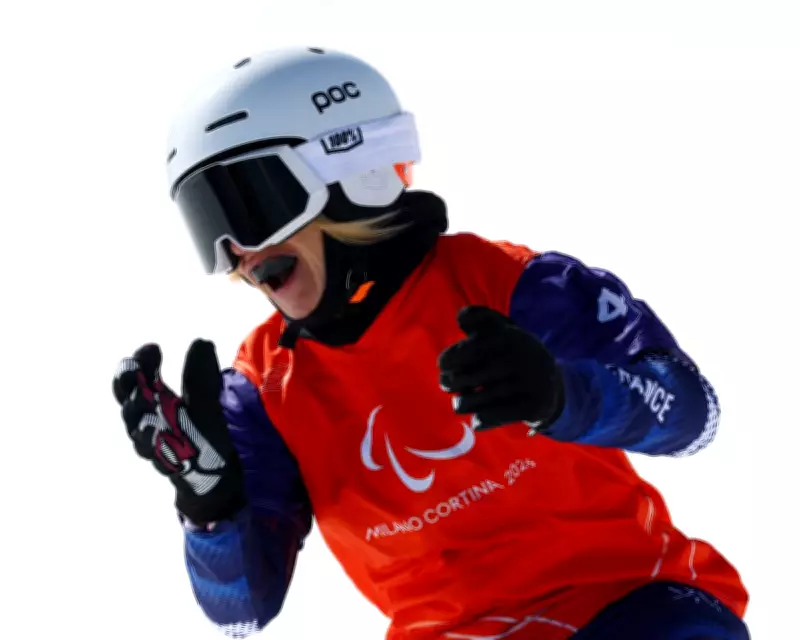
Equally jubilant was French snowboarder Cécile Hernandez, who successfully defended her title in the women's LL2 classification at the age of 51. Overwhelmed with joy, she collapsed to the ground after finishing and expressed her delight at winning with her daughter present among the spectators. "It's incredible and I still can't realise what happened. I'm very, very, very proud. My daughter is here, and my dream was to see some tears, but tears of joy in my daughter's eyes and on her face. I did it, and this medal is for her," Hernandez remarked.

Vibrant Atmosphere and Global Participation
Hernandez's daughter would have found herself immersed in a festive atmosphere while watching her mother compete. An apres-ski vibe permeated the midday event, with vibrant colors and enthusiastic support emanating from diverse groups. Alongside the Scottish contingent sporting royal blue beanies in support of Zyw, a substantial Lithuanian delegation was present to cheer on Rapolas Micevicius, their first winter Paralympian in 32 years. Although Micevicius was eliminated in the LL2 category quarter-finals, the celebratory spirit persisted unabated, as another wave of fiercely dedicated daredevils was poised to crest the hill momentarily.