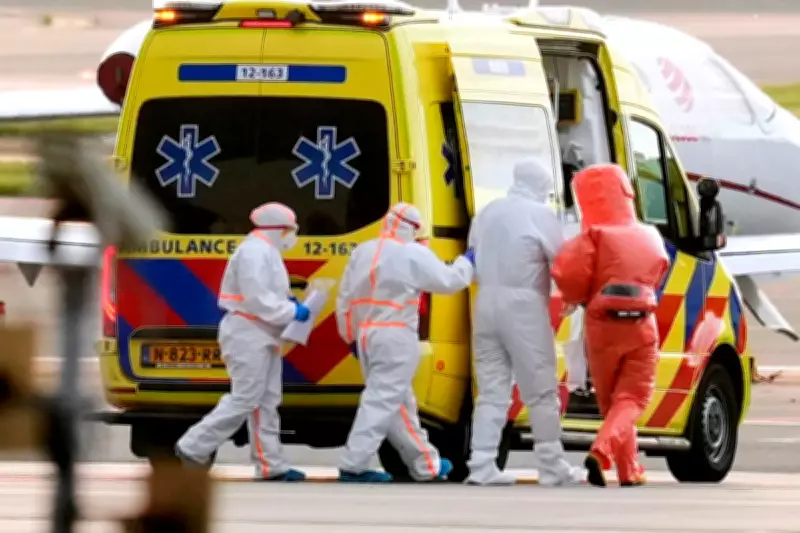
Health officials across the globe are urgently working to trace contacts of individuals exposed to hantavirus following a deadly outbreak on a cruise ship that has claimed three lives. Scientists are racing to learn more about the virus, including whether it has mutated and how exactly it spreads.
Outbreak Details and Response
Officials remain optimistic that the outbreak will not escalate into a wider epidemic. While human-to-human transmission is rare for hantaviruses, rigorous contact tracing is underway across several countries to identify and monitor those potentially exposed. Hantaviruses typically spread when people inhale contaminated residue from rodent droppings. However, the Andes virus implicated in this incident poses a unique concern as it may, in rare instances, be capable of human-to-human spread.
The World Health Organization reiterated that the risk to the general public remains low. "This is not coronavirus, this is a very different virus," said Maria Van Kerkhove, WHO director of epidemic and pandemic management. "This is not the same situation we were in six years ago."

Contact Tracing Efforts
The goal of contact tracing is to alert people who might have been exposed, monitor them for symptoms, and prevent further spread. In the cruise ship outbreak, fewer than a dozen people are thought to have shown symptoms, with only five confirmed cases. However, many more may have been exposed. About 140 people remain on the ship heading to the Canary Islands, with no reports of illness. Authorities are trying to reach dozens who disembarked earlier, hailing from at least 12 countries, including the United States.
In St. Helena, a remote British territory where passengers got off, authorities are monitoring a small number of higher-risk contacts, who are advised to isolate for 45 days. British health officials report two passengers who flew home midway are self-isolating without symptoms. Singaporean authorities are monitoring two men who traveled from St. Helena to South Africa and then home; they are being tested and isolated. The U.S. Centers for Disease Control and Prevention is closely monitoring the situation, classifying it as a "level 3" emergency response. President Donald Trump expressed hope that the outbreak is under control.
Scientific Investigation
Scientists are analyzing the Andes virus's genetics to see if it has mutated to become more transmissible. They are also studying how it spreads, with evidence suggesting people are mainly infectious when symptomatic, possibly through respiratory droplets. Argentina's Health Ministry plans to send a team to Ushuaia, where initial cases may have been contracted during a birdwatching trip.