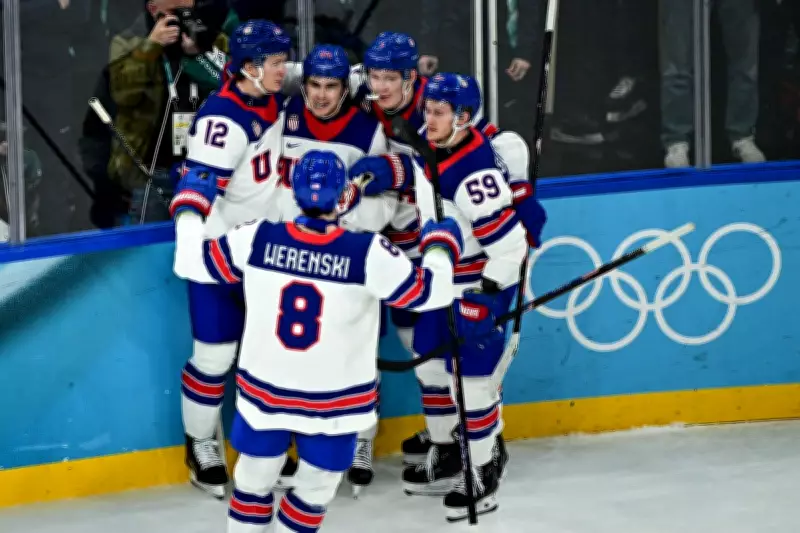
Geopolitical Edge Intensifies Historic Olympic Hockey Final
The United States will clash with bitter rivals Canada in the men's Olympic hockey final this weekend, marking their first gold medal meeting since 2014. This highly anticipated showdown arrives with an unmistakable political undercurrent, transforming a sporting contest into a symbolic battle between neighboring nations.
More Than Gold at Stake in Milan
For hockey-obsessed Canadians, the prospect of losing to the United States might rival the discomfort of former President Donald Trump's rhetoric about annexing their country. Hockey represents far more than a game in Canada—it serves as a cultural cornerstone and national identity marker. The sport has historically channeled political tensions, exemplified by the legendary 1972 Summit Series against the Soviet Union and the Miracle on Ice at the 1980 Winter Olympics.
These NHL teammates understand they carry more than Olympic aspirations across the Atlantic. Trump's provocative comments—including memes about making Canada the 51st state and referring to former Prime Minister Justin Trudeau as a "governor"—have injected contemporary political friction into this historic rivalry.

Recent History Fuels the Fire
When the nations met at last year's 4 Nations Face-Off tournament, the competition coincided with heightened tariff disputes between the two countries. The United States claimed victory in Montreal, while Canada responded with a win in Boston to secure the overall tournament title. The atmosphere turned hostile almost immediately, with fights breaking out seconds into one contest and both national anthems receiving loud jeers from opposing fans.
Following Canada's tournament victory, Trudeau posted a defiant message: "You can't take our country—and you can't take our game." This sentiment encapsulates how hockey has become intertwined with national sovereignty in the Canadian consciousness.
Political Climate Shapes Narrative
While some American athletes at these Games have expressed unease about the domestic political climate, the hockey players have fully embraced their role as national representatives. Conservative commentators have labeled them "America's real team," and the USA's overtime victory over Canada in Thursday's women's final trended extensively across pro-Trump social media platforms.
Well-sourced reports suggest Trump might make a surprise appearance if the United States reaches the final, though Canadian Prime Minister Mark Carney is not expected to attend. American forward Matthew Tkachuk captured the team's mindset: "We're the best country in the world. The greatest honour in the world is wearing this red, white and blue. To do that in an Olympic final, there is nothing better."
Road to the Final
The United States delivered a dominant performance in their semi-final, overwhelming Slovakia 6-2 to establish themselves as narrow favorites for gold. Canada faced a much tougher challenge against Finland, requiring late heroics to secure a 3-2 victory and book their place in the championship match.
One Canadian fan leaving the Milano Santaguila arena summarized the national sentiment: "I'd rather we lost here than lost to them." This attitude reflects how hockey functions as a civic rite in Canada, deeply ingrained in the national identity despite recent tests of faith during these Games.
Injury Concerns and Key Performances
Canada's path to the final included dramatic comebacks, most notably overcoming a two-goal deficit in the semi-final with Nathan MacKinnon scoring the equalizer with just 35 seconds remaining. The team faces uncertainty regarding captain Sidney Crosby, who sat out the semi-final after sustaining an injury during the quarter-final victory against Czechia.
Crosby tested his leg in a closed session but wasn't cleared to play, with coach Jon Cooper remaining guarded about his potential return for Sunday's gold-medal match. "That was for Sid," said MacKinnon after the semi-final victory. "He's a special person and a special clutch player. He's our captain and he makes it happen. With him not there, we all had to step up."

Connor McDavid delivered an outstanding performance with two assists, setting the record for points by an NHL player at a single Olympics with 13. Goaltender Jordan Binnington contributed 15 crucial saves to secure Canada's advancement.
Legacy and Implications
Crosby, who famously scored the overtime winner in the 2010 Olympic final in Vancouver, possesses two Olympic gold medals. At 38 years old, he may no longer be in his prime, but his potential presence could prove decisive. Coach Cooper acknowledged the uncertainty: "We have 48 hours to decide. I'll tell you he has a better chance of playing in the gold-medal game than he had of playing in the semi-final."
For Canada, defeat would resonate far beyond the scoreboard, striking at the heart of national identity. For the United States, victory would deliver a message extending well beyond the Milan arena, reinforcing American dominance in a sport traditionally associated with Canadian supremacy.
This eighth Olympic gold medal meeting between the nations represents more than athletic competition—it's a geopolitical spectacle that will captivate audiences worldwide. The International Olympic Committee's mantra that sport brings people together will face its ultimate test during this Sunday showdown that promises to bring the Games to a dramatic, politically charged conclusion.