Milan Cortina's Expansive Footprint Transforms Winter Olympic Experience
The Milan Cortina Winter Olympics, stretching across a vast swath of northern Italy, are fundamentally reshaping the Olympic journey for athletes, officials, and spectators alike. With competitions dispersed over an unprecedented 22,000 square kilometers (8,500 square miles), this edition stands as the most geographically spread-out Winter Games in history.
Logistical Challenges and Mixed Reviews
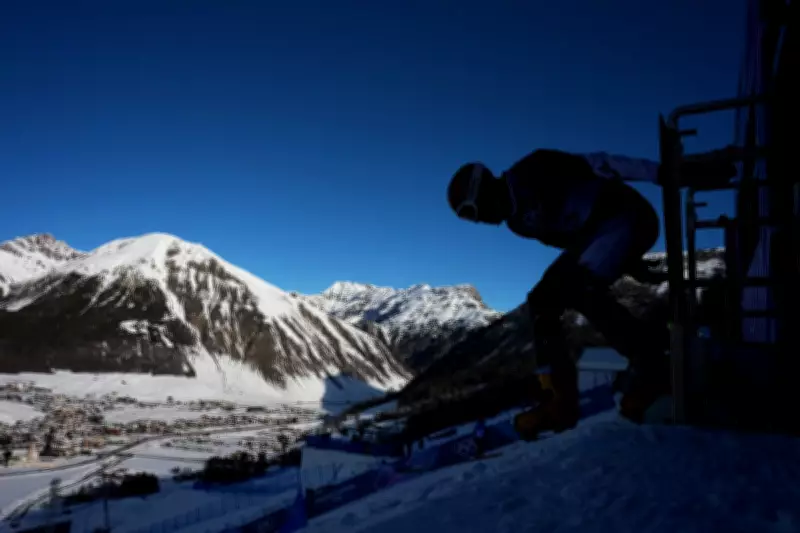
The immense distances between venues are presenting significant logistical hurdles. Thierry Montiller, head of Haiti's ski federation, exemplified this, spending over four hours driving mountain roads between Bormio and Tesero to support his athletes in different events, with another 220-kilometer journey planned.
"Yes, it is a major difficulty to have such distances," Montiller stated, capturing a sentiment echoed by many. While past Winter Olympics often featured city and mountain clusters relatively close together, the Milan Cortina model spreads mountain clusters far wider and places them considerably farther from the urban anchor.

Initial reviews from attendees are decidedly mixed. Bob Grover, a spectator from Portland, Oregon, contrasted his experience with the 2010 Vancouver Games, where venues were less than two hours apart. "It’s like, why isn’t it all in Cortina?" he questioned, though he acknowledged the potential economic benefits for the wider region.
The New Olympic Model: Pros, Cons, and the Road Ahead
This dispersed model offers distinct advantages, including avoiding massive public investment in post-Games white elephants, providing easier access for local residents, and distributing tourist revenue across a broader area. However, it demands more from participants. U.S. snowboarder Red Gerard noted the extra effort required, having driven 3.5 hours to Milan for a family celebration between competitions. "It’s just a little harder to get the full Olympic experience," he admitted.
This is not a one-off experiment. The Olympic movement is embracing this expansive approach for future Games. The 2030 Winter Olympics will feature snow events in the Alps, a closing ceremony in Nice, and speed-skating held abroad. Similarly, the 2034 and 2038 Games are planned with significantly wider geographic footprints.
Embracing the Journey and Finding New Hearts
For some, the dispersion has become an opportunity. Fans like Tyler Thostenson and his mother, on a 12-day, multi-stop itinerary, have embraced the chance to explore the Italian and Swiss countryside intimately, a contrast to being confined to a single cluster or viewing the landscape from a bus window.
International Olympic Committee President Kirsty Coventry praised the model, acknowledging the long drives but calling the feeling of the Games "very magical." The geographic spread has also led to an unexpected shift in tradition. Without a central medals plaza, ceremonies now occur immediately after events at the competition venues, offering spectators like Kathy McCabe a more immediate and emotionally raw payoff.
Furthermore, the lack of a single geographic heart—with both Milan and Cortina acting as anchors—has been compensated for by the Leonardo da Vinci-inspired Olympic cauldron in Milan, which has become a nightly gathering point. Meanwhile, athletes in smaller mountain villages, like South African cross-country skier Matt Smith in Predazzo, appreciate the peace and intimacy removed from the larger Olympic glitz, describing it as a "pukka Olympic experience."
As the first week concludes, the Milan Cortina Games are proving to be a bold experiment in redefining the Winter Olympic footprint, presenting a complex blend of logistical challenge, regional economic opportunity, and a uniquely dispersed athletic celebration.