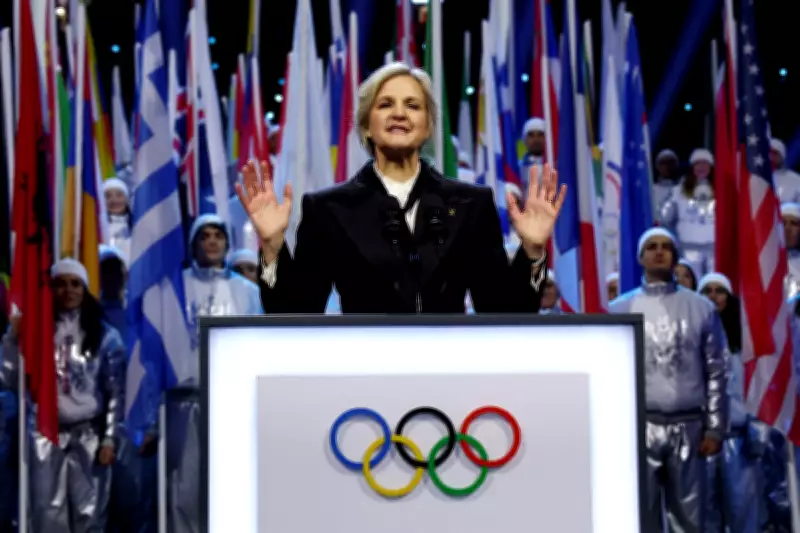
The International Olympic Committee (IOC) has enacted a sweeping new policy that effectively bans transgender women athletes from competing in female categories at the Olympic Games. This landmark decision, announced on Thursday, 26 March 2026, aligns with a recent executive order issued by U.S. President Donald Trump concerning women's sports, setting a precedent ahead of the 2028 Los Angeles Olympics.
Policy Details and Implementation
Under the revised eligibility framework, participation in any female category event at the Olympic Games or other IOC-sanctioned competitions is now strictly limited to biological females. The IOC has mandated a one-time SRY gene screening to determine eligibility, a move that introduces a genetic-based criterion for defining female athletes in Olympic sports.
Impact on Transgender Athletes
It remains unclear how many transgender women, if any, are currently competing at an elite Olympic level. Notably, no athlete who transitioned from being born male participated in the 2024 Paris Summer Games, suggesting that the immediate impact may be more symbolic than practical. However, the policy establishes a formal barrier that could affect future aspiring transgender Olympians.

The alignment with President Trump's executive order highlights the growing influence of political directives on international sports governance. This development raises questions about the balance between inclusion and competitive fairness in athletics, a debate that has intensified in recent years.
As the sporting world looks toward the 2028 Los Angeles Games, this policy shift is expected to spark further discussions and potential challenges from advocacy groups. The IOC's stance marks a significant moment in the ongoing global conversation about gender, identity, and equity in sports.