France's Biathlon Success Overshadowed by Team Scandals at Winter Olympics
France's women's biathlon team has enjoyed a spectacular start to the Winter Olympics, securing multiple medals and demonstrating world-class athletic prowess. However, this sporting dominance comes with a significant caveat, as years of internal scandal and controversy threaten to cast a shadow over their achievements on the global stage.
Olympic Glory Amidst Personal Turmoil
Norway and France were widely anticipated to dominate the biathlon events at these Winter Games, and initial results have confirmed those expectations. The French quartet triumphed in the opening mixed relay event, while Norway secured gold and bronze in the men's 20km individual race, with France claiming the final podium position. On Wednesday, France achieved an impressive one-two finish in the women's 15km individual event, further cementing their status as a biathlon powerhouse.
Despite these remarkable successes, the French women's team finds itself generating headlines for off-track drama rather than sporting excellence. The squad's internal conflicts and ethical controversies have created an atmosphere of tension that contrasts sharply with their competitive achievements.

The Julia Simon Controversy
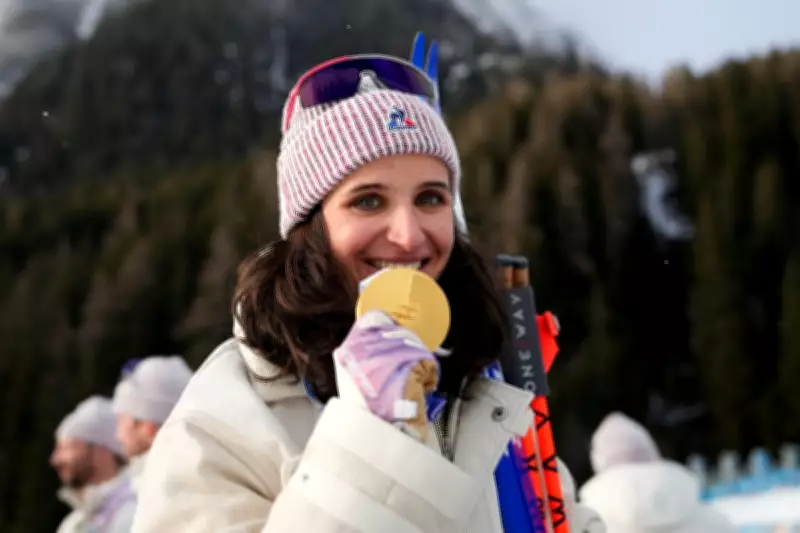
At the centre of the controversy stands Julia Simon, one of France's most prominent medal hopes and already a double gold medallist at these Games. Simon delivered a heroic final leg in the mixed relay before dominating the women's 15km individual event on Wednesday, finishing an impressive 53 seconds ahead of her nearest rival, teammate Lou Jeanmonnot.
Simon's presence at the Olympics is particularly contentious given her recent legal troubles. The 29-year-old athlete served a one-month ban with an additional five months suspended after being convicted of credit card fraud in October. She had stolen credit cards from a team physiotherapist and her own teammate, Justine Braisaz-Bouchet, in 2023.
After initially denying the allegations and claiming identity theft, Simon eventually admitted her guilt in court, receiving a three-month suspended prison sentence along with suspension by the French Ski Federation. Prior to these Games, Simon was a Beijing 2022 silver medalist in the relay and had accumulated 13 world championship medals, establishing herself as one of France's most accomplished athletes under championship pressure.
Many observers found Simon's punishment disappointingly lenient, consisting essentially of a slap on the wrist that allowed her to miss just one round of the World Cup circuit. This timing enabled her to return to peak condition precisely when the French federation anticipated a gold rush at the Winter Olympics.
Further Team Scandals Emerge
Braisaz-Bouchet found herself unwillingly at the centre of another significant scandal involving her teammates. The 29-year-old athlete caught Jeanne Richard red-handed tampering with teammate Oceane Michelon's weapon before a World Cup race in Pokljuka, Slovenia last March. This action represented a cardinal sin in the sport and constituted a gross attempt to steal points at Michelon's expense, as both athletes were competing for the under-23 title and seeking to secure their positions within the fiercely competitive team.
Although Michelon ultimately won the title, the scandal appears to have had lingering effects on both athletes. Richard received a ban from attending the French team's first three training camps during the summer off-season as resentment festered within the squad. Neither athlete has regained their previous form this season, with Richard being demoted to the second tier of elite racing, the IBU Cup, though this demotion resulted from performance issues rather than disciplinary action.
The matter was handled internally, according to statements from both Richard and Michelon. However, this approach has been criticised as prioritising sporting results over ethical integrity, with Richard receiving minimal punishment despite her serious transgression. The situation has created profound unfairness for Michelon, who must continue competing alongside someone she can no longer fully trust for understandable reasons.

Performance Consequences and Team Dynamics
Braisaz-Bouchet, typically one of the fastest skiers on the tour, appears to have struggled significantly amid this ongoing drama, delivering erratic performances on the shooting range and achieving middling results. She was notably excluded from the mixed relay team, while Simon led the squad to victory. On Wednesday, Braisaz-Bouchet finished 75th in the individual event after missing eight of twenty shots, potentially jeopardising her starting position in Saturday's sprint race.
Following her victory, Simon gestured for silence as she crossed the finish line, stating: "Now, I'd like to be left alone, honestly, because I read some things last night that weren't pleasant. I proved I belong here today, and I have even proven myself before. I don't have anything left to prove to anyone, and now I'd like to be left alone to do my biathlon. The past is behind us within the team."
This assertion of resolution raises questions about whether the team has genuinely moved beyond its controversies, particularly given the ongoing performance struggles of affected athletes and the palpable tension within the squad.
Ethical Questions in Pursuit of Success
The French women's team presents a paradox of sporting excellence amidst internal discord. Despite dominating the World Cup circuit, particularly through current overall standings leader Lou Jeanmonnot, the atmosphere remains strained. In a sport that balances individual competition with team collaboration, where athletes train together and compete for relay results collectively, this bad blood creates uncomfortable dynamics in shared hotel rooms and during team gatherings.
Simon has already secured two gold medals from two races and remains a favourite in the remaining sprint, pursuit, mass start, and women's relay events. Her current form suggests she could potentially win medals in all six events she contests.
However, her presence at the Games, following what many consider inadequate punishment, raises fundamental questions about what behaviours sports organisations should tolerate in pursuit of success. To what extent can sporting achievement justify overlooking ethical breaches? Are Simon's Olympic opportunities more valuable than Braisaz-Bouchet's peace of mind? Does Richard's talent outweigh the injustice experienced by Michelon?
These questions linger over the French team's accomplishments, suggesting that even multiple gold medals may prove insufficient to restore balance and integrity to a squad divided by scandal. The Winter Olympics should celebrate athletic excellence, but for France's women's biathlon team, victory comes with complicated baggage that extends far beyond the finish line.