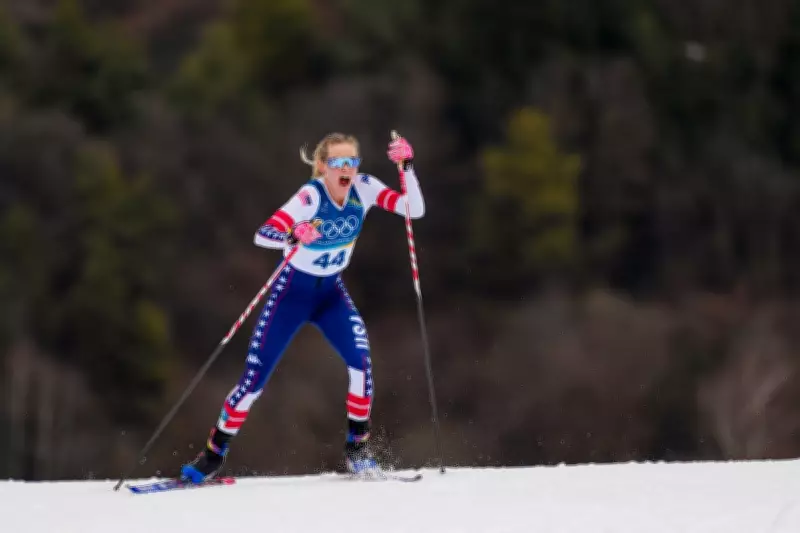
Female Cross-Country Skiers Poised for Historic Olympic 50km Debut
This Sunday will witness a landmark moment in Winter Olympic history as female cross-country skiers compete in the 50km classic event for the very first time. The race, scheduled at the Tesero Cross-Country Skiing Stadium in Val di Fiemme, Italy, during the Milano Cortina Games, represents a significant stride towards gender parity in the sport. However, this historic occasion is generating a spectrum of emotions among the athletes set to tackle the gruelling distance.
A Gruelling Finale Amidst Athlete Fatigue
The 50km classic race serves as the concluding cross-country event of the 2026 Winter Olympics, presenting a formidable challenge to competitors who are already fatigued from five previous contests. Furthermore, athletes face an immediate return to the demanding World Cup circuit shortly after the Games conclude. The hilly course in Val di Fiemme is anticipated to take over two hours to complete, testing both physical endurance and mental fortitude to the extreme.
Swedish skier Jonna Sundling, a gold medallist in the team sprint, has openly expressed a preference for the traditional 30km distance. "If I would choose I would prefer 30k, but if it's 50k I can do 50k," she stated. Sundling added, "In some way I would prefer 30k, like for the audience also," highlighting concerns about spectator engagement over such an extended race duration.

Enthusiasm for the Challenge and Strategic Depth
In contrast, other competitors are embracing the new challenge with enthusiasm. Norway's Astrid Oeyre Slind praised the strategic complexity introduced by the longer distance. "I think a 50k is a good distance. It's quite different than a 30k. When a race is more than two hours, you have to be more aware of energy and tactical stuff and everything. It's quite a different race, so I think it's a good thing we have a 50k," she explained, underscoring the unique demands of the event.
A Crucial Step Towards Olympic Equality
The introduction of the women's 50km race is widely viewed as a pivotal advancement for Olympic equality. This development follows recent controversies, including the absence of a women's Nordic combined event, which sparked significant debate over female participation in winter sports. The move addresses long-standing disparities in race distances between male and female cross-country skiers at the Olympic level.
American skier Jessie Diggins voiced strong support for the change, emphasising the importance of equal opportunity. "I am really excited about having equal distance," Diggins said. "When I got to the World Cup and was like, 'Wait a minute, the men get to do 50 and the women are capped at 30. Why?' And I didn't understand why. Why do we not get to do these big, epic races that are pretty iconic and pretty legendary in our sport?'"
Cross-country skiing made its Olympic debut in 1924 as a men-only discipline, with women first participating in 1952. Diggins concluded, "Whether or not you're an athlete who wants to race the 50k, I think you should have the opportunity to race the 50k," reinforcing the principle of choice and equality in athletic competition.
As the historic race approaches, the mixed reactions from athletes highlight the broader conversations about endurance, spectator appeal, and the ongoing journey towards full gender equity in Olympic sports. The event promises to be a defining moment, not only for the competitors but for the future of women's cross-country skiing on the global stage.