Spain Secure Second World Cup Star with Cautious Approach
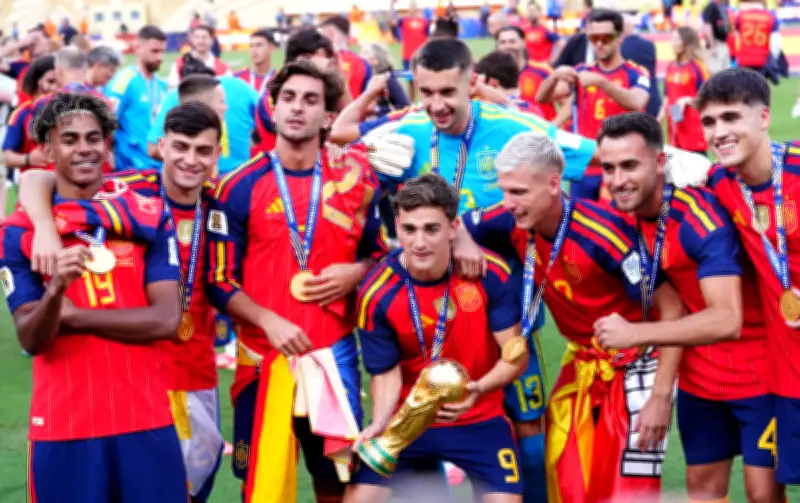
Spain's second World Cup win was eerily similar to their first in South Africa 16 years ago. A campaign that began with a goalless draw against Cape Verde ended with a second star on the badge, as Spain summoned the spirit of 2010 in their approach to the final at MetLife Stadium in New Jersey.
Final Mirror of 2010: Patience Rewarded
Spain won the 2010 World Cup final 1-0 by scoring in the second half of extra time to beat a ten-man Netherlands side. Against 39-year-old Lionel Messi and Argentina on Sunday, things were not so different. Enzo Fernandez was sent off for two bookable offences, and Spain's role as protagonists rather than disrupters was rewarded when substitute Ferran Torres fired in from Nico Williams's knocked-down header for the only goal of a fraught and cagey final.
It was Andres Iniesta who had ceremoniously carried the trophy onto the pitch ahead of kick-off, a portent of Argentina clinging on throughout against a Spain team whose attacking instincts and commitment to wearing down the ever-tiring defending champions never looked likely to end in vain.
Messi Nullified as Rodri Shines
Rodri winning the golden ball should not whitewash Messi's legacy across these five weeks. Right from the moment he rocked up on Argentina's opening night and hit a hat-trick against Algeria, it could be argued that this had been Messi's best World Cup, more impressive even than 2022 when he finally won the ultimate prize. However, Messi ended the evening inconsolable, tears spilling, a runners-up medal round his neck his assaulting reality.
The Messi versus Lamine Yamal sell did not come to fruition, this a contest between sustained state of probing versus constant state of containment and devoid of individual stardom. It was the turgid extreme of the fraught final many had anticipated.
Enzo Fernandez's Red Card Decisive
Spain thought they had scored even before Torres did. Williams, another lively substitute, converted only for a fantom foul by Mikel Merino on Nicolas Otamendi to see it ruled out. Match statistics had flashed up on the big screen in the first half of extra time, just before Spain forced their winner. Spain shots: 16. Argentina shots: zero. They were getting close.
There was no turning point in a game that did not have patterns and periods but just one permanent complexion. That said, Spain's dominance was handed a favour for free when Enzo Fernandez picked up two bookings in 11 minutes — dissent, then a crude foul — and was shown his marching orders. The rogue challenge on Pau Cubarsi was a moment of incomprehensible stupidity from a player who Spain's biggest club had publicly distanced themselves from only a few weeks earlier. His reaction to the dismissal was to try to have Marc Cucurella sent off for covering his mouth while speaking.
Fernandez's red card was in keeping with Argentina's conveyor-belt delivery service of fouls throughout the game. Not since the 2022 final had a team committed as many fouls in a World Cup game. The guilty party that day: them again.
Spain's Dominance and Historic Feat
Until he went off for Martin Zubimendi, Rodri had been so efficient and effective in possession, turning through his Premier League rival Alexis Mac Allister with such simplicity yet mastery. Shirt tucked in as usual, he was doing things in his own exemplary, old-school way. How Argentina could have done with his metronomic capabilities.
Argentina were intent on making physicality their edge, a rather cowardly admission that they did not feel equipped to beat Luis de la Fuente's side on the football front. Their clearest chances came late on when chasing a game that had never truly felt like theirs to grasp. Indeed, the best performance down Argentina's right wing was probably that of Madonna, Ronaldinho and Ronaldo Nazario driving a pretend motor car during the much-dreaded half-time show, which caused a chasm between the first and second half of more than 27 minutes long. Esteemed culture critic Wayne Rooney exclaimed: "I thought it was crap" to BBC Sport.
And so was the final itself, almost. That is, until Torres's moment of clarity cut through the MetLife bluster and cut dead the Argentine tactics of delay and disruption. Spain are the first team ever to win the World Cup by conceding just one goal along the way, all the more impressive given they did so across eight games, the first-ever winners of this new extended format. Yet again, never in danger, never in doubt. So having not jumped to conclusions, time to conclude. They deserve to be world champions.