F1 Rules Guru Responds to Bearman Crash and Regulation Backlash
Formula One's governing body, the FIA, is initiating talks to address controversial aspects of the sport's new 2026 regulations, following a turbulent start to the season highlighted by safety concerns. Nikolas Tombazis, the FIA's single-seater director, has emphasized that while changes are necessary, a complete overhaul is not required, describing the situation as needing "a couple of apples per day" rather than "open-heart surgery."
High-Speed Incident Sparks Urgent Review
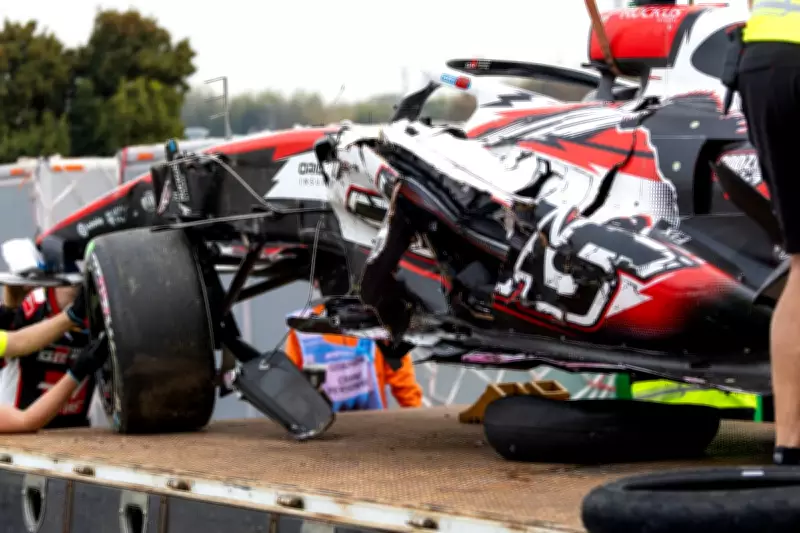
The urgency for regulatory adjustments was underscored by Oliver Bearman's dramatic crash at the Japanese Grand Prix, where he collided at 190mph to avoid the slower car of Franco Colapinto. Tombazis acknowledged that such high-speed accidents are always shocking, noting that closing speeds had been identified as a risk prior to the incident. He stressed that safety remains the top priority, but cautioned against hasty changes that could exacerbate issues.
"Every accident at high speed is a shock," Tombazis stated. "We need time to analyse parameters properly. When we've introduced changes in a hurried way, the risk is making things worse." The crash has intensified discussions among drivers, teams, and officials about the drivability and safety of the new formula, which increases reliance on electrical energy management.

Driver Dissatisfaction and Regulatory Evolution
The 2026 regulations have sparked mixed reactions from drivers. While leaders like George Russell of Mercedes and Lewis Hamilton of Ferrari have expressed general acceptance, others have been highly critical. Lando Norris has voiced distaste for the energy management system, and world champion Max Verstappen has even suggested he might leave the sport due to dissatisfaction.
Tombazis accepted that criticism comes with his role, comparing it to that of a headmaster or referee. "I don't know if there's ever much of a case when you get a pat on the back all the time," he remarked. "We are big enough to know that." He emphasized that the FIA is listening to driver feedback, particularly regarding issues like closing speeds and energy deployment, which affect both safety and the racing experience.
Structured Talks Aim for Swift Resolution
A series of meetings is underway this month to propose and finalize changes. Preliminary discussions involving the FIA, teams, power-unit manufacturers, and commercial rights holder FOM began on a recent Thursday, with another scheduled for the following week. These will culminate in a high-level meeting on April 20, attended by team principals, CEOs, and F1 CEO Stefano Domenicali, where regulatory adjustments will be decided.
The goal is to implement changes in time for the Miami Grand Prix on May 3, subject to ratification by the world motorsport council. Tombazis explained that modifications will focus on energy management rules, which can be adjusted through software and settings without hardware changes. "These changes are fundamentally possible to introduce very soon and go to the core of addressing closing speeds or driver satisfaction," he said.
Balancing Innovation with Safety
Tombazis, a seasoned engineer with decades of F1 experience, highlighted the complexity of the new hybrid engines and the steep learning curve for teams. "You can learn theoretically how to play the violin, but until you play it, you don't necessarily understand what it involves," he observed, noting that up to 200 engineers per team are working to optimize performance under the new rules.
Despite the challenges, Tombazis expressed optimism about reaching a consensus. He acknowledged that further developments might be phased, allowing manufacturers time for tweaks. "We may decide to have a phase one and a phase two, giving phase two more time for some tweaks," he suggested. The FIA remains committed to evolving the regulations responsibly, ensuring they enhance both the spectacle and safety of Formula One.
As talks progress, the focus is on marrying safety improvements with necessary adjustments, aiming for broad support from teams and drivers. Tombazis concluded, "Everyone is extremely passionate about this sport, and when things are not perfect, they will be quite passionate. We're not expecting people to sugarcoat their comments, but I'm hoping for broad consensus."