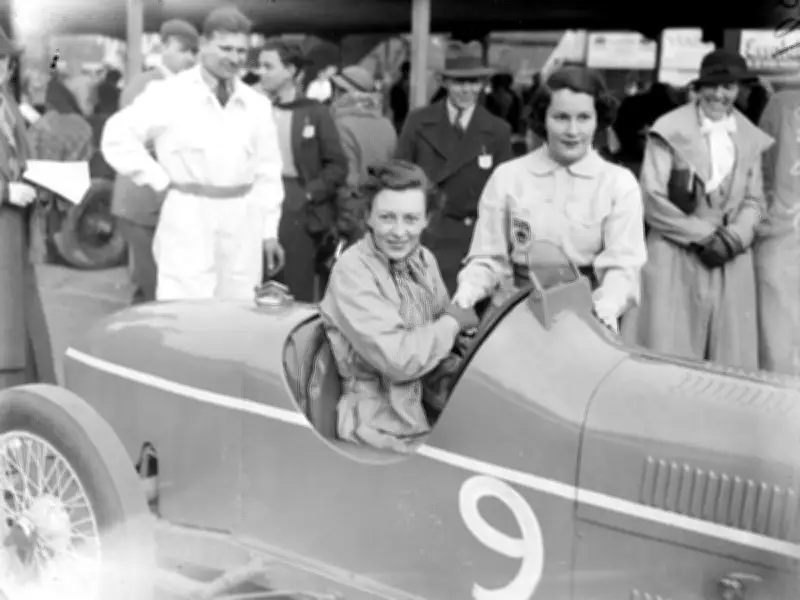
The Brooklands Belles, a group of women who defied convention to race cars at Brooklands in the 1930s, are the subject of a new book aiming to restore their place in history. Author Toby Hartwell's book, 'Brooklands Belles: The Women Racers Who Took on the Men', published by The History Press on September 10, tells the story of these pioneering women who challenged male dominance in motor racing.
Defying the Rules and the Track
Initially, racing at Brooklands was open only to male drivers. Women competed in just two races before being banned by the Brooklands Automobile Racing Club, on the basis that there were no "lady jockeys" and therefore no place for women racers. The ban was lifted in the late 1920s, allowing women to race against each other first, and then, by 1932, on equal terms against men. The Belles, as they became known, included married women, former ambulance drivers from the First World War, and many friends—all competitive speed queens determined to push boundaries.
Toby Hartwell, 68, from Dorset, comes from a family of motor racing enthusiasts and was inspired by a photograph of a woman in a racing suit leaping out of a car in kitten heels, dated 1931. "I did some research and was just smitten by the stories and pictures I found of this group of extraordinary women," he said. "I had to bring them back to life."
Remarkable Women, Remarkable Stories
Among his favourite Belles is Kay Petre, who was just four feet ten inches tall and had wooden blocks fitted to her car's pedals to reach them. She achieved three lap records and was awarded the '130mph star' for completing a lap at that speed. A serious accident in 1937 ended her racing career, but she later became a journalist and food writer, dying in 1994 at age 91.
Another Belle, Fay Taylor, known as 'Flying Fay', started as a motorcyclist before switching to cars. Hartwell describes her as a "contrarian" who once refused to stop in a race, carrying on for several more laps. However, she was also a follower of fascist leader Sir Oswald Mosley and an admirer of Hitler, leading to her internment during the war. She continued racing into the 1950s and died in 1983.
Beatrice Schilling, described by Hartwell as "brusque, no nonsense and usually with a fag in her mouth," was a brilliant designer. During WWII, she devised a device that solved a problem with fighter aircraft engines choking and stalling, going round airfields to fit them and "undoubtedly saved many, many lives." She raced motorbikes and cars, was made an OBE, and died in 1990.
A Legacy That Inspires
Racing at Brooklands stopped in 1939 at the outbreak of the Second World War, and the site was turned over to military aircraft production. The track never saw racing again. Today, it forms part of an aviation and motoring museum, with sections of the track, including a banked area with a 60-degree slope, still visible.
Hartwell, formerly managing director of publisher The Folio Society, says the Belles' story faded after the war but deserves greater acclaim. "These were stoic women, who lived lives close to the edge; a small band of impressive women who achieved a lot in a short time and they deserve greater acclaim," he said. "The Belles have left a great legacy. I want to pass on their story, because it's one that shows barriers can be broken down and that anything is possible."