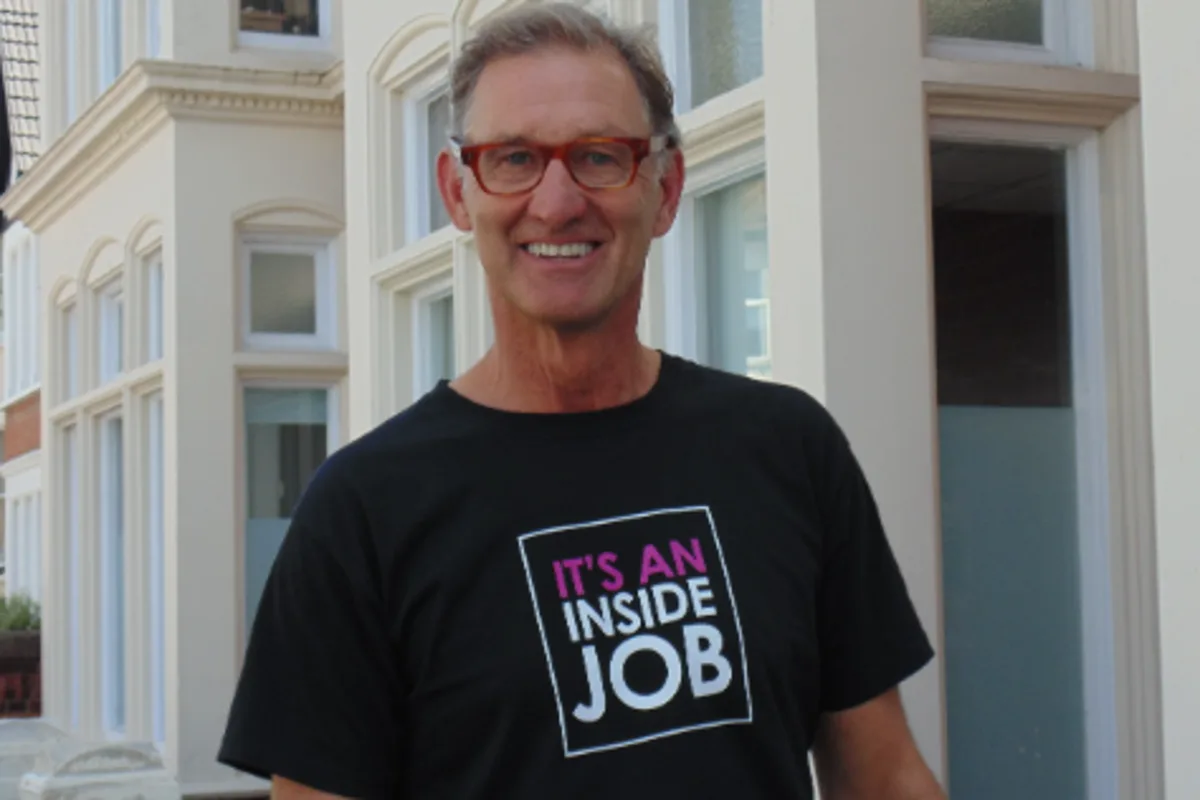
Tony Adams, the former Arsenal and England captain, is set to run the 2026 London Marathon on Sunday, marking 30 years of sobriety and his 60th year. In an exclusive interview, Adams reflects on his journey from hitting rock bottom after Euro 96 to becoming a beacon of hope for others struggling with addiction.
A Journey from Despair to Hope
Adams recalls the summer of 1996, when he reached his lowest point after England's penalty shootout defeat to Germany at the European Championships. He embarked on a 44-day binge, mixing brandy and Guinness to avoid vomiting. By August, at age 29, his alcohol addiction had spiraled out of control. “I felt so lonely and so desperate,” he says. “I was blacking out and it got into my psyche. I had this mask on, so no one saw it, but underneath I was dying. Everything had stopped working: the football, the drink. I felt scared, in terror, and I just didn’t want to be here. I had a moment where I broke down and cried – and that was a moment of clarity.”
Now, 30 years sober, Adams describes the transformation: “I was stuck at that point of no return. We called it the ‘jumping-off point’ in Alcoholics Anonymous. I couldn’t work, my family had gone, and everything had collapsed. So fast forward 30 years, to now running around smiling at people on Sunday… that’s very special.”
A New Challenge at 60
With 66 England caps, 672 Arsenal appearances, and 13 trophies, Adams has achieved much in football. Now, four years after his stint on Strictly Come Dancing, he takes on the London Marathon, battling a metal knee. He runs for The Forward Trust, a charity he chairs that helps people break cycles of addiction, crime, and unemployment. “Even in a marathon with 50,000 people running, you never know who’s struggling,” he says. “Addiction is insidious; it’s buried inside. You can’t tell what someone is going through just by looking at them.”
The charity has helped 1,000 people into employment last year and 35,000 in total. “Charities everywhere are struggling and we’re not a very ‘sexy’ charity. Alcohol and drug abuse are not high on the agenda. There’s no real funding for rehabilitation – but we’re trying to provide it.”
Family and Legacy
Adams’s journey reached a poignant moment two years ago when his son Oliver, now 34, admitted his own struggle with alcohol. “When my son came to me and said, ‘I’m done, Dad’, I knew what I had to do,” Adams says. “That’s the difference compared to 30 years ago, when I reached out. Now, I know the solution. I can pass it on and he can pass it on to others.” This drives his work with the Sporting Chance Clinic, which he founded in 2000 to support athletes with addiction and mental health issues.
Approaching the Marathon
Adams is calm ahead of the event, having taken a “less is more” approach to training, with no run longer than 10 miles. “I’m quite calm, I’m used to big events,” he says. “It’s not like Strictly – mentally, that was really tough. This will be a bit of fun, but you’ve got to be careful not to get carried away with the moment.” He recalls a lesson from his first trophy win in 1987: “I left a big hole behind me and Ian Rush scored. That taught me a valuable lesson.”
Though he insists he’s “not competitive,” Adams can’t resist a gentle jab at John Terry, another former England centre-back who ran the marathon in just over five hours last year. Adams aims for “probably under six hours,” adding: “In my last game, in 2002 against Chelsea, I just did my job. I got through the match, we won 2-0 and lifted another double. I’m approaching the marathon in the same way. I’m not going to run 26 miles in the first mile.”
“I’ve been very lucky and won a lot in my career, but finishing the marathon would be equal to any achievement. This is personal, I’m on my own out there, but there’s a different responsibility to this one.”