
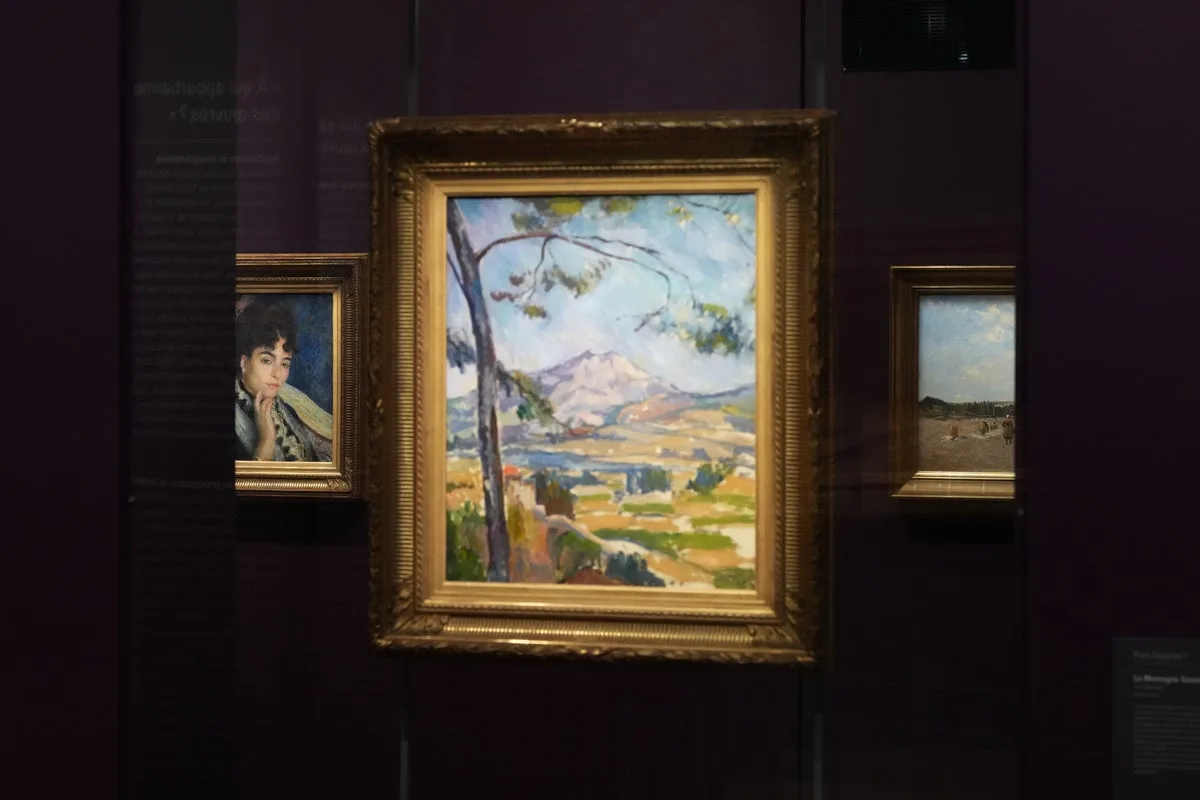
A new gallery at the Musée d'Orsay in Paris is dedicated to displaying artworks looted by the Nazis during World War II, known as 'orphaned masterpieces'. The gallery features paintings whose reverse sides are visible, revealing stamps and labels that trace their journey from private homes into Nazi hands. One centrepiece is a painting by Belgian artist Alfred Stevens, acquired in 1942 for Adolf Hitler's planned museum in Linz, Austria.
The Stevens painting is among 2,200 such works in France, designated MNR (Musées Nationaux Récupération), retrieved from Germany and Austria after the war and held in trust by French national museums. The Musée d'Orsay holds 225 of these pieces. Last month, the museum launched a research unit of six Franco-German researchers to trace the rightful heirs of these artworks.
France's reckoning with Nazi-era art plunder has been slow. In July 1995, President Jacques Chirac acknowledged the French state's responsibility for the first time. A national inquiry followed in 1997. Of approximately 100,000 cultural objects looted from France, around 60,000 were recovered, with 45,000 returned to owners. The 2,200 MNR works are those with no identified owner; only four were returned between 1954 and 1993. Since 1994, the Orsay has returned 15 pieces.
The gallery also displays works by Degas, Renoir, and Cézanne, each with a history of looting or forced sale. For example, a Degas copy of a Berlin ballroom scene was bought by Jewish collector Fernand Ochsé in 1919; he was later killed in Auschwitz. A Renoir portrait was sold to a Cologne museum in 1941 with no record of the seller. The new gallery aims to educate visitors about this dark chapter in art history.




