Iowa's Girls' Basketball Paradox: Statewide Decline Amid National Spotlight
In the very home state of basketball phenom Caitlin Clark, a concerning trend is unfolding. Participation in girls' high school basketball across Iowa has experienced a dramatic and sustained decline, even as the women's game enjoys unprecedented popularity at collegiate and professional levels. This paradox highlights a complex challenge facing grassroots sports, with statewide participation figures dropping by a staggering 38% since the year 2000.
The Stark Numbers Behind the Slide
According to data from the National Federation of State High School Associations, the national picture mirrors Iowa's struggle. Since 2000, girls' basketball participation across the United States has fallen from 451,600 to 356,240 in 2025, representing a 21% decrease. Conversely, volleyball has surged, overtaking basketball as the most popular girls' team sport a decade ago and growing by 29% in the same period.
Iowa's decline is particularly pronounced, with participation plummeting from 9,401 to just 5,856. The state finds itself among those with the most significant drops, alongside Kansas, Louisiana, North Dakota, and Indiana. This is a remarkable shift for a state with a rich heritage in the women's game, having hosted the nation's first girls' state tournament back in 1920.

Newell and Fonda: Defying the Trend in Northwest Iowa
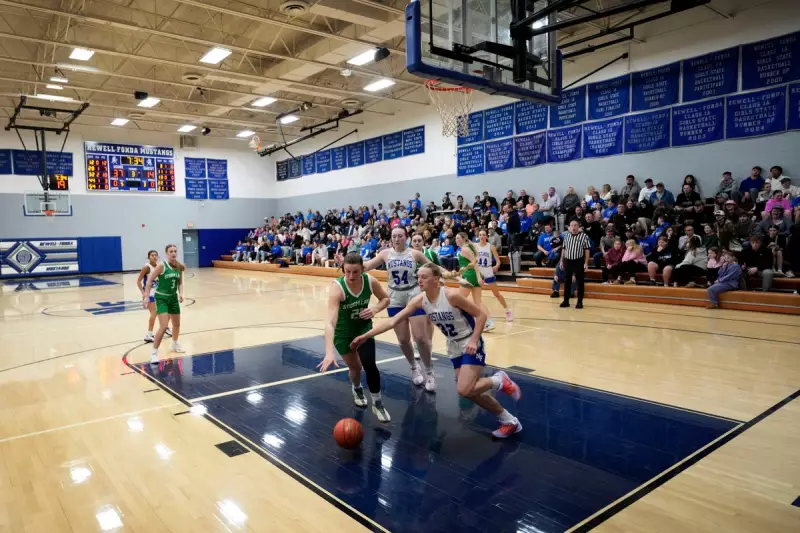
Amid this statewide downturn, the neighbouring northwest Iowa towns of Newell and Fonda stand as remarkable exceptions. Despite the quiet streets and visible signs of rural decline, the heart of these communities beats powerfully within the Newell-Fonda High School gymnasium. Here, the girls' basketball team, the Mustangs, commands unwavering support, filling the stands with residents from Newell's 850 and Fonda's 600 populations, plus surrounding farm families.
The program's success is legendary. With 21 of the school's 71 high school girls playing on varsity or junior varsity teams, the Mustangs are a powerhouse. Under coach Dick Jungers, the team boasts a phenomenal 527-83 record over 24 years, with four state championships and 16 state tournament appearances. They have played in the state final in seven of the last eight seasons.
"It's an intense desire to win, you've got to admit," said 89-year-old Jim Gailey, a fixture at games for six decades. For senior centre Jocee Walsh, basketball is simply part of the local identity: "If you know Newell-Fonda, you know we play basketball."
Root Causes: Competing Sports and Shifting Interests
Coaches and administrators point to several interconnected factors driving the broader decline. The rise of club volleyball, with its season directly conflicting with basketball, has siphoned off many athletes. Furthermore, the recent sanctioning of girls' wrestling in Iowa for the 2022-23 season has attracted over 2,000 participants, creating another competitive outlet.
There is also a growing sense that basketball presents unique developmental challenges. Coaches note that the skills gap between serious, club-trained players and casual participants has never been wider, often leading to discouragement and dropout by middle school. The sport's physical demands—constant running and contact—can also deter some.
Even Caitlin Clark's alma mater, Dowling Catholic in West Des Moines, has not been immune. Coach Kristin Meyer has seen turnout drop from about 40 girls a decade ago to just 28 this season. Chad Jilek, coach of the two-time defending 5A champion Johnston team, reported having only 20 players last year, the lowest in his 14-year tenure.
A Task Force Seeks Solutions for the Future
In response to the alarming trend, the Iowa Girls High School Athletic Union formed a task force last year, including coaches Meyer, Jilek, and Jungers. Their mission is to diagnose the causes of the statewide decline and propose actionable solutions to revitalise the sport.
Key discussions focus on youth development. Coach Meyer advocates for structural changes in grade-school programmes, suggesting three-on-three games until fifth grade to increase touches and maintain interest. She also emphasises the need for more young women with basketball backgrounds to coach at the grassroots level, arguing they can be more relatable mentors than traditional "dad coaches."

In Newell-Fonda, this community-based model is already in action. A new second-grade team saw 17 of 21 eligible girls sign up. As alumna and current second-grade coach Andrea Vanderhoff noted, "Everyone just wants to be a part of it." This generational continuity is the program's bedrock, with 87-year-old Marie Breon, a former player and longtime team bus driver, having seen daughters, granddaughters, and now a great-granddaughter take the court.
More Than a Game: Basketball as Community Glue
In Newell and Fonda, basketball transcends sport. Games are major community events, often preceded by fund-raising suppers in the school cafeteria—pulled pork sandwiches were a recent feature, nodding to the county's significant pork industry. The gym regularly reaches standing-room-only capacity, with those unable to find a seat peering through doorways from the hallway. Livestreams of home games can attract up to 2,500 viewers.
"It's really important here, a lot of pride," Coach Jungers reflected. "It gives the community something to look forward to. It makes a big difference, and when kids feel successful, it helps everything." For these towns, the success of the Mustangs is a point of shared identity and resilience, proving that even as trends shift statewide, deep-rooted passion can keep a tradition thriving against the odds.