Levels of greatness need not always be defined by numbers. Nick Faldo’s six majors to Rory McIlroy’s five prior to events at Augusta National on Sunday gave the Englishman the edge in the eyes of many in respect of Europe’s finest ever golfer. That McIlroy had already won the career grand slam of majors, therefore passing every test his sport has to offer, meant he was more worthy of the crown. Those who want to add Harry Vardon and a bygone age to the conversation should check the Jersey man’s scoring for his septet of major wins.
It is the nature of McIlroy’s achievement that sets him apart. Retaining the Masters for major No 6 places McIlroy in lofty company – Faldo, Phil Mickelson and Lee Trevino. He is suddenly one shy of Arnold Palmer. Gary Player and the non-US record of nine is a legitimate goal. Yet watching McIlroy right until the final hole at Augusta National served as a reminder that it is the addictive, thrilling style of his output that is worthy of the highest praise. The Northern Irishman was half a hole from Masters glory, shunting galleries back 50 yards so he could visualise a recovery shot from a forest. Love or loathe McIlroy, you simply cannot take eyes off him.
Faldo raced to meet McIlroy in the aftermath of his one-shot triumph, handing the 36-year-old a note about joining the back-to-back Masters-winning club. Faldo had spent much of the week making gauche references to 1996, when he overhauled Greg Norman’s six-shot lead. Faldo’s achievement 30 years ago was superb, his dismantling of Norman a Masters epic, yet it never led to adulation. Faldo was the grindsman who got the job done, whose awkwardness in public was emphasised by his remarkable 1992 Open-winning speech at Muirfield. Faldo was rightly respected but never loved, certainly outside golf.
McIlroy’s journey, from humble roots on the outskirts of Belfast, resonates widely. His struggle between 2014 and 2025 to win a fifth major and the Masters in particular struck chords with people who have no interest in week-to-week golf. He is the sport’s most relatable superstar. “If you put the hours in and work on the right things, eventually it will come good for you,” McIlroy said. This not only looks and sounds so blissfully simple but belies McIlroy’s concerted, obvious frustrations when Augusta could not be conquered.
There is electricity wherever he walks. This Masters summed that up. From establishing a six-shot lead, to handing that advantage back to the field, to three-putting the 4th hole on Sunday from 9ft, to arrowing a stupendous nine-iron right at the flag of the iconic 12th to the brush with danger at the last. Watching McIlroy is exciting and exhausting. Rafa Nadal, who has no reason to offer deference easily, seemed borderline obsessed with him at Augusta, the Spaniard scurrying into position for each and every shot.
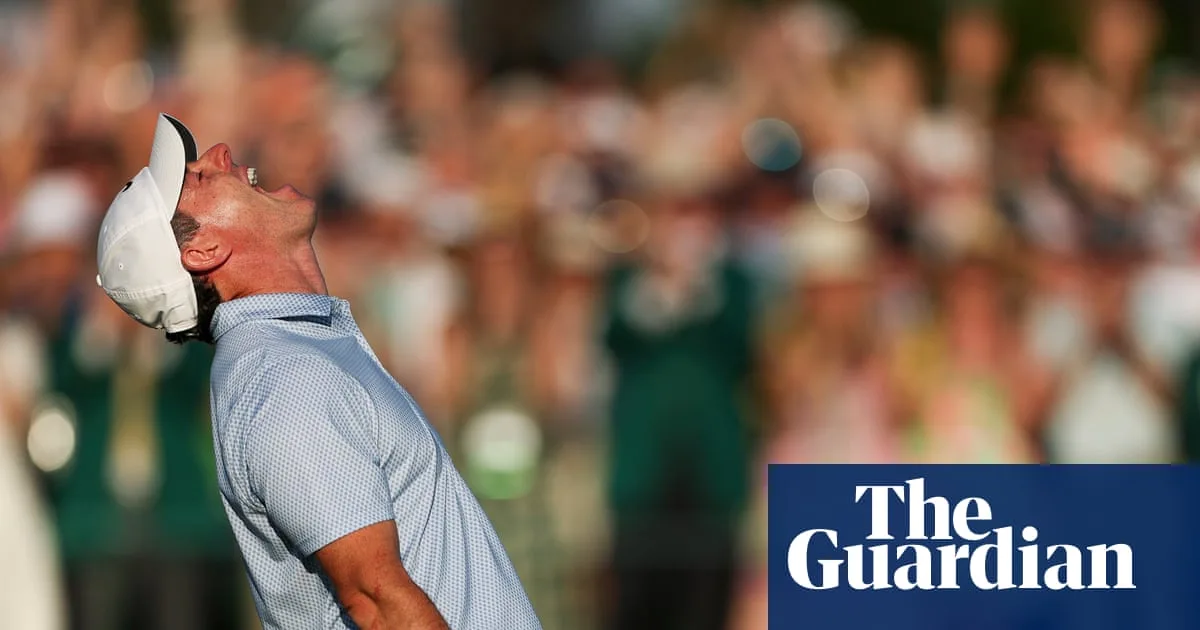
McIlroy won the Green Jacket for a second time while tied 52nd for driving accuracy out of 54 players who made the cut. He hit only 31 of 56 fairways. This conjures comparisons with Seve Ballesteros, a hero of European golf, who was famed for his escapism. McIlroy has that, plus imagination, creativity and a resilience when the going gets tough that is often underappreciated. When not at his best, having already won the Masters and watching Justin Rose surge two shots ahead of him on Sunday’s back nine it would have been easy for McIlroy to wilt. Instead, Rose faded under pressure as McIlroy jabbed back. Confirmation of victory brought unbridled joy for McIlroy as opposed to the emotional outpouring of 2025.