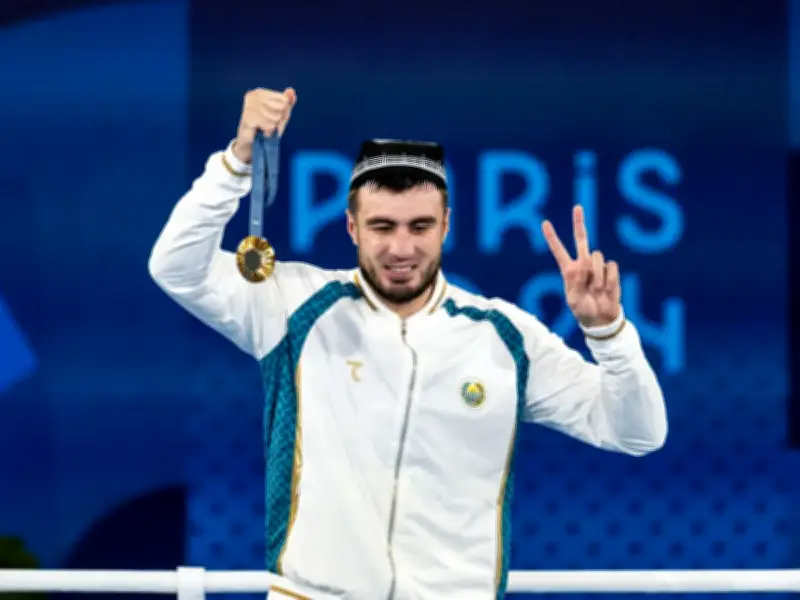
Double Olympic champion Bakhodir Jalalov has a chance to make a statement to the heavyweight division when he appears on the O2 bill in London next Saturday, despite not being the headline act.
The Uzbek southpaw, who won super-heavyweight gold in Tokyo and Paris, faces Solomon Dacres in his second fight this year since joining Frank Warren's Queensberry stable. At 32, eight years after his professional debut in Connecticut, doubts remain about his ability to make the transition from amateur to pro successfully.
A Stalled Professional Career
Jalalov's double life, combining amateur and professional commitments, has stalled his development in the pros. Though the policy delivered Olympic gold, it has meant he has not been able to focus fully on his professional career. He is at least giving it a go now, and he knows this is his chance to get people excited.
At 6ft 7ins and 18st, Jalalov brings a 21st century frame to the ring, with back-to-back Olympic golds to his name. But amateur boxing is not pro boxing, and opponents in the pros are at you every minute of every round. Jalalov does not have the skill-set for fighting on the inside, and the change from padded 12oz gloves to the 10oz heavyweight variety makes the game different.
Dacres as the Test
Solomon Dacres is Jalalov's 18th opponent. At 6ft 5ins and 17st, there was some excitement about Dacres in the amateurs. He spent three years in the GB squad but was sparked in the first round defending his British title against David Adeleye two years ago and injured his bicep during a points win in his comeback fight last year.
Jalalov's style is pretty much set at 32. He will always want to keep it long and use his power. The problem is, as he moves up the food chain, opponents will want to defuse him by getting close and working his body. Dacres is unlikely to be that guy, which is why he is in there, but the best Dacres is potentially Jalalov's toughest test to date.
Turning Up the Dial
If Jalalov is to make the most of his Olympic legacy, he has to turn up the dial sharpish. He must learn how to block, then unload three or four combinations at close range. If he can do that, he will at least gain the respect of opponents when the challenge gets serious.