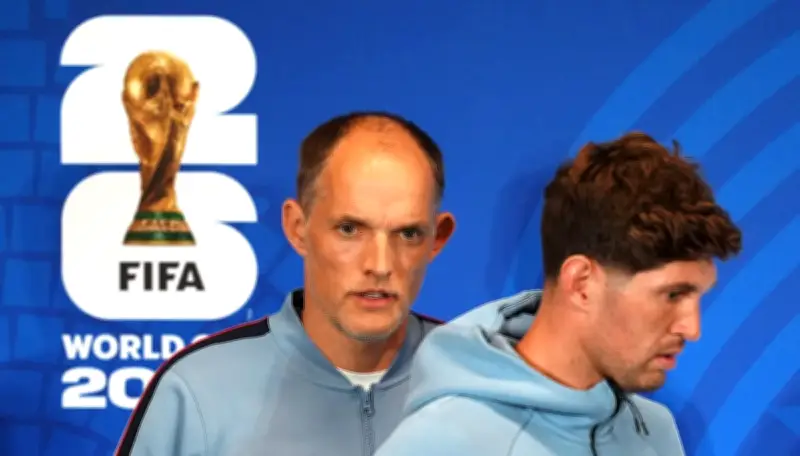
Thomas Tuchel, the England head coach, arrived two hours late for his press conference in Fort Lauderdale due to weather-delayed flights, but once the questioning began about England's World Cup semi-final defeat to Argentina, he was unapologetic and unwilling to engage in what he called "the blame game."
Sat alongside John Stones to preview the third-place play-off against France, Tuchel batted away questions, refusing to accept blame. His insistence that he takes "responsibility" was seen as hollow, as he stuck by his decisions, stating within his answer to the very first question: "If you are asking if I regret my decisions, I say no, I don't."
Tuchel Irked by Trump Reference
The first question also included a reference to US President Donald Trump, who had earlier criticized Tuchel in a surreal press conference, questioning why Tuchel used his golf buddy Harry Kane as a "defensive player." Tuchel was irked by this, responding: "Do you use Donald Trump as your witness for the case, or? I was just asking."
The FA have already stood by Tuchel, having extended his contract ahead of the tournament, making it difficult to meddle with his destiny through to Euro 2028 even after the semi-final defeat.
Tuchel's Defensive Posture
Tuchel wore a half smile as he arrived at Miami Stadium, but it did not last long. He was soon fiddling with the mic, squirming in his seat, showing through both his barked self-defence protestations and body language that he wished to be anywhere else. "I take responsibility," he said performatively. "If it is easier for someone to take responsibility, I do. But I will not engage in this kind of game. If you need to take someone to blame, I take the blame."
Tuchel did not appear to appreciate the indignation about the manner of England's exit, particularly how a worst-ever protection of a one-goal lead in a crucial knockout game occurred under his watch. He was hired to get these moments right, to avoid the mistakes of managers past, and to finally drag England over the line.
Questioning the Blame Game
Standard Sport challenged Tuchel, asking whether it was understandable that the media and England fans want to know which decisions caused the lead to be lost late on in a World Cup semi-final. Tuchel refused to answer, claiming he had "never [been] shy to explain" and did not "understand the question." He absolved himself of blame by summoning more excuses than explanations.
"Out of the four teams, the other three were expecting to be world champions," he insisted. "We were hoping, dreaming, believing. We are not there yet. There is still a gap to close."
Refocusing for France
Tuchel must now refocus the England players for a showdown with France. He said England were not favourites to the same degree as France or the two finalists, Argentina and Spain. Throughout the last few days, Tuchel has demonstrated that he cannot understand the severity of some of the criticism he and his players have faced.
What he will come to appreciate, if he speaks with England fans and the FA to debrief, is that the deja vu element of England's exit, coupled with his lofty reputation and sizeable pay packet, has created scepticism towards him not present beforehand. "It's not so long ago that we were in front of thousands of fans singing Wonderwall," he said, but such feelgood moments in the group stage and early knockout rounds were never how success was going to be judged.
Tuchel was England's win-now head coach and knew this coming in. After a semi-final exit, even if the run to the last four was spirited, there is a sense of a huge missed opportunity. Today's shot at a bronze-medal finish won't change any of that, and Tuchel's hardnosed doubling down of his own decisions won't either.