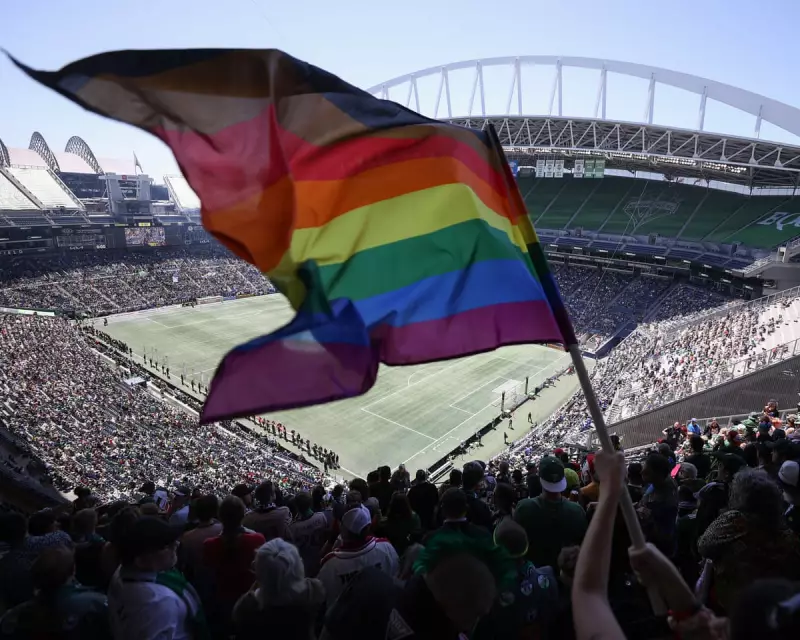
As the 2026 FIFA World Cup approaches, a powerful stand for inclusivity is unfolding in one of its host cities. Seattle's local organising committee has firmly committed to holding a 'Pride Match' on 26 June at Lumen Field, a decision now under international scrutiny due to the teams scheduled to play.
A Clash of Values on the Global Stage
In a significant twist of the tournament draw, the match designated for Seattle's LGBTQ+ pride weekend will feature Egypt and Iran. Both nations have laws that persecute the gay community, with homosexuality punishable by death in Iran. The football associations of these countries have formally protested to FIFA, citing the governing body's statutes on political and social neutrality during competitions.
This appeal comes with notable irony, as it followed closely after FIFA awarded its inaugural peace prize to former US President Donald Trump for overtly political reasons. Despite the pressure, Seattle's organisers have unequivocally rejected the requests to alter their plans. The city will proceed with Pride events, and rainbow flags will be displayed both inside and outside the stadium.
Local Customs Versus FIFA's Past Precedents
FIFA finds itself in a difficult position, having previously banned rainbow captain's armbands during the 2022 World Cup in Qatar, citing respect for local customs. Seattle's organisers are now turning that logic on its head. The entrenched local custom in the Pacific Northwest is one of tolerance and celebration of diversity.
This principled stance highlights a broader tension within modern mega-events. As journalist Leander Schaerlaeckens argues, the World Cup is at its best when it absorbs local character rather than imposing a sterile, uniform template. The true legacy of a tournament lies not in its pomp and commercial spectacle, but in the authentic human experiences and cultural exchanges it fosters.
The Enduring Memory of Football's Greatest Show
Reflecting on past tournaments, Schaerlaeckens recalls the defining moments that resonate long after the final whistle. From the warmth of South African hosts in 2010 and playing with lion cubs outside Cape Town, to the vibrant Argentine fan scrums in Doha's streets in 2022, it is these human interactions and local flavours that endure.
While the 2026 edition, co-hosted by the USA, Canada, and Mexico, risks being the most exclusive and inaccessible World Cup ever, it can still be redeemed. Redemption will come from allowing host cities like Seattle to express their identity, from permitting fans to celebrate freely, and from players overcoming immense physical demands to deliver sporting excellence.
The resolve shown in Seattle is precisely what can save the soul of the tournament. By protecting adjacent cultural events like a Pride celebration, the World Cup can remain a genuine celebration of humanity, even in spite of FIFA's frequent commercial and political manoeuvring. The message from the Pacific Northwest is clear: the hosts must be allowed to stage this global event on their own, inclusive terms.