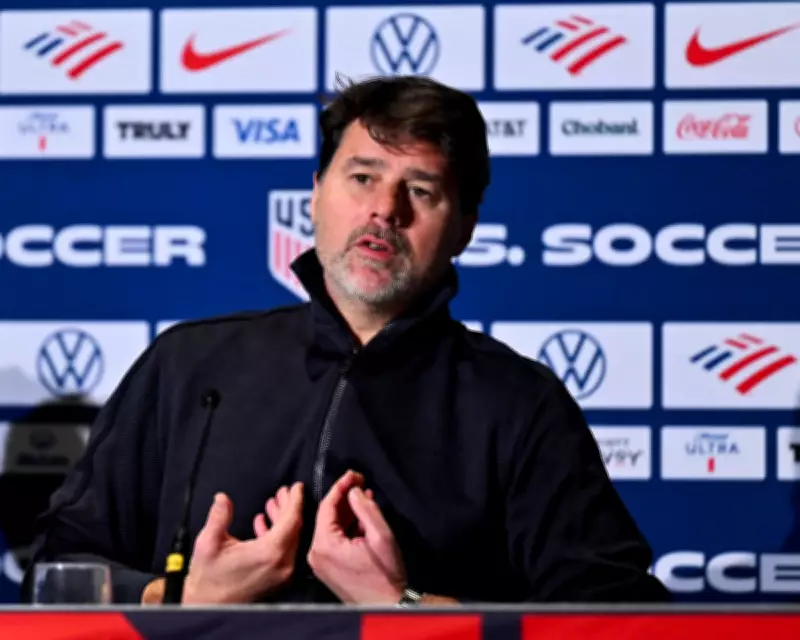
Mauricio Pochettino, the manager of the United States men's national soccer team, has issued a firm directive to his players, advising them to steer clear of making political statements or commenting on matters outside their sporting remit. The Argentine coach's comments came during a virtual press conference, where he specifically addressed recent remarks made by winger Tim Weah regarding the affordability of tickets for the upcoming 2026 World Cup.
Weah's Concerns Over World Cup Accessibility
Tim Weah, the 25-year-old Olympique Marseille forward who has earned 47 caps for the USMNT, recently spoke to French newspaper Le Dauphiné Libéré about various topics, including the forthcoming tournament co-hosted by the United States, Mexico, and Canada. Weah expressed disappointment at the high ticket prices, stating, "I am just a bit disappointed by the ticket prices. Lots of real fans will miss matches." He emphasised that football should remain accessible to everyone, adding, "It is too expensive. Football should still be enjoyed by everyone."
Pochettino's Response and FIFA Support
Pochettino, however, did not appreciate Weah wading into the affordability discourse, which has become a prominent topic surrounding the World Cup. The 53-year-old manager asserted, "I think players need to talk on the pitch, playing football, not outside. It is not his duty to evaluate the price of the ticket ... We are not politicians. We are sport people that only we can talk about our job."

Furthermore, Pochettino lent his full-throated support to FIFA, the governing body of world football, which has faced criticism for its political stances, including openly backing Donald Trump. He stated, "I think if FIFA does something or takes some decision, they know why, and it is their responsibility to explain why. But it's not up to us to provide our opinion." Pochettino praised FIFA for "doing an amazing job around the world uniting people" and urged the media to direct such questions to the organisation instead.
Contrasting Perspectives and Historical Context
Pochettino's stance has been viewed as antediluvian and out of touch by some observers, particularly because Weah's comments were squarely related to soccer—specifically, the accessibility of the sport for fans. This contrasts with recent trends in the USMNT, which has become more outspoken in recent years, albeit not to the extent of the Megan Rapinoe-era US women's team. Under previous manager Gregg Berhalter, players were encouraged to engage in social campaigns like "Be The Change," with the federation's support.
The manager's comments also stand in sharp relief to actions by other high-profile football figures, such as Manchester City's Pep Guardiola, who has repeatedly spoken out on international issues like the conflict in Gaza. Pochettino's position appears to ignore the practical barriers faced by fans, such as exorbitant parking costs at World Cup venues, which can reach up to $300 per match in the Los Angeles area.
Weah's Political Nuance and Irony
Ironically, Weah himself has previously expressed a desire to avoid politics, despite his unique background as a member of Liberia's first family. After an unexpected encounter with Donald Trump in the Oval Office last summer, where the former president launched into political topics, Weah remarked, "It was weird. I was caught by surprise, honestly, when he started talking politics, with Iran and everything. I was kind of like, I just want to play football."
This shared belief in remaining apolitical between player and manager highlights a misrepresentation in Pochettino's critique. Weah was not engaging in partisan politics but rather commenting on a soccer-specific issue that directly impacts the fan experience and the sport's inclusivity. By rebuking Weah, Pochettino inadvertently bolstered World Cup organisers who are increasingly blending soccer with political elements, thus missing the broader mood of the moment.

Pochettino, who has generally been affable and savvy since taking over the USMNT after brief stints at Paris Saint-Germain and Chelsea, faced criticism for this particular episode. His comments have sparked debate over the role of athletes in societal discussions and whether they should confine themselves strictly to on-field matters. As the World Cup approaches, this incident underscores the ongoing tension between sports, politics, and commercial interests in modern football.