Family of Football Legend Gordon McQueen Condemns FA's 'Adversarial' Inquest Approach
The grieving family of former Scotland international Gordon McQueen has publicly questioned why the Football Association chose to 'fight' them during a landmark inquest into the defender's death. The proceedings, held in North Yorkshire, concluded on Monday with a significant ruling that the repeated heading of a football was a contributory factor in the development of the severe brain disease that ultimately claimed his life.
Coroner's Verdict Links Heading to Fatal Brain Disease
North Yorkshire coroner Jon Heath delivered a narrative conclusion, determining that McQueen died from pneumonia as a consequence of mixed vascular dementia and chronic traumatic encephalopathy (CTE). Crucially, Coroner Heath stated: 'It is likely that repetitive head impacts sustained by heading the ball while playing football contributed to the CTE.' This verdict marks a pivotal moment, as McQueen becomes the first high-profile ex-player in the modern era to have his death officially linked to this specific footballing activity.
'Scared' FA Challenged Family During Proceedings
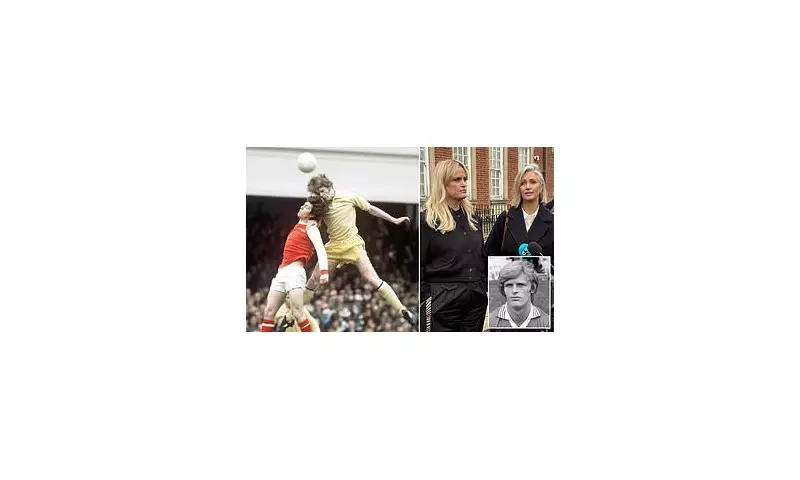
During the inquest, McQueen's daughter, Sky Sports broadcaster Hayley McQueen, and her legal team faced rigorous cross-examination from the FA's barrister. The governing body sought to demonstrate that the aggressive form of CTE was not the cause of the 70-year-old's death in June 2023. Speaking after the verdict, McQueen's daughter Emma expressed the family's dismay: 'The fact that the FA tried to fight this is quite surprising. I think they are scared and not sure what the best approach is. Now that there is more evidence [of a link between heading and brain injury] they have to do more.'

Family Highlights Lack of Support from Players' Union
The McQueen family also levelled serious criticism at the Professional Footballers' Association (PFA), alleging a complete absence of support during their father's struggle with CTE's devastating effects. Emma McQueen revealed: 'I emailed the PFA begging for help but that email wasn't answered. They sent me on a wild goose chase. The PFA gave us no support – nothing whatsoever.' Hayley McQueen acknowledged some recent changes at the union but insisted they must 'up their game' in assisting the families of numerous players suffering similar symptoms.
Broader Implications for Football and Legal Claims
This landmark verdict carries profound implications for the sport. Verdicts explicitly linking deaths to heading could significantly strengthen legal claims by former players and their families for compensation, providing a clear incentive for some football authorities to contest such findings. The FA has previously attempted to challenge families pursuing similar verdicts through coroners' courts, including in the case of former Middlesbrough player Bill Gates.
Call for Action to Protect Future Generations
The McQueen family's primary desire is not financial compensation but proactive change. They urge the FA to address the problem of heading and brain injury to protect current players, whom they believe risk dementia later in life, rather than spending resources on legal challenges. Hayley McQueen poignantly stated: 'Our dad loved everything about football but it took his life in the end. He went through a terrible time towards the end of his life. If he were here today, his message would have been to teach future generations.' This sentiment is echoed by campaigns like Head Safe, founded by Judith Gates, which works to educate clubs about reducing heading in training.
Gordon McQueen, capped 30 times for Scotland and a star for both Leeds United and Manchester United during a distinguished 16-year career, died at his North Yorkshire home in 2023. His family's fight has now established a critical precedent, potentially paving the way for CTE to be designated as an industrial disease in football, enabling future financial support for affected families.