McQueen Family Issues Urgent Call for Football Safety Overhaul Following Fatal Brain Injury Findings
The grieving family of former Scotland and Manchester United defender Gordon McQueen has issued a powerful plea for football to implement immediate safety reforms. This comes after a coroner's inquest concluded that repeatedly heading the ball during his professional career was "likely" to have contributed to a brain injury that played a significant role in his death.
Coroner's Narrative Points Directly to Football Heading
Gordon McQueen, a celebrated central defender who earned 30 caps for Scotland and played for both Leeds United and Manchester United during a distinguished 16-year career, passed away at his North Yorkshire home in June 2023. He was 70 years old. The official cause of death was recorded as pneumonia, which developed after he became frail and bedridden for several months.
However, the inquest in Northallerton, led by coroner Jon Heath, revealed a more complex underlying cause. The pneumonia was determined to be a consequence of mixed vascular dementia and chronic traumatic encephalopathy (CTE). In a narrative conclusion, Coroner Heath stated unequivocally: "It is likely that repetitive head impacts sustained by heading the ball while playing football contributed to the CTE."

Family's Heartbreak and Call for Legacy of Change
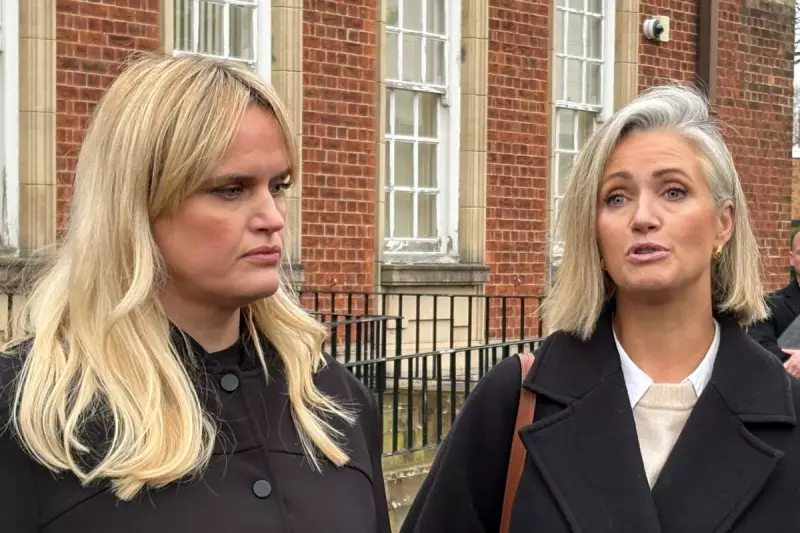
Following the hearing, McQueen's daughters, TV presenter Hayley McQueen and her sister Anna Forbes, spoke passionately about the dangers their father faced and the urgent need for systemic change within the sport.
"It should have been a turning point many, many years ago when we learned the same thing with Jeff Astle and not much has happened between that time and now," said Hayley McQueen, referencing the former England striker whose death was also linked to heading. "Hopefully, my dad's legacy will not just be what he gave football on the pitch but what we can learn from this and make sure that this really horrible problem isn't a problem for future generations."
She emphasised that football authorities must act, calling for potential legislation, better education, and concrete protective measures for players. "He absolutely loved everything about football. But, ultimately, it took him in the end," she added, describing the "horrendous time" he endured towards the end of his life.
Criticism of Player Union and Support for Fellow Sufferers
The family also expressed deep disappointment with the Professional Footballers' Association (PFA), the players' union. Anna Forbes labelled the organisation a "disgrace," claiming it failed to respond to pleas for help while her father was alive. "It depleted my parents' lifetime savings looking for private care for my dad and we relied on charities such as Head for Change to support his respite care because the PFA gave us nothing, no support whatsoever," she revealed.
Hayley McQueen reported speaking with many ex-players from her father's era who are now "terrified" about their own neurological health. She noted a pattern of neurodegenerative disease among footballers, citing the England 1966 World Cup squad and players from the 60s, 70s, 80s, and early 90s. "I know a lot of footballers whose families have reached out who have symptoms very similar to that of my dad, and I think we're going to start to see more and more," she warned, adding that some former players refuse brain scans out of fear of the results.
Expert Medical Evidence and a Charitable Perspective
The inquest heard that McQueen's family donated his brain for research to Professor Willie Stewart, a leading neuropathologist at Glasgow's Queen Elizabeth University Hospital. Professor Stewart confirmed he found clear evidence of CTE and vascular dementia, agreeing that the CTE "more than minimally, negligibly or trivially" contributed to the death and that heading the ball contributed to the CTE. The professor stated the only evidence available was McQueen's "high exposure" to heading a football during his career.

Judith Gates, founder of the Head Safe Football charity, echoed the call for action. "Gordon died from CTE. CTE is only caused by repeated impact. Therefore, how do you solve repetitive head impacts? You reduce the frequency," she stated, highlighting the straightforward preventative logic.
A Champion's Career and Personal Struggle
Remembered as a formidable defender known for scoring crucial headed goals, McQueen helped Leeds United win the league title in 1974 and reach the European Cup final in 1975 before moving to Manchester United and winning the FA Cup in 1983. After retirement, he worked as a coach and a respected TV pundit.
His daughter recalled a healthy, active man who began to change after his 60th birthday, becoming withdrawn after a lifetime of being sociable. She also remembered him returning from training with headaches, needing to lie in a darkened room—an early, unheeded warning sign of the damage being done.
The McQueen family stressed they do not wish to ruin the sport their father loved, but they are now unwavering advocates for making it safer. They urge clubs, coaches, and governing bodies to strictly follow and enhance guidelines on heading, hoping Gordon McQueen's tragic story becomes a catalyst for long-overdue protection of players at all levels.