Manchester City's Champions League Transformation: From Predictable Dominance to Unpredictable Jeopardy
Pep Guardiola's Manchester City stand at a critical juncture in their Champions League journey, facing genuine jeopardy in their final league phase match against Galatasaray. This moment serves as validation for the competition's revamped format, promising a less predictable finale than the old group stage system ever delivered.
The Shift from Predictability to Uncertainty
Manchester City were once the ultimate indictment of the old Champions League group stage structure. Under Guardiola's leadership, they had become the team who consistently qualified with matches to spare, often securing progression before the penultimate game. Their dominance made outcomes predictable and reduced tension in the early stages.
Now, in the new league phase format, City find themselves stalked by genuine jeopardy. A year ago, they faced the humiliating prospect of early elimination, trailing Club Brugge with just 45 minutes remaining. They eventually scrambled to 22nd position, drew Real Madrid, and suffered elimination before the last sixteen even began.

The Current Conundrum
Currently positioned 11th in the standings, Manchester City are trapped in midfield congestion, part of a complicated mathematical equation that will determine their fate. The side that once made Champions League progression predictable now contributes to making it unpredictable. Their recent form illustrates this perfectly: a victory over Real Madrid in Spain sandwiched between a home defeat to Bayer Leverkusen and a historic loss to Bodo/Glimt.
Once again, City have ninety minutes to shape their destiny against Galatasaray, with the standings likely to shift multiple times during the match. Jeremy Doku emphasized the importance of securing a top-eight finish, noting that avoiding the knockout play-off round would significantly reduce their workload during a congested fixture period.
The Mathematical Complexity
Securing direct qualification to the last sixteen is not as simple as merely winning on Wednesday. Manchester City need to leapfrog at least three rivals in the standings. The situation is complicated by multiple concurrent matches that could influence their fate, including Paris Saint-Germain versus Newcastle, Chelsea's trip to Napoli, Tottenham's visit to Eintracht Frankfurt, and Sporting CP's away game in Bilbao.
Pep Guardiola acknowledged the complexity, stating: "We need to focus on trying to win our game," while recognizing that City could benefit from rivals dropping points elsewhere. Even victory over Galatasaray carries risks, with Atletico Madrid positioned directly below City and facing Bodo/Glimt at home, creating a scenario where goal difference could become decisive.
A Broader Transformation
The competition's evolution mirrors Manchester City's own transformation. For seven consecutive seasons, Guardiola's side won their group and reached at least the quarter-finals, featuring in two finals and three semi-finals. Their exits came only through narrow margins: once on away goals and once on penalties.
In the revamped format, they have been reduced to the rank of stragglers. Their last seventeen Champions League matches across two seasons have yielded as many defeats as victories: seven each. This contrasts sharply with their previous two years of Champions League football, where they suffered no defeats in regulation time, only a penalty shootout loss.
Shocks and Setbacks
The side that once seemed immune to shocks has suffered several unexpected setbacks. The team that appeared superior now finds themselves evenly matched with seven other clubs, all sharing the same points total. Guardiola reflected: "I would prefer to have more, but it is what we deserve, thirteen points."
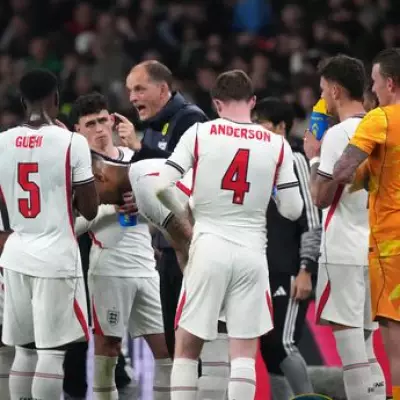
He has been self-critical about City's failures last season, and the danger persists that he may need to be again. His decision to field a second-string side against Bayer Leverkusen proved costly, while injuries contributed to what Erling Haaland described as an "embarrassing" performance in Norway.

Familiar Faces and Tactical Challenges
The match brings reminders of a more glorious past, particularly through the return of Ilkay Gundogan, now of Galatasaray, to the Etihad Stadium for the first time since his second departure. Guardiola described him as "the captain for the treble season, a massive character, a top player in the top games."
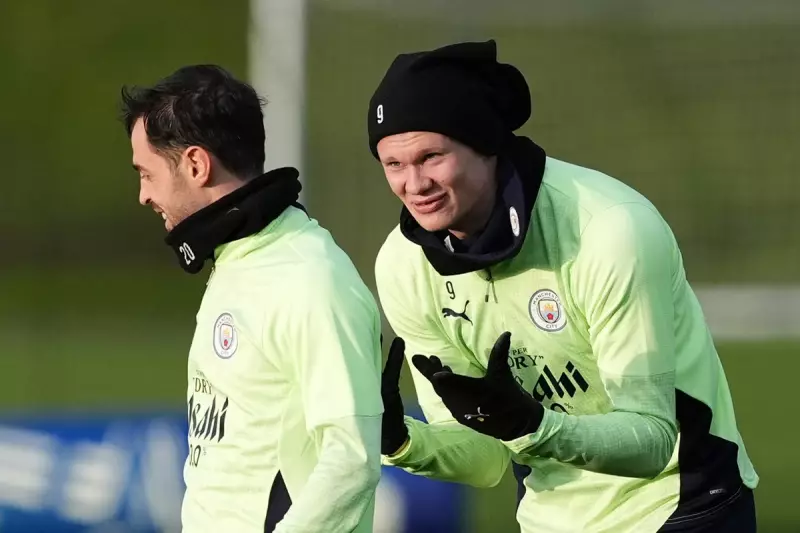
Gundogan's knowledge of Guardiola's methods presents a tactical challenge, though the manager noted that personnel have changed since the German's departure. City face selection issues with Rodri suspended after his red card in Norway and Nico Gonzalez a doubt, potentially increasing reliance on Bernardo Silva in midfield.
The Istanbul Connection
Galatasaray intrigue Guardiola for personal reasons too. Despite a managerial career that has taken him to Barcelona, Bayern Munich, and Manchester City, and numerous Champions League campaigns, he has never visited Istanbul for an away match. "I would love to go to Istanbul away," he admitted.
Ironically, if City end up in the knockout play-off round, he may get his wish in one respect, though the club would prefer to avoid February's double-header altogether. The stage is set for a dramatic conclusion to the league phase, with Manchester City's evolution from predictable dominators to unpredictable contenders perfectly encapsulating the Champions League's own transformation.