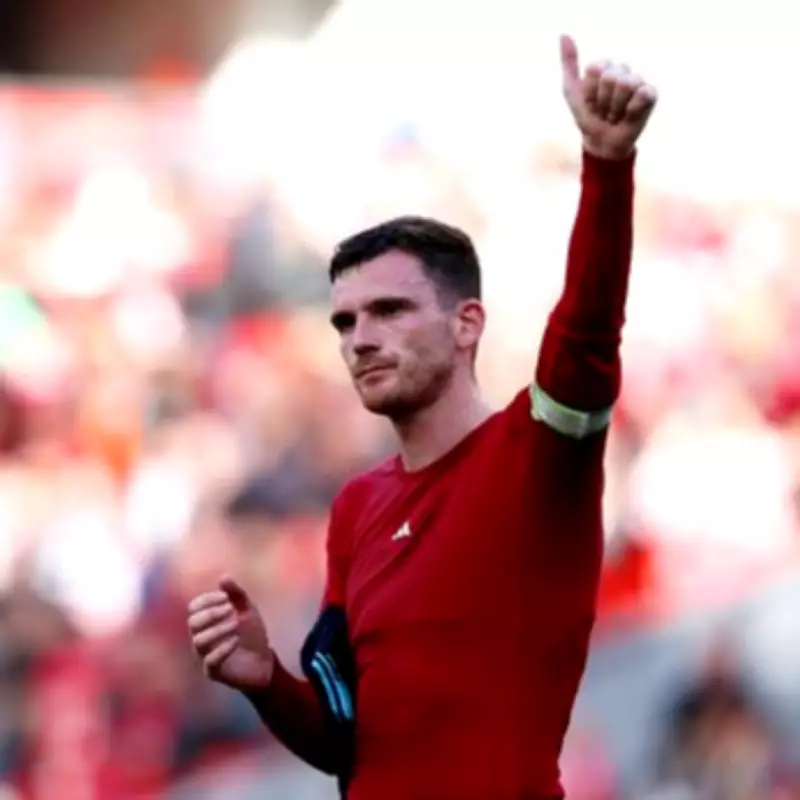
Liverpool's Transfer Process Under Scrutiny After Robertson Departure
Official confirmation of Andy Robertson's departure from Liverpool at the end of this season has sparked widespread tributes for the club's vice-captain, but it also exposes a flawed transfer strategy that has become a recurring theme at Anfield. The Scottish left-back will leave on a free transfer, marking another instance where the club fails to secure financial compensation for an elite player.
A Pattern of Costly Departures
To adapt an old saying, losing one world-class full-back for free might be considered misfortune, but losing both looks like carelessness. Robertson's exit follows Trent Alexander-Arnold's departure, for which Liverpool received only an early release fee of €10 million, and Mohamed Salah's similar move. The bottom line is clear: Liverpool is repeatedly allowing top talent to leave without maximizing financial returns.
In January, Tottenham Hotspur offered £5 million for Robertson, but Liverpool declined the deal. Since that transfer window closed, Robertson has started only two Premier League matches—in the win at Sunderland and the home draw with Spurs. While his potential role in securing Champions League qualification could justify the decision, Robertson is likely to feature from the bench in the remaining seven league games, diminishing his impact.

Robertson's Legacy and Current Form
The procession of tributes from past and present teammates, along with club legends, underscores Robertson's significance. As vice-captain, he has been an outstanding servant during a thrilling period in Liverpool's recent history, including last season's Premier League triumph. He started 29 league games and came off the bench in four, with only five unused substitute appearances—two of which occurred after the title was secured.
At 32, Robertson remains a valuable asset, with no strong evidence suggesting a decline in form or fitness. His leadership qualities and unifying presence at Anfield over nine seasons are irreplaceable, leaving Virgil van Dijk increasingly isolated as a talismanic figure.
Questionable Replacements and Future Implications
The decision to let Robertson go raises questions about his replacement, Milos Kerkez. There has been little evidence that the Hungarian is an upgrade, and it is unlikely he will develop Robertson's leadership traits. This move highlights broader issues in Liverpool's transfer policy, where short-term gains may compromise long-term stability.
As Robertson prepares for his next chapter, Liverpool must reflect on a transfer process that has allowed key players to depart without adequate financial benefit, potentially weakening the squad's depth and experience.