John Virgo's Private Battle: From Snooker Stardom to Gambling Despair and Redemption
John Virgo's Gambling Addiction Battle and Late-Life Redemption

With his flamboyant waistcoats, booming catchphrases and dazzling trick shots, John Virgo stood as one of Britain's most recognisable snooker personalities. Yet behind the television smiles and public persona lay a deeply private struggle that nearly consumed him entirely. At the zenith of his fame, the legendary player and broadcaster was secretly descending into a devastating £200,000 gambling addiction, a compulsion that would cost him two marriages, his family home, and push him to the brink of bankruptcy.

A Descent into Chaos

Virgo, who has died aged 79, later revealed how he ended up relying on the kindness of friends after his three-bedroom Surrey house was repossessed. He admitted his life unravelled as betting debts mounted and his snooker career faltered. The youngest of five children from a working-class Salford family, Virgo's remarkable journey from poverty to primetime television was ultimately overshadowed by this personal crisis.

Humble Beginnings

Born in Salford on March 4, 1946, Virgo's father earned £9.50 a week as a crane driver at Salford Docks, with the family barely scraping by. He recalled shoes and trousers being paid for in weekly instalments and hiding when the rent collector called. Leaving school at 15 to work as an invoice clerk at a steel firm, he spent his spare time touring northern snooker parlours, 'playing for stakes' and honing his craft.

The Rise to Prominence

His breakthrough came in 1971 when he won the British youth championships, leading to an invitation to a Granada Television tournament. By then married to first wife Susan, with whom he had a son, Gary, he won the tournament but, as an amateur, couldn't accept prize money, instead requesting £350 in Mothercare vouchers. Turning professional in 1976, he reached the World Championship semi-finals in 1979 and won his first major tournament, the UK Championship, that same year.

The Gambling Spiral

As his form declined in the 1980s and exhibition work dried up, Virgo attempted to supplement his income through gambling. He borrowed £200,000 against his mortgage over six years 'just to keep up the pretence' of success, describing himself as trapped in 'a vicious circle'. At one point, he lost £10,000 in two weeks, with TV star Des O'Connor, himself a notorious better, offering to act as his bookie.

Opening up about his struggles in 2017, Virgo said: 'There was pressure on me to have the newest car, a more expensive holiday. It was all about keeping up appearances. When the results weren't coming on the snooker table, I tried to supplement things by gambling on horses even more. I went through a period when I was addicted to gambling.'

Financial and Personal Collapse

The situation worsened when Virgo bought a racehorse named Jokist, which never developed into a top-class runner. Becoming emotionally attached, he turned down lucrative offers to sell, ending up approximately £60,000 out of pocket. By this time, he was married to his second wife, Avril, with whom he had a daughter, Brooke-Leah. The marriage collapsed in 1991 after eight years as Virgo's life unravelled.

'My financial misfortunes coincided with my second marriage falling apart,' he reflected. 'When I started borrowing against the mortgage, it coincided with a sharp rise in interest rates and my mortgage rose from £40,000 to £200,000. I had to hand the keys back and move in with a friend. Just about all I owned was my car.'

Redemption and Rebuilding

After losing his home, Virgo ended up living with a 'friend of a friend' in a small house in Stoke D'Abernon, Surrey. It was here he first met publishing executive Rosie Ries, though it would be over twenty years before he found the courage to ask her out. 'A mate tried to set us up years ago but then his girlfriend said she wouldn't be interested in me,' he once explained. 'I was so frightened of a knock-back, I didn't ask her out for 22 years.'

Career Revival and Lasting Love

His fortunes began to change when he landed the job alongside Jim Davidson on the BBC game show Big Break, which ran from 1991 to 2002, attracting audiences of up to 14 million at its peak. This launched a new presenting career, with appearances on chat shows, morning television, and even being 'gunged' on Noel's House Party. He developed his own line of waistcoats, wrote books, and later created an app showcasing his trick shot skills.

Reflecting on working with Davidson, Virgo said: 'I always remember, Jim had a bit of a reputation in the business for being hard work. A few people asked me, 'How are you getting on working with Jim Davidson?' I said, 'He doesn't bother me, I worked with (Alex) Higgins for 20 years!' I wasn't daunted. He's your crafty Conservative comedian and I'm your dour northern socialist. How do you come up with that - but obviously the chemistry worked.'

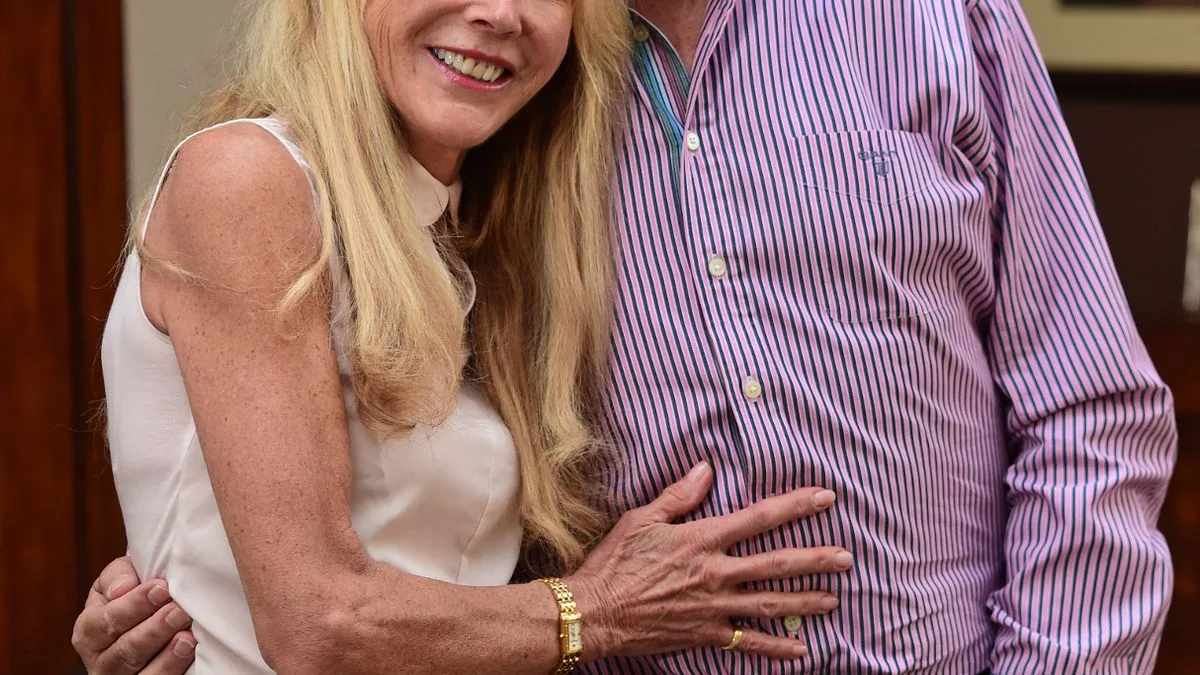
Finally, in 2009, Virgo and Rosie married, a union he described as 'the best day of my life' and 'absolutely wonderful.' Her steady support helped him rebuild his life after decades of turmoil, with the couple finding quiet happiness in Spain.

Later Career and Legacy

While he retired from playing in 1994, Virgo remained a fixture on screen as a BBC snooker commentator, famously coining the catchphrase: 'Where's the cue ball going?!' His commentary career wasn't without controversy; in 2009, he apologised for a racially insensitive remark during a broadcast, and in 2016, he apologised after being caught swearing when he thought his microphone was off during a World Championship semi-final.

Yet his popularity endured. Three years ago, he saw off BBC plans to retire him and fellow snooker icon Dennis Taylor following a significant fan backlash. His last commentary for the BBC came just 17 days before his passing, during the Masters final where Kyren Wilson beat John Higgins.

A Life of Few Regrets

Despite the tumultuous journey, when inducted into the World Snooker Tour's Hall of Fame three years ago, Virgo expressed few regrets. 'Listen, I'm never going to complain about the way it has turned out because I always feel I'm very lucky,' he said. Reflecting on a conversation with Taylor and Steve Davis, he added: 'We all say this as the bottom line - we feel lucky we walked into a snooker club with our ripped trousers and we managed to be good at a game that took us all around the world. Particularly as someone coming from Salford - I consider that to be a right result.'

John Virgo's story is ultimately one of remarkable talent, profound struggle, and hard-won redemption, leaving behind a complex legacy in the world of snooker and beyond.