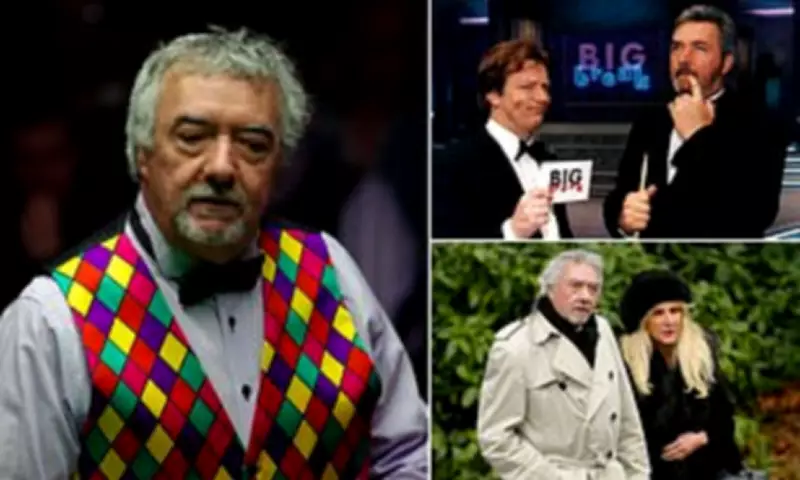
The world of snooker and television entertainment is mourning the loss of John Virgo, the beloved commentator and former UK champion who passed away at the age of 79. While celebrated as the "voice of snooker" and a trick shot specialist, Virgo's life story encompassed dramatic highs and profound personal struggles, most notably a crippling gambling addiction that nearly destroyed him before an unexpected television career offered salvation.
From Salford to Snooker Stardom
Born in Salford on March 4, 1946, Virgo's fascination with snooker began in childhood with an unlikely object: a broken snooker cue his mother used to unfasten an airing rack in their terraced home. His passion was cemented when he received his first snooker baize as an eight-year-old on Christmas Day 1958, draping the 6ft 3in surface across the family dinner table for makeshift games.
Virgo honed his craft during teenage years spent in Manchester's Temperance Billiards Hall, developing the skills that would eventually make him a professional player. However, these formative years in billiard halls also introduced him to betting on horses and greyhounds – a pastime that would evolve into a destructive addiction with severe consequences.

The Triumph and Tragedy of 1979
Virgo turned professional in 1976 as snooker was experiencing a television boom, boosted by the spread of colour broadcasting. His career peaked in 1979 when he defeated Terry Griffiths in the 27th frame to win the UK Championship, though he would later describe this victory as both the "best" and "worst" day of his life.
"They'd changed the time of the final without telling me and I was six miles away in my hotel," Virgo recalled in 2017. "I arrived, panicking, 25 minutes late, got penalised two frames and the crowd booed me. I was shaking so much I don't know how I played." To compound matters, BBC cameramen were on strike, meaning no footage exists of him lifting the trophy on Grandstand.
The Descent into Gambling Addiction
Despite reaching his all-time rankings high of 10 that season and adding the Bombay International and Pontins Professional titles in 1980, Virgo's playing career declined throughout the 1980s as his gambling addiction spiralled out of control. What began as teenage betting evolved into a compulsion that threatened to ruin his life.
"When the results weren't coming on the snooker table, I tried to supplement things by gambling on horses even more," Virgo revealed. "I went through a period when I was addicted to gambling. It was a compulsion that I struggled to get to grips with. By 1990, it was in danger of ruining my life."
The Financial and Personal Cost
The financial consequences were devastating. Virgo recalled spending £10,000 in just two weeks betting on horses and borrowing £200,000 against his mortgage to fund his losses. This ultimately led to the repossession of his three-bedroom Surrey home, representing the lowest point in his personal and financial life.
"I was borrowing against the mortgage just to keep up the pretence that I was successful," he admitted. "Looking back, I see it was crazy. I think a lot of players may have had issues with gambling. You are brought up in that environment – hustling in the snooker clubs to earn a few quid and, if there was no one to play, you'd go in the bookies."
Redemption Through Television
Virgo's salvation arrived through an unexpected second act: his role as co-host alongside comedian Jim Davidson on BBC1's primetime snooker game show Big Break, which ran from 1991 to 2002. The programme, reportedly a favourite of Margaret and Denis Thatcher, provided both financial stability and creative fulfilment during his most difficult period.
"Then I got a phone call asking me if I wanted to do a TV show with Jim Davidson," Virgo remembered. "The viewing figures were amazing and we peaked at almost 14 million. People were gutted when it ended." He later credited Big Break with saving him from ruin, noting the chemistry between himself as a "northern socialist" and Davidson as a "cockney Tory" that made the show work.

Life Beyond the Green Baize
The success of Big Break launched Virgo into a new phase of his career, leading to his own range of waistcoats, books, apps, and pantomime appearances. He remained a popular part of the BBC's snooker commentary team right up to last month's Masters at Alexandra Palace, maintaining his reputation for dry-witted quips, player impersonations, and his famous catchphrase "Where's the cue ball going?"
Virgo also found personal happiness with third wife Rosie Ries, a publishing executive he married in 2009 after knowing her for two decades. "I was so frightened of a knockback, I didn't ask her out for 22 years," he confessed. "By then I'd lived on my own for five years and I needed that time to recentre myself. But eventually we went on a date. I used my wit, charm and repartee on her and, blow me down, two months later we got engaged."
A Complex Legacy
John Virgo's 2017 autobiography, titled Say Goodnight, JV after Davidson's closing line on each Big Break episode, offered unflinching honesty about his struggles. The father of two – previously married to Avril before their 1991 divorce and then in a second marriage – leaves behind a complex legacy as both a snooker champion and television personality who battled personal demons in the public eye.
His story serves as a powerful reminder of how addiction can affect even the most successful sports personalities, while also demonstrating the possibility of redemption through unexpected opportunities and personal resilience. Virgo's journey from Salford billiard halls to UK champion, through gambling addiction and home repossession, to television stardom and commentary legend represents one of snooker's most compelling human stories.