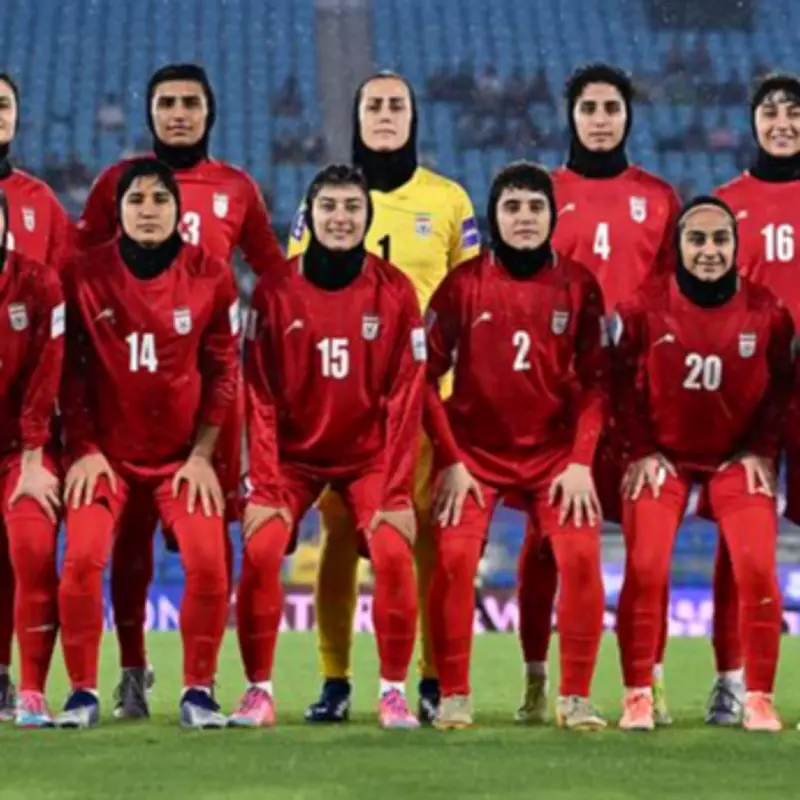
Iranian Women's Football Team Faces Grave Treason Allegations
The Iranian women's national football team is reportedly confronting fears of execution after staging a protest during the Women's Asian Cup in Australia. The players refused to sing Iran's national anthem and perform a military salute during their opening match against South Korea, drawing severe backlash from Iranian authorities.
Protest During Tournament Leads to 'Traitors' Label
During the match on Monday, the team's silent protest against the current regime resulted in a 3-0 defeat. They subsequently played two more games in the tournament, falling 4-0 to hosts Australia and 2-0 to the Philippines, which eliminated them from competition. In those later matches, the team complied with anthem and salute protocols, but the initial protest had already triggered official condemnation.
Iranian state television has branded the athletes as 'traitors,' with presenter Mohammad Reza Shahbazi issuing a stark warning: "In times of war, traitors must be dealt with more harshly. Anyone who takes even a single step against the country during wartime must face stronger consequences."

Capital Offense Charges and International Concern
Under Iranian law, treason is a capital offense punishable by death, raising alarms about the team's safety upon their planned return to Iran. Refugee Council chief executive Paul Power expressed concern, stating, "Certainly on the evidence that's available, it would appear that the members of the women's soccer team are at risk if they're returned."
Journalist Ali Bornaei highlighted the imminent danger on social media, tagging Australian Foreign Minister Penny Wong and writing, "The lives of the Iranian Women's National Football Team are in imminent danger. After their peaceful protest in Australia, Iranian state-linked media has officially labelled them 'wartime traitors.' In Iran, 'treason' is a capital offence punishable by death. These athletes face arbitrary detention and execution if forced to return."
Calls for Asylum and Government Action
Australia's shadow attorney general, Julian Leeser, has urged the Australian government to offer asylum to the team, particularly noting the timing on International Women's Day. He emphasized, "We must stand up for the women in our midst. We know that in recent days serious threats have been made against the courageous Iranian women's soccer team who are playing in Australia. Given the serious threats, members of the Iranian team should be offered asylum if they want it. The Australian government should not turn a blind eye to the danger these women face."
Several Iranian community organisations and civil society groups have also contacted Australian authorities, outlining their fears for the team's welfare should they be repatriated. The situation underscores the broader tensions between Iran's government and dissenters, with the footballers' protest symbolizing a stand for freedom amid severe potential repercussions.