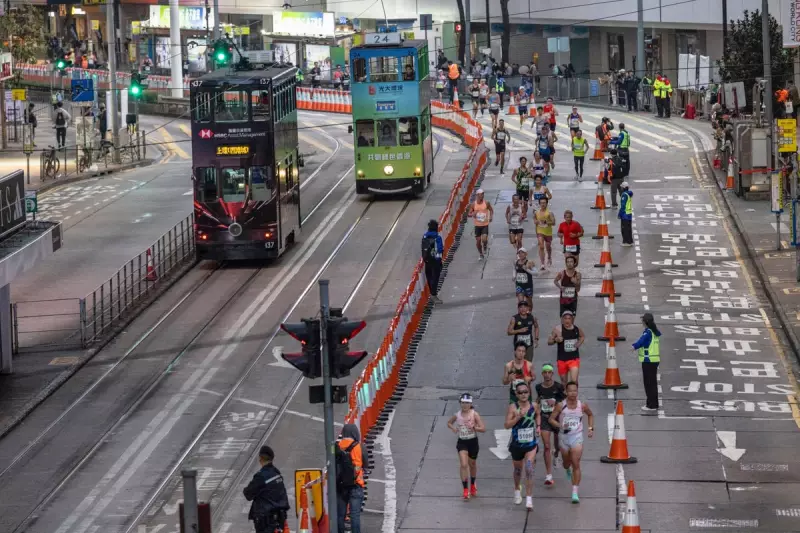
A male runner has been disqualified from the Standard Chartered Hong Kong Marathon and issued with a ban from future events after race organisers discovered he had participated with a young infant strapped to his chest. The incident, which occurred during the event on 18th January 2026, has ignited a significant public debate regarding child safety and adherence to competition regulations.
Footage Reveals Concerning Incident
Videos circulated widely on social media platforms depicted the man competing in the full marathon distance while carrying the baby in a front-mounted carrier. The infant appeared to be wearing a small jacket with an official race bib attached, while the runner himself was equipped with a backpack and was seen holding a mobile phone. The footage clearly showed the baby's head bouncing with the runner's motion, raising immediate alarm among viewers regarding potential physical harm.
Official Response and Rule Violation
The Hong Kong, China Association of Athletics Affiliates (HKAAA), the governing body for the marathon, swiftly confirmed the disqualification. In an official statement, the association emphasised that all participants must strictly follow competition rules designed to prevent danger to themselves or others. Race officials intervened after the runner had covered approximately 15 kilometres, requesting his immediate retirement from the course for safety reasons. He did not complete the 42-kilometre race.

"Runners must adhere to the official competition rules and refrain from any actions during the race that could pose a danger to themselves or others," the HKAAA stated. The organisation later informed the South China Morning Post that the individual had also been prohibited from entering future events organised by the association.
Public Outcry Over Safety Risks
The incident provoked a fierce reaction online, with many social media users and commenters expressing horror at the perceived risks to the child. Numerous concerns were voiced about the potential for the infant to suffer head injuries, including concussion, from the constant jolting motion. Others highlighted the catastrophic consequences that could have ensued had the runner tripped and fallen forward onto the child.
One commentator on a Hong Kong news YouTube page remarked, "He totally disregarded the baby's safety. The baby's brain is still developing, and cannot take the bouncing up and down pressure." Another added, "I can't imagine what it's like for the baby to go through 42km of rough ride, sun and car tunnel air." There were also questions raised about how the runner, with the baby clearly visible, managed to pass several initial checkpoints before being halted by officials.
Event Logistics and Participant Tracking
According to official race tracking data, the runner in question began the marathon at 6:25 am in the first wave of male participants. He maintained an average pace of around nine minutes per kilometre, reaching the 15-kilometre mark in approximately two hours and twenty minutes before being intercepted by officials. The case underscores ongoing challenges in monitoring all participants during large-scale public sporting events, despite established safety protocols.