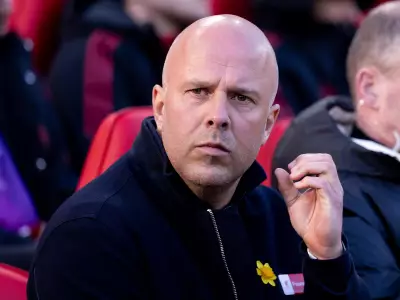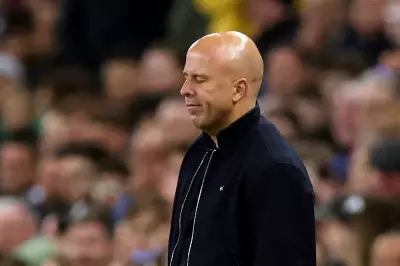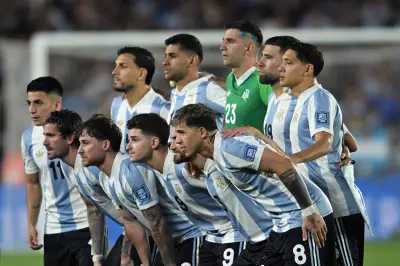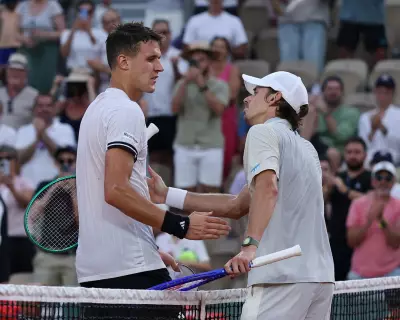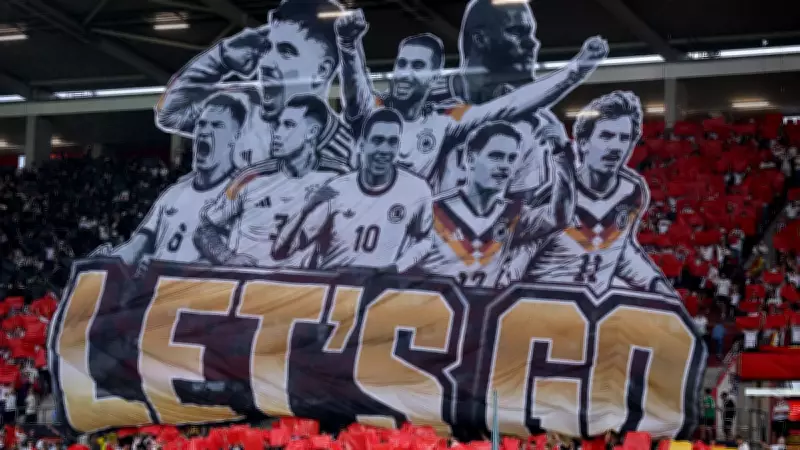
Julian Nagelsmann will rely on a Bayern-based core, but individual class is in worryingly short supply as Germany prepares for the 2026 World Cup. Predicting Germany's tactics is not entirely straightforward because Nagelsmann likes to change his lineup and system. The result was five mediocre to poor performances in the qualifiers, including a 2-0 defeat in Slovakia that could easily have been heavier. But they were convincing in the return fixture, sweeping their opponents aside 6-0, and won their group convincingly.
The Plan
Nagelsmann will probably base his team from that match in Leipzig and will demand passion from his players. “We have to play with emotion,” says Nagelsmann, who is regarded as a tactical obsessive and is often seen shouting and raging in the technical area. The team’s traditional recipe for success has been to adopt the things that work well at Bayern Munich, and in 1974 and 2014 that led to World Cup triumphs. The chances of a repeat initially appear favourable: this season has gone exceptionally well for Germany’s only world-class club. Nagelsmann is therefore likely to rely on a Bayern core of Jonathan Tah, Aleksandar Pavlovic, Joshua Kimmich, Leon Goretzka, Jamal Musiala and the impact substitute Lennart Karl (with Serge Gnabry out through injury) as well as Manuel Neuer, who ended his international retirement in May to play in his fifth World Cup.
But can the Munich axis be relied upon? Musiala is out of form and in recent months was not much more influential for Bayern than Goretzka, who sat on the bench in all the important matches in the second half of the season yet still seems certain to start under Nagelsmann. And Kimmich will play in a different position for Germany than he does for Bayern: at right-back rather than in central midfield. It is a solution with risks.

Key Fixtures
Germany's Group E fixtures include: 14 June v Curaçao, Houston; 20 June v Côte d'Ivoire, Toronto; 25 June v Ecuador, New York/New Jersey.
Lack of Individual Class
Kimmich embodies a problem in German football: there is a lack of individual class. He is certainly a master of the traditional virtues, but as captain, because of his shortcomings in tackles and one-on-ones, he does not measure up to predecessors such as Lothar Matthäus, Michael Ballack or Philipp Lahm. Germany also used to pride themselves on their goalkeepers and defenders. That, too, is lacking, despite the return of the 40-year-old Neuer. Nor are there any midfield strategists in the mould of Toni Kroos or Mesut Özil.
The hope lies up front. In the No 10 role, Nagelsmann has a wide range of options in Florian Wirtz, Musiala, Kai Havertz and Karl, all of whom possess outstanding skills. He will probably use Havertz as a deep-lying centre-forward as there was never any doubt about the Arsenal forward’s technical ability, only about his efficiency. Will he be more clinical than he was at Euro 2024? He will need to be because, with Niclas Füllkrug and Nick Woltemade still not established, this is a team without a classic goalscorer.
The Coach
More and more figures within German football are criticising Julian Nagelsmann. Most recently, Uli Hoeness accused him of misunderstanding his role. “Our national coach thinks he wins the match. No, the team wins the match,” said Bayern Munich’s still-influential honorary president. Nagelsmann has achieved little more than a run of mixed results and he keeps making life difficult for himself with curious remarks. After the 2-1 win over Ghana in March, irritated by questions, he publicly rebuked his match-winner, Deniz Undav. A decade ago, as a (very) young coach, he saved Hoffenheim from relegation and soon afterwards led the club into the Champions League. He is only 38 years old, but the promise many believed they saw in him – that he would become a great, even a genius – has yet to be fulfilled.

The Star Player
Florian Wirtz combines the qualities of a playmaker with those of a tireless team player in a way that is exceedingly rare. “He is extremely hard-working and not a classic No 10 who only wants the ball, but someone who also puts in a lot of work,” said Nagelsmann, who defended Wirtz when he came in for criticism in the months after he moved to England. Wirtz did not have a terrible season at Liverpool, but measured against his class and his transfer fee it has not been a particularly good one. The same applies, to some extent, to the national team. Against non-elite opponents, as in the 4-3 win in Switzerland in March, Wirtz can blow everyone away with his technique and interplay with Havertz or Karl. But if Germany are to be successful the 23-year-old will have to perform against major sides.
One to Watch
At the age of 10, Lennart Karl had a trial at the Bernabéu, but decided to stay in Germany. When he said in January that Real Madrid was his dream club and he definitely wanted to play for them one day, some Bayern fans took offence. Yet it is probably this mixture of self-confidence and carefree ease that defines the 18-year-old. A year ago, he was playing for Bayern’s under-19s; now his dribbling is feared everywhere. He made his international debut in March. “He is calmer than I expected,” said Nagelsmann. “I had absolutely no sense the hype had gone to his head.”
Unsung Hero
Nico Schlotterbeck and Antonio Rüdiger attract more attention, but Germany’s best defender is Jonathan Tah. His strength in the tackle and his composure on the ball will be crucial. Tah is not a man of many words and comes across as quiet off the pitch. On it, however, he seems to have found his role, and in the United States he will play his first World Cup match at the age of 30. “It was never pleasant playing against me, because I have a certain physicality,” he told Zeit two years ago. “But now I’m even more unpleasant, because I always keep my opponent in view and stay right on him.”
Probable Starting XI
Germany's probable starting XI includes Neuer; Kimmich, Tah, Rüdiger, Raum; Pavlovic, Goretzka; Wirtz, Musiala, Karl; Havertz.
Fan Atmosphere
German terrace chants cannot quite keep up with the creativity of Musiala’s or Karl’s dribbling, and during the home Euros two years ago Nagelsmann complained that Germany’s fans were too quiet. Being typically German, the DFB set up a working group in 2024 to improve the atmosphere: the AG Stimmung. “People want to sing, they just need someone to tell them what to sing,” said lead chanter Bengt Kunkel. However, Kunkel will not be travelling to the United States. He feels the same as many fans, for whom this World Cup is simply too big and too expensive. Even so, there will probably be a few more supporters in the US, Mexico and Canada than there were in Qatar.
Relationship with the US/Trump
Much like German football, it has seen better days. At the end of April, Friedrich Merz criticised Donald Trump in front of school pupils, saying he had gone to war with Iran without any strategy whatsoever. Trump’s response was that Merz had no idea what he was talking about and was doing a terrible job. That it may not always be wise to say every thought out loud is something the chancellor and the national coach still have to learn, the latter having had to row back on several occasions in his career. No one should expect any sign of rebellion from the DFB in the United States. There was some discussion in Germany about boycotting the World Cup because of the Greenland crisis, but only briefly. The DFB still seems traumatised by the One Love armband affair at the World Cup in Qatar. “I’m no longer taking part in the political discussion,” said the captain, Joshua Kimmich. “We’ve seen that it’s not really productive when we players speak out politically.”