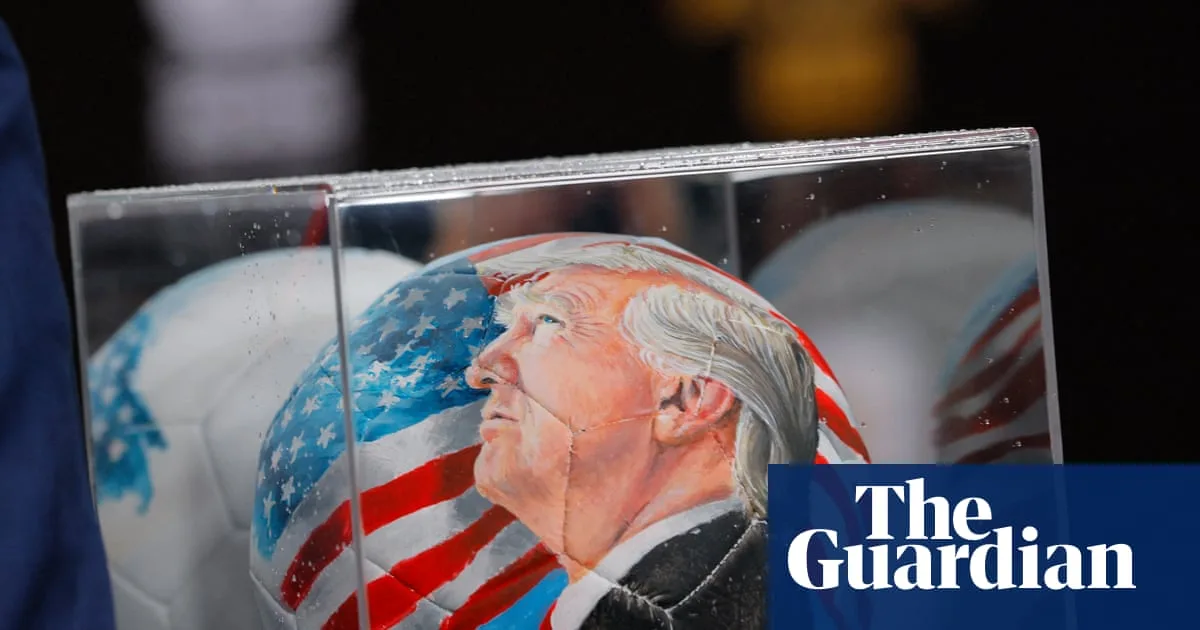
The German Football Association (DFB) has formally ruled out a boycott of this summer's World Cup in the United States, Canada and Mexico, despite calls from within its own ranks to send a political message to US President Donald Trump.
The DFB said in a statement that its executive committee had discussed the option of a boycott, first proposed last week by DFB vice-president Oke Göttlich, but that it was not currently under consideration. “We believe in the unifying power of sport and the global impact that a Fifa World Cup can have,” the DFB said. “Our goal is to strengthen this positive force – not to prevent it.”
Göttlich, who is also president of Bundesliga club St Pauli, had referred to Trump’s recent actions and statements, urging the federation to “seriously consider” a boycott. However, the DFB appeared to rebuke him publicly, stating that “debates on sports policy should be conducted internally and not in public”.
The federation confirmed it remains in contact with political, security, business and sports representatives regarding tournament preparations. Germany international Leon Goretzka said Trump’s behaviour had made him feel “not only German but also European”. Meanwhile, France’s sports minister Marina Ferrari also ruled out a boycott, saying: “I am one who believes in keeping sport separate [from politics].”
Germany are drawn in Group A against Curaçao, Côte d'Ivoire and Ecuador. The DFB said it wants to “compete fairly” and called for a “peaceful festival of football”. Concerns remain over high ticket prices and travel bans imposed by the Trump administration that could affect fans from some nations.