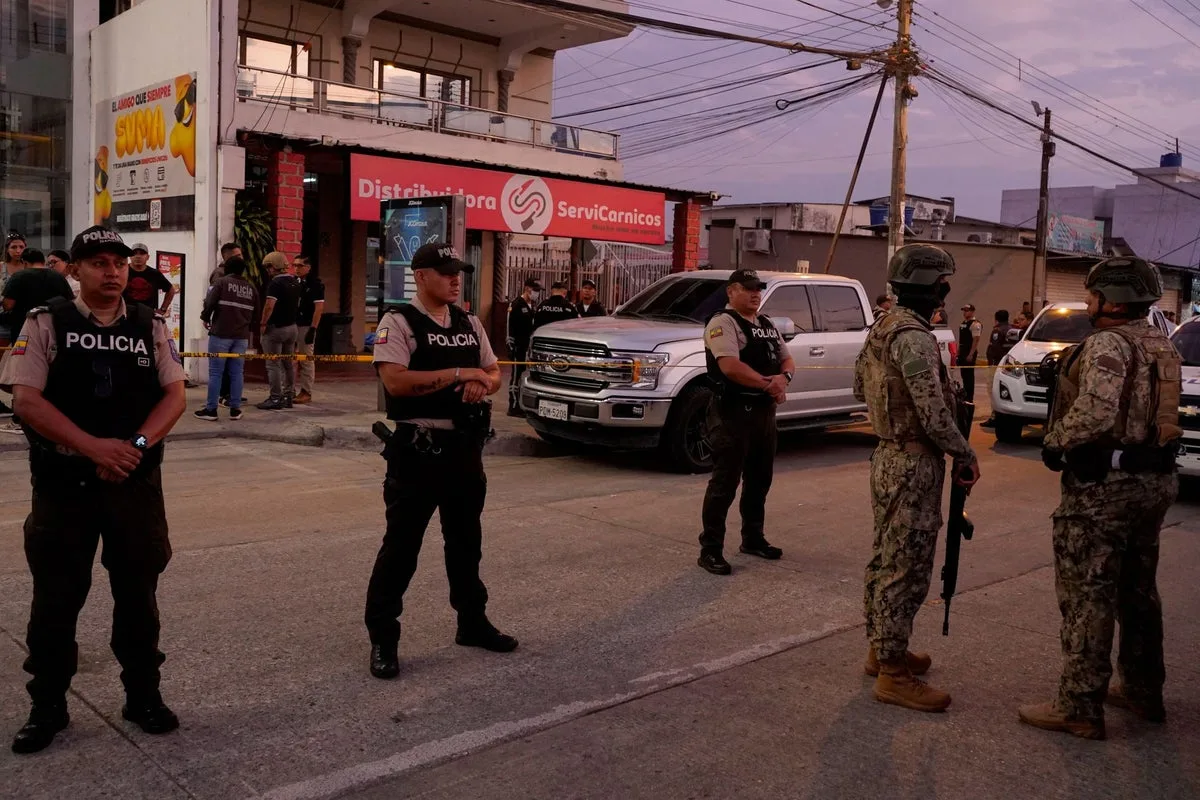
Ecuadorian footballer Mario Pineida, a 33-year-old defender for Barcelona de Guayaquil, was shot dead in an apparent attack in the coastal city of Guayaquil, police said on Wednesday. Another unidentified person was also killed in the incident, while a third person was wounded.
Ecuador's Interior Ministry confirmed Pineida's death but gave no further details. Barcelona de Guayaquil said in a statement that its fans were saddened by the loss.
Pineida began his professional career at Independiente del Valle, where he played from 2010 to 2015. He joined Guayaquil side Barcelona in 2016, winning two league titles. He also had a brief spell at Brazil's Fluminense in 2022.
Pineida earned nine international caps for Ecuador, making his debut in a friendly against the United States in 2014. His final appearance came against Brazil at the 2021 Copa America, where he was an unused substitute in the quarter-final defeat to eventual champions Argentina.
Ecuadorian media reported the shooting took place in the Samanes area in the north of Guayaquil. The country is expected to record its most violent year ever, with more than 9,000 homicides, according to the Ecuadorian Observatory of Organized Crime. President Daniel Noboa has pledged to fight criminal groups linked to international drug cartels.
In November, a 16-year-old Independiente del Valle footballer died from a stray bullet, also in Guayaquil. Two months earlier, players Maicol Valencia, Leandro Yépez and Jonathan González were killed in separate shootings.