The Rise of Competitive Speed Jigsaw Puzzling in America
What was once considered a leisurely pastime has evolved into a full-fledged sport, captivating thousands across the United States. At the 2026 USA Jigsaw Nationals and Convention in Atlanta, Georgia, held on 29 March, a diverse group of participants, including a PhD student from Berkeley, a 12-year-old from Texas, a content creator from Washington, an undergrad at Stanford, and a former math teacher turned homeschool mom from Texas, gathered to compete for national championship titles in speed jigsaw puzzling. This event, organized by the volunteer-run USA Jigsaw Puzzle Association (USAJPA) in partnership with Ravensburger, one of the world's leading puzzle manufacturers, showcased the explosive growth of this burgeoning hobby.
From Lockdown Hobby to National Phenomenon
The jigsaw puzzle community experienced a significant surge during the Covid-19 lockdowns, with demand for puzzles skyrocketing. "We didn't have enough [puzzles], the demand was infinite," remarked Thomas Kaeppler, president of Ravensburger North America. As in-person events halted, online competitions gained traction through platforms like speedpuzzling.com, founded in 2020 by Jonathan Cluff. Social media played a crucial role in spreading awareness, with YouTuber Karen Kavett noting that viral videos introduced many to the concept of speed puzzling, creating a ripple effect of interest.
A Community Defined by Kindness and Camaraderie
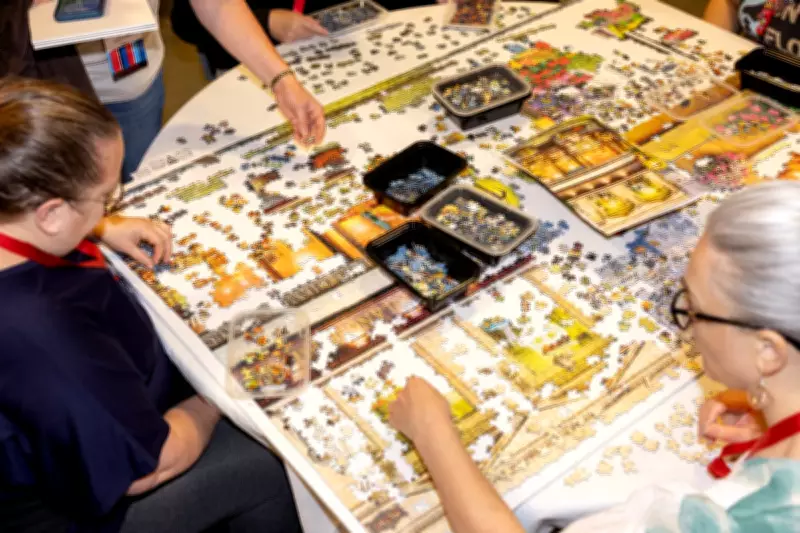
Walking through the convention, attendees displayed a vibrant sense of community, wearing colorful attire adorned with puzzle piece designs and coordinating team outfits with names like "Puzzycat Dolls" and "Jigsaw Jamm". Beyond the main competition, ancillary activities included puzzle chess matches, panels on topics such as "Decoding Data: Speed Stats 101," and vendor stalls selling puzzle accessories. The atmosphere was overwhelmingly friendly, with participants describing the community as "genuinely some of the most kind people" they had ever met. This spirit was evident when Minnesotans, amidst protests against ICE raids, provided food to support fellow puzzlers, highlighting the group's solidarity.

The Intense Competition and Training Regimens
The competition featured individual, pairs, and team events, with participants tackling 500-piece or 1,000-piece puzzles. Top puzzlers, such as defending champion Kelly Walter, a medical student from Arizona, train up to three hours daily, focusing on techniques like optimizing table space and core exercises to prevent back pain. Hannah Doyle, a PhD student at UC Berkeley, livestreams her practices on Twitch, emphasizing how the community has transformed her solitary puzzling into a shared experience. The event drew over 1,600 attendees, including more than 1,000 competitors, a dramatic increase from the first competition's 300 participants.
Personal Experience: A First-Time Competitor's Journey
As a lifelong puzzle lover, I entered the nationals to test my skills. Assigned to a back table as an unranked participant, I faced a challenging 500-piece puzzle depicting a busy front porch scene. Despite initial anxiety, I adopted strategies like building from one side to the other, ultimately finishing in 1 hour and 20 minutes, ranking 122nd out of 200. Though far from the top 50, the supportive environment, with high-fives and encouragement from fellow puzzlers, made the experience rewarding and addictive.
Celebrating the Champions and Future Growth
The finals saw remarkable performances, with 12-year-old Conner and his partner Josh Trauger winning the pairs event in 25 minutes and 11 seconds, while Alice Rowe secured the individual title in under 38 minutes. Rowe's team, the Jiggernauts, also triumphed in the team category. Winners received glass puzzle-piece trophies, and the event concluded with discussions about the sport's potential, including hopes for a youth division and even Olympic recognition. "If we could make [speed puzzling] an Olympic sport, that would be awesome," said Kaeppler, underscoring the community's ambitious vision.

As speed puzzling continues to attract younger and faster competitors, with many top performers in their 20s, the future looks bright. The 2026 nationals not only crowned champions but also reinforced the sense of belonging and passion that defines this unique sport, proving that jigsaw puzzling is much more than a quiet hobby—it's a dynamic and growing competitive arena.