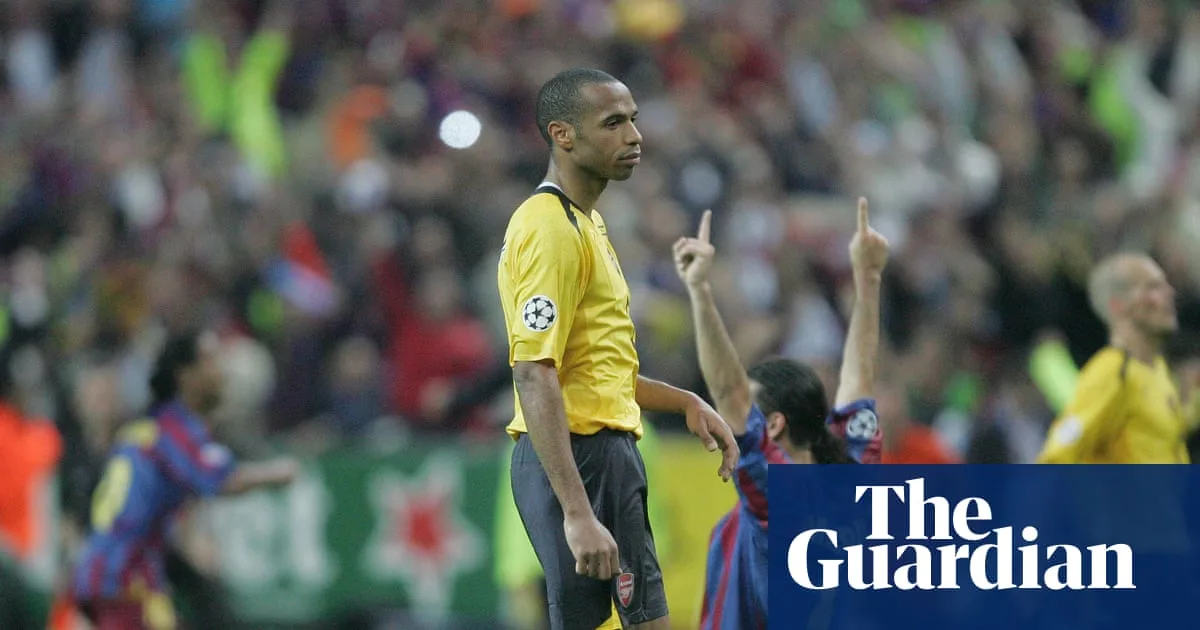
Twenty years after the heartbreak of the 2006 Champions League final, Arsenal are back in the showpiece event, this time facing an opponent in Budapest. The memories of that night in Paris still linger: Jens Lehmann’s early red card, Sol Campbell’s defiant header, and late goals by Samuel Eto’o and Juliano Belletti that snatched victory for Barcelona.
For those at the club at the time, the overriding feeling is one of frustration. “We were robbed,” says Keith Edelman, then managing director. “The ref shouldn’t have given him a red card.” Referee Terje Hauge is said to have apologised, acknowledging he could have played advantage after Lehmann’s collision with Eto’o.
That final marked the end of an era. Patrick Vieira had already left, Robert Pires played his last match, and Dennis Bergkamp sat on the bench. Thierry Henry would depart a year later. The club then moved to the Emirates Stadium, a £400m debt that made them uncompetitive. “We were begging and borrowing to tread water,” recalls one former director.
Securing financing was a “white knuckle ride”, says Edelman. Banks refused loans, leading Arsenal to strike deals with Nike (£140m) and Emirates (£100m) for shirt and naming rights, plus a loan from Barclays. The financial strain forced star players like Ashley Cole, Kolo Touré, and Gaël Clichy to leave for rivals.
Now, under Mikel Arteta, Arsenal have a chance to finally claim the Champions League title that eluded the Invincibles generation. The journey from 2006 to 2026 has been marked by financial struggle and on-pitch disappointments, but redemption is within reach.