Argentina's Transformation: From Desperate Crusade to Football Dynasty
When Argentina arrived in Qatar four years ago, they were a nation consumed by a singular mission. This was a band of brothers on a high-stakes crusade to fulfill a prophecy that had been thirty-six years in the making. The atmosphere was frantic, charged with the desperation of a country longing for World Cup glory. However, as they prepare to travel to North America for this summer's tournament, the entire vibe has undergone a profound shift. The frantic energy has been replaced by a formidable presence. The footballing world now finds itself staring down the barrel of a potential dynasty in the making.
The End of the 'Nearly' Years
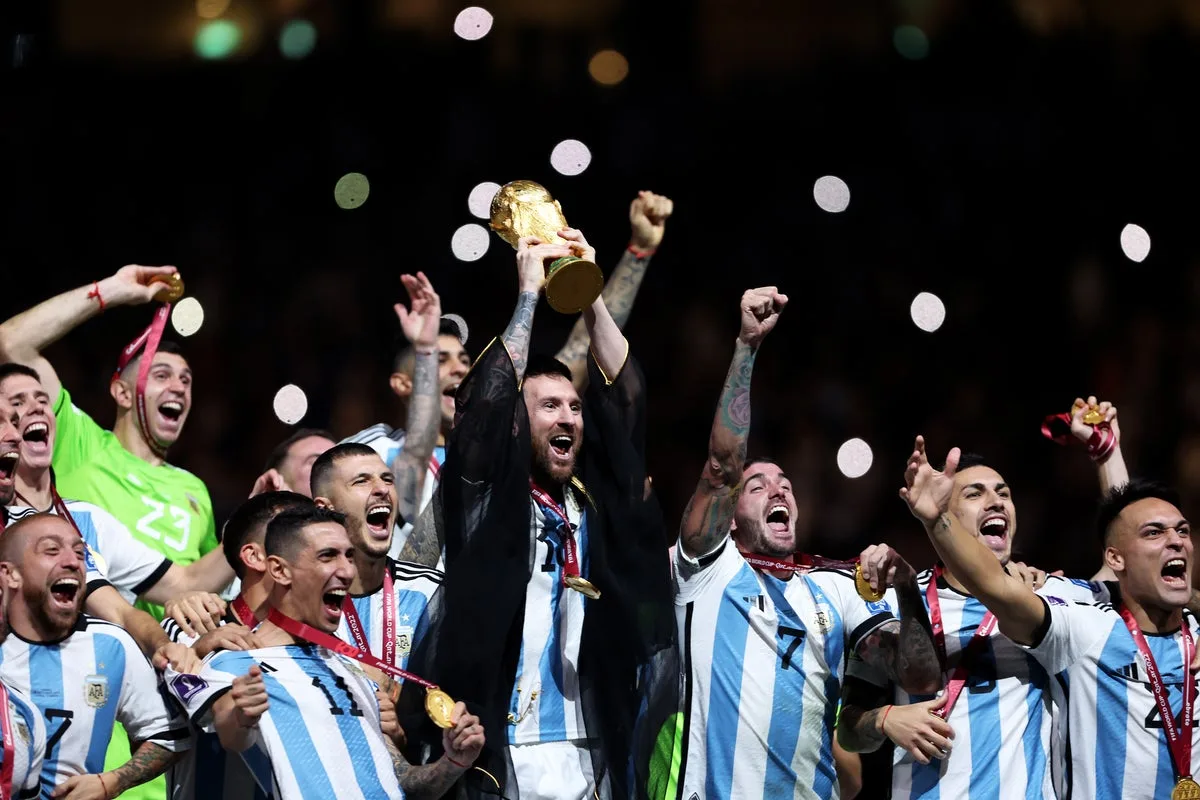
It feels like a lifetime ago that Argentina was defined by its 'nearly' years. This was a generation of world-class talent perpetually haunted by the ghosts of lost finals and burdened by the suffocating weight of a multi-generation World Cup drought. The psychological dam finally broke when Lionel Messi inspired a young, hungry, and exceptionally gifted squad to glory in 2022. That humid night in Lusail marked a turning point not just in trophy cabinets, but in national psyche.
Since that historic victory, Argentina has evolved from a romantic narrative into a cold-blooded juggernaut. By securing a second consecutive Copa America title in 2024, Lionel Scaloni's men have firmly established themselves as the undisputed dominant force in international football. They no longer play with the desperation of a nation seeking validation. Instead, they play with the unmistakable arrogance of a team that believes it owns the throne.
The Lingering Shadow of Maradona
Despite the silverware now glistening in Argentina's trophy room, a significant question still lingers on the streets of Buenos Aires. For all his eight Ballons d'Or and his World Cup winner's medal, Lionel Messi continues to operate in the long, flickering shadow of Diego Maradona. To step fully into the light, he may require one final, emphatic statement: another World Cup triumph. History, however, makes this a daunting task. No nation has successfully defended the trophy since Pele's Brazil achieved the feat back in 1962.
The cultural distinction remains palpable. Maradona's connection with the Argentine people, forged from his roots in a poor neighborhood, created an identification that Messi has not quite replicated. This enduring legacy means that for many Argentines, Maradona still holds the title of the greatest of all time, though Messi is undoubtedly right up there, especially for the new generation.
Managing Messi: A New Chapter
As Lionel Messi approaches his 39th birthday during the tournament, a new reality is setting in. While still regarded as one of the planet's finest footballers, the Inter Miami star is no longer the frenetic dribbler of his youth. Argentina has, for years, been carefully calibrated to compensate for their captain's limited movement off the ball. This summer may require pushing that tactical accommodation even further to keep their talisman at the heart of the action.
We might witness the first World Cup where Messi's minutes are actively managed, with potential substitutions to preserve his fitness. Yet, when he is on the pitch, the game will still revolve around him. His desire to drop into midfield to orchestrate play remains, placing immense demands on midfielders like Rodrigo De Paul, Enzo Fernandez, and Alexis Mac Allister. Their role will be to provide defensive protection while also breaking forward to join attacks.
There is also the unresolved question of participation. Messi has played only three times for his country since 2024 and has not officially declared his availability for World Cup selection. While conversations with Scaloni remain private, the expectation is that barring a serious injury, he will be a central part of the team.
The Scaloni Effect: Building a 'Nasty' Winner
It is easy to forget the state of Argentine football before the recent triumphs. Following a dismal 2018 World Cup exit that nearly prompted Messi's retirement, the appointment of Lionel Scaloni—initially seen as a cheap interim option—changed everything. Scaloni oversaw a complete tactical and atmospheric shift, instilling a 'nastiness' and psychological edge that has made Argentina a nightmare to play against.
This mentality asserts: 'You cannot bully us. You cannot be better than us. We will find a way. If you want to play dirty, we can do that. If you want possession, we can do that.' This confidence, built from winning the Copa America in Brazil, is now their greatest strength. The squad transformed from being broken to believing they can beat anyone.
Youth Pipeline and Evolution Concerns
Argentina enters the 2026 World Cup as one of the tournament favorites and one of the most in-form teams globally. However, a growing concern lies beneath the surface: a potential lack of evolution. In Qatar, the team was revitalized by the explosive breakthroughs of young stars like Enzo Fernandez, Julian Alvarez, and Alexis Mac Allister.
Four years later, the concern is that the tap of world-class reinforcements has momentarily run dry. The reliance on the 2022 cohort remains significant. Yet, Argentina's conveyor belt of talent rarely stays empty for long. Young players like Nico Paz at Como, Franco Mastantuono at Real Madrid, and Valentin Barco at Strasbourg are names to watch. They could follow the Enzo Fernandez blueprint and announce themselves on the global stage this summer.
Expectations and the Weight of History
On paper, Argentina's route through Group J—alongside Algeria, Austria, and Jordan—looks straightforward. They are overwhelming favorites to top the group. However, the memory of their shocking 2-1 defeat to Saudi Arabia in their 2022 opener serves as a permanent warning against arrogance.
The pressure on this squad is not merely about progressing from the group. It is about the staggering height of the bar they have set for themselves. In Argentina, the 'defending champion' tag carries a heavy tax. While the expanded 48-team format introduces an extra knockout round, the expectation remains unchanged: excellence is the only acceptable outcome.
Winning back-to-back World Cup titles is incredibly difficult, a feat not achieved in over six decades. Falling short of the semi-finals would likely be viewed as an underwhelming tournament. The feeling will be that Argentina did not meet the colossal expectations they have created. The journey from desperation to dominance is complete, but the challenge of sustaining that dominance is just beginning.