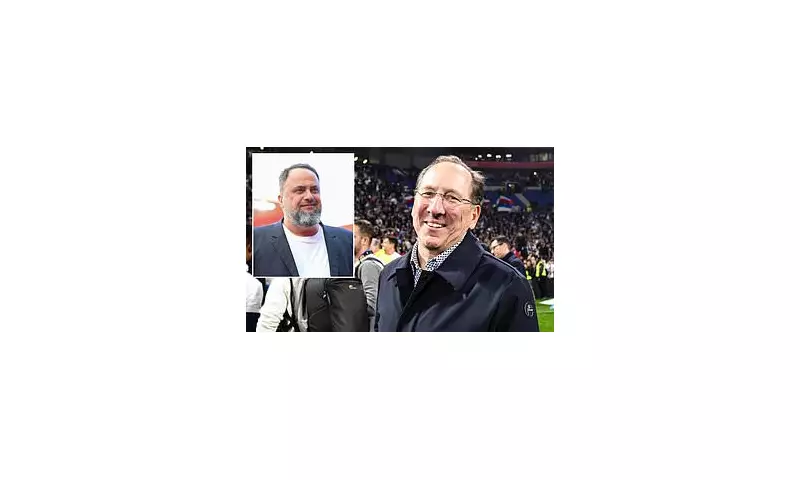
In a revealing online broadcast this week, football investor John Textor peeled back the curtain on the cosy, informal relationships that can dictate multi-million pound player moves between clubs. His detailed comments about dealings with Nottingham Forest owner Evangelos Marinakis have sparked fresh debate about the inner workings of the transfer market and the potential grey areas within the Premier League's strict financial regulations.
The 'Mates Rates' Network: A Web of Transfers
During an 80-minute webchat on the Canal do TF YouTube channel, Textor, whose Eagle Football Holdings controls clubs like Lyon and Botafogo, detailed his close working relationship with Marinakis. While no formal ties link Marinakis's clubs, which include Forest, and Textor's portfolio, the transfer traffic tells its own story. In the past three years, there have been nine transfers between their operations: five moving from a Marinakis club to a Textor one, and four going the other way.
The most recent activity raised eyebrows among fans. In the last summer window, Nottingham Forest signed four players from Textor's Brazilian club Botafogo: defender Jair Cunha, striker Igor Jesus for £16.5m, goalkeeper John Victor, and left-back Cuiabano. This flurry of business followed a major deal the previous year, where Forest sold defender Moussa Niakhate to Textor's Lyon for around £30m – more than double what they had paid for the injury-hit player who had made just 30 starts in two seasons.

'Adjustments' and Perceptions of Value
The core of Textor's revealing commentary centred on the concept of informal "adjustments" between trusted trading partners. When questioned by a Botafogo fan about Jair Cunha's seemingly generous transfer fee to Forest, Textor explained that not every fee is judged in isolation. Inequities in one deal might be balanced out in the next, fostering a long-term partnership.
"You feel really stupid when suddenly Igor Jesus is the best player against Liverpool and you're sure you should have gotten paid more money for him," Textor admitted in the broadcast. He cited the player's injury history as a key factor in the final price. "A lot of those numbers will bounce around... sometimes it's part of making an adjustment because you trade with that particular friend in a lot of situations."
He later clarified to The Times, stating, "Every deal is a negotiation, and if you desire to continue trading with a particular owner, you sometimes agree to another owner's perception of value, sometimes forfeiting your own." This practice, while seemingly common sense in business, exists in a sport now governed by stringent Profit and Sustainability Rules (PSR), with which Forest have had notable difficulties in 2024.
A Legal Grey Area in a Regulated Landscape
Critically, there is no accusation or evidence that Textor and Marinakis have broken any Premier League rules. The league itself has confirmed it is not investigating the relationship. However, Textor's frank discussion exposes a potential fault line in the game's financial governance.
If club owners were to privately agree on "sweeter" deals to help one another with tight PSR calculations, it would be extraordinarily difficult to detect and prosecute, relying largely on goodwill and accurate reporting. The system operates on trust—a "good faith" principle that Textor's comments have inadvertently put under the microscope.
This phenomenon of productive relationships shaping the market is not new. History is replete with examples, such as the flow of players between Manchester United and Preston North End when Sir Alex Ferguson's son, Darren, was manager there. However, in today's environment of hyper-scrutiny over club finances, such informal understandings take on a new significance.
Ultimately, Textor has provided a rare, unvarnished glimpse into the human relationships that drive football's economy. While within the rules, his talk of "mates rates" and cross-deal "adjustments" highlights how the sport's complex accountancy rules can be navigated through personal networks, leaving fans and regulators to wonder where savvy negotiation ends and something more problematic begins.