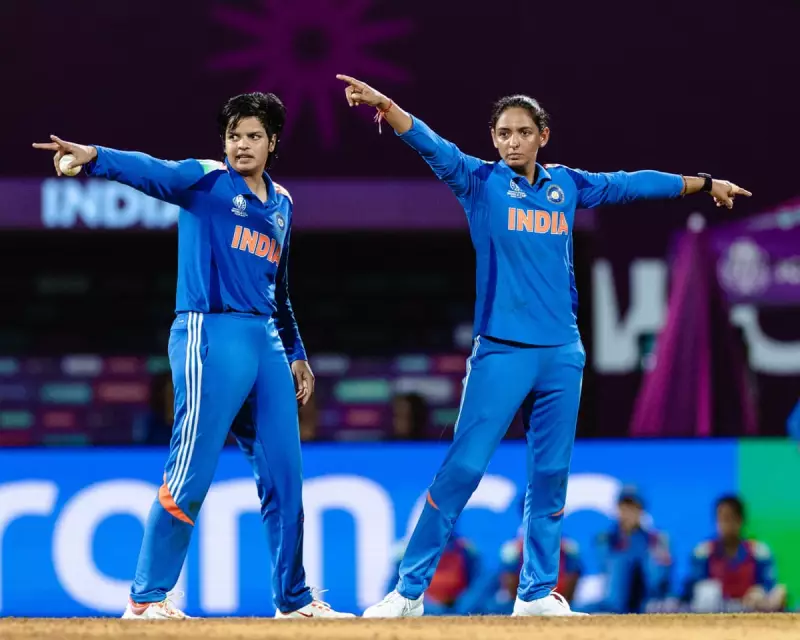
A Landmark Victory for Women's Cricket and Equality
In a historic moment for Indian sport, the women's national cricket team has claimed their first-ever Women's Cricket World Cup trophy, defeating South Africa in a thrilling final held in Navi Mumbai. This landmark achievement represents more than just sporting success - it stands as a powerful statement for gender equality in a nation where cricket has traditionally been dominated by men.
Defying Social Stigma to Reach the Top
The journey to this World Cup victory has been extraordinary, with players overcoming significant social barriers and limited resources. The story of opening batter Shafali Verma exemplifies these struggles. Growing up in Rohtak, Haryana, where cricket was considered unsuitable for girls, a nine-year-old Verma cut her hair short and entered a tournament disguised as her brother, eventually winning man of the match.
Her determined father, Sanjeev, recalled how every cricket academy refused to accept his daughter, forcing him to enrol her as a boy. "Luckily, nobody noticed," he said, as Verma remarkably made her national team debut at just 15 years old.
These challenges were common among the squad members, who juggled manual jobs between training sessions and defied deep-rooted social stigma in India's still largely patriarchal society.
A Turning Point for Women in Indian Sport
The significance of this victory extends far beyond the cricket pitch. Sharda Ugra, one of India's foremost cricket writers, emphasised how the match carried profound social meaning. "For Indian women in the public space, your body is usually seen as a source of honour or shame," she explained. "So to see these girls - who mostly come from rural small towns - running around, sweaty, shouting, screaming and uninhibited about what they looked like, sent a very powerful message."
The impact was immediately felt across the country. Varnika Choudhary, who plays for the Uttar Pradesh state under-23s women's team, described how her entire village of Beerakheri gathered to watch the final - something unprecedented for women's cricket. "Everyone in my village got so excited when they won," she said. "They were all sending me photos and reels and messages saying: 'This will be you winning for India one day.'"
Captain Harmanpreet Kaur acknowledged the transformative potential of their achievement, stating after the match that without this trophy, "the revolution, the change we want, won't come." The team's status as sporting royalty was confirmed when they were hosted at the residence of Indian Prime Minister Narendra Modi.
Inspiring the Next Generation
At cricket academies across India, the victory's inspirational effect is already visible. At Delhi's Gargi college academy, 11-year-old Kiera Kareer expressed renewed determination: "This winning match proved to everybody that women's cricket is as good as men's. We can hit as hard and we can run as fast."
The changing landscape is evident in participation numbers. Rudal Maurya, father of 18-year-old academy player Spreeha, noted that when he first brought his daughter to state trials, only about 40 girls attended. This year, that number had swelled to approximately 500.
"The mindset is changing," he observed, his eyes welling up. "So many more parents will bring their girls for training now, and that can change the society."
The Road Ahead for Women's Cricket
Despite this breakthrough, women's cricket in India still faces significant challenges. The Women's Premier League (WPL), established only in 2023, features just five teams compared to the men's Indian Premier League, valued at approximately $18.5 billion. Women's cricket also lacks its own governing body, remaining under the men's administration.
Furthermore, resources and cricket academies for young women remain limited, particularly in rural regions. However, the World Cup victory has undoubtedly accelerated progress toward making cricket a viable profession for Indian women and a sport that girls can pursue for enjoyment and recognition equal to their male counterparts.