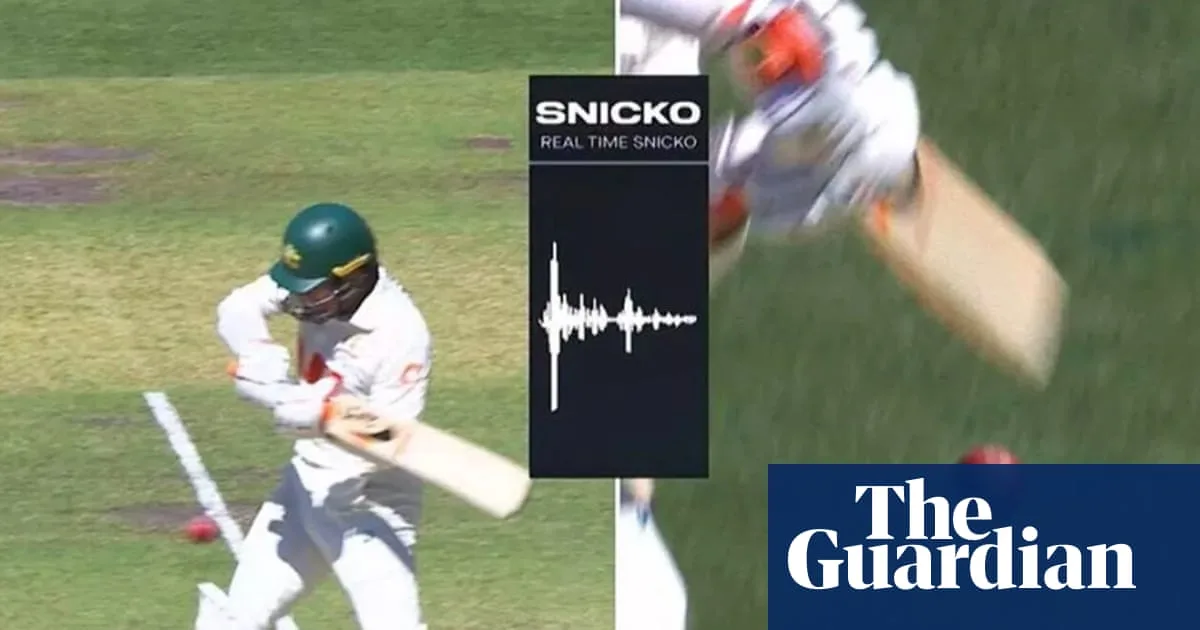
England have had one of their reviews reinstated after a Snicko malfunction during the third Ashes Test at Headingley. The error occurred when Australia's Alex Carey, on 72, was given not out after England believed he had edged behind off Josh Tongue. The third umpire, Chris Gaffaney, felt there was insufficient evidence to overturn the decision despite a spike on Snicko, as it appeared before any possible contact.
BBG Sports, the company that owns Snicko, admitted the mistake, stating that the operator likely selected the incorrect stump microphone for audio processing. The technology uses audio from stump microphones, and it is believed the feed from the non-striker's end may have been used in error. Carey went on to score 106, helping Australia reach 326 for eight at stumps.
England head coach Brendon McCullum lodged a complaint with ICC match referee Jeff Crowe, who reinstated one of England's reviews after discussions with McCullum and team manager Wayne Bentley. The ICC is set to investigate the issue further.
England bowling consultant David Saker expressed frustration, saying: 'The boys were pretty confident he hit it. I think the calibration of the Snicko is out quite a bit... There have been concerns all series. We shouldn't be talking about this after a day's play, it should be better than that.'
Carey admitted he thought he had hit the ball, saying: 'If I was given out, I think I would have reviewed it – probably not confidently though. Snicko obviously didn't line up, did it? That's just the way cricket goes sometimes.'