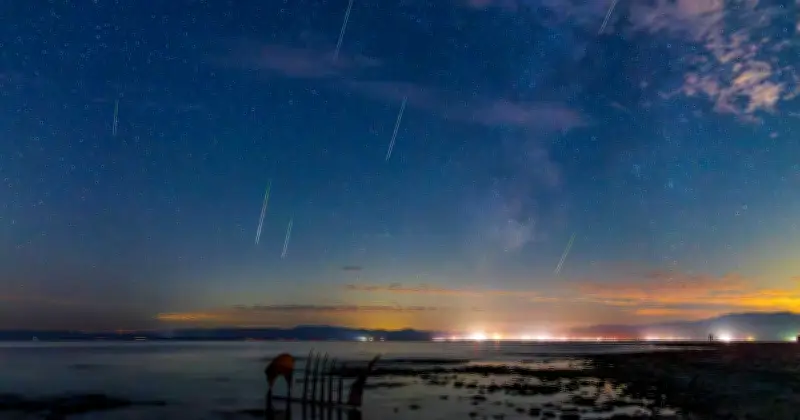
The June Bootids meteor shower is set to peak during the final week of June 2026, giving stargazers a chance to spot shooting stars from home. Unlike more predictable meteor showers, the June Bootids are known for their unpredictability. In some years, only a handful of meteors appear, while other years deliver surprisingly spectacular displays. This uncertainty makes the event particularly captivating for astronomy enthusiasts.
Expert Advice on Viewing the Meteor Shower
Alan Jones, astronomy expert at 365 Astronomy, said it was well worth keeping watch because you can never truly know what to expect. He stated: "The June Bootids are pretty unpredictable. Some years there is not much to see at all, but other times you can end up with a really nice show if you are in the right place at the right time." He noted that no specialist equipment is required, making it ideal for casual stargazers. Alan added: "You just need a clear, dark sky and a bit of patience. Give your eyes time to adjust and just look up. You do not need binoculars or a telescope, and in some ways it is better without them because you want to take in as much of the sky as possible."
Best Time and Conditions for Viewing
According to Alan, the optimum time to look is generally after midnight when the sky is at its darkest and well away from street lighting or light pollution. Lying back and waiting patiently remains the most effective method of catching a meteor. The unpredictability of the June Bootids means that even experienced stargazers may have to wait, but the potential for a dazzling show makes it worthwhile.
How to Photograph the Meteor Shower with Your Phone
Alan explained that while mobile photography can be effective, the key is to keep things straightforward. He said: "The main thing is keeping your phone steady. If you can rest it on something or use a tripod, that helps a lot because even the smallest movement can ruin the shot." He also emphasized the importance of settings: "Turn on night mode if your phone has it and lower the exposure a bit so the sky stays nice and dark. That way, if a meteor does show up, it has a better chance of standing out."
Aiming and Patience
Alan further explained that the direction in which the phone is aimed matters more than most people realise: "Just point it at a wide bit of sky rather than trying to guess where something might happen. Meteors are random, so the wider your view, the better your chances." He also stressed that patience is essential, acknowledging that there could be a considerable wait before anything appears — but that this is all part of the experience.
The June Bootids meteor shower peaks this week, and with the right preparation, even smartphone users can capture stunning images of shooting stars. Clear skies and a steady hand are all that is needed to enjoy this celestial event.