
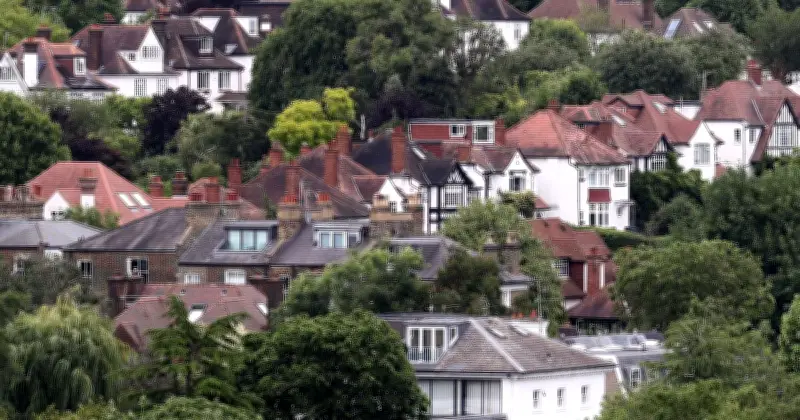
As the Met Office issues a red heatwave alert with temperatures predicted to reach 40C in parts of England and Wales this week, an architect has revealed that homes built before 1901 are naturally better equipped to stay cool compared to modern new builds.
Victorian Design Outperforms Modern Construction
Ben Roberts, Senior Lecturer in the School of Architecture, Building and Civil Engineering at Loughborough University, wrote on The Conversation website that Victorian homes—constructed between 1837 and 1901—are cooler in summer than many built more recently, despite being designed without modern computer modelling.
“Victorian homes were constructed long before the complex computer models used today to design buildings were invented. Yet, these homes, built over 100 years ago, are cooler in summer than many built more recently,” Roberts said.
Key Features That Keep Victorian Homes Cool
One of the primary advantages is the use of external wooden shutters, which were standard in many Victorian homes. “The Victorians knew that blocking the sun’s heat before it enters the building is among the best ways to reduce overheating,” Roberts explained. He noted that few 20th-century UK homes have external shutters, partly because modern outward-opening casement windows cannot accommodate them. In contrast, homes in southern and central Europe have retained shutters due to historically hotter summers.
Another benefit comes from sash windows, which allow for effective ventilation. “Sash windows are particularly effective because they have a separate operable upper and lower portion which allows for hot air to leave the home at the top and cooler air to enter at the bottom,” Roberts said. Modern casement windows, by contrast, often block incoming air with outgoing air, reducing cooling efficiency.
Natural Ventilation and Thermal Mass
Victorian homes also benefit from high natural ventilation rates. Designed with open fireplaces, open chimneys, suspended timber floors, and uninsulated solid brick walls, they are among the least airtight homes in the UK housing stock. “This allows more air to enter the building, even when windows are closed, which can cool the home in summer if it is cooler outside than inside,” Roberts noted. The suspended timber floors also store cool air beneath the building during the day, providing a passive cooling effect.
Thermal mass is another critical factor. Victorian homes feature solid brick or stone walls—both internal and external—which can absorb and store heat, keeping indoor temperatures stable. “Walk into an ancient church on a hot day and you may mistakenly think they’ve installed air-conditioning. The real reason for the instant cool feeling is in the huge amounts of thermal mass,” Roberts said. Modern new builds, which use lightweight plasterboard and timber for cost and speed, lack this thermal mass.
The Met Office warned that the upcoming heatwave could exceed the June record set in Hampshire in 1976 by several degrees and may approach the UK’s all-time high of 40.3C recorded in July 2022. While many homeowners resort to fans, closing curtains, or even freezing hot water bottles, those in Victorian homes have a built-in advantage.




