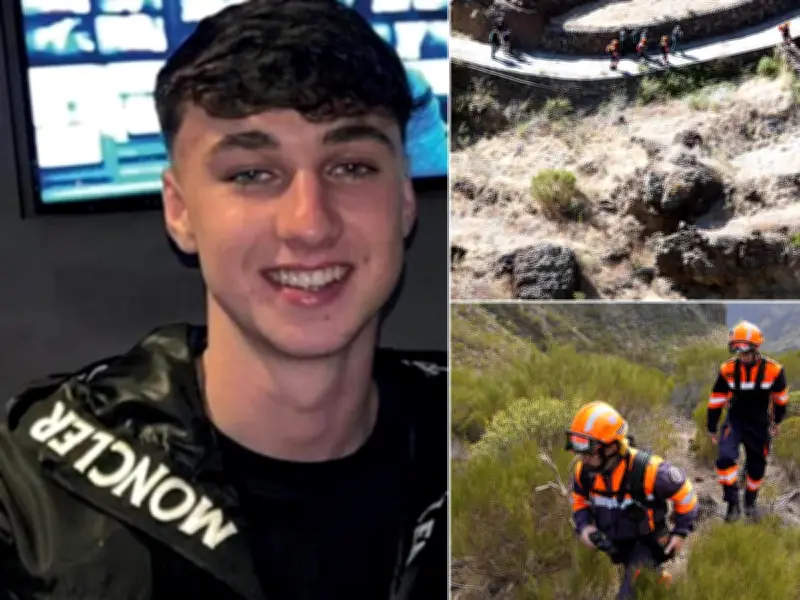
It has been two years since Jay Slater died in a remote part of Tenerife, and the terrain where he vanished remains as unforgiving as ever. The 19-year-old apprentice bricklayer from Lancashire disappeared on his first holiday abroad with friends. After waking up in an Airbnb following a night out, he embarked on an 11-hour trek back to his accommodation after missing the local bus. Shortly before his phone died, he warned friends that he was thirsty and had no idea where he was.
The Search and Discovery
For four weeks, Spanish police searched the Parque Rural de Teno nature reserve close to where Jay's phone last pinged. His mother Debbie Duncan, father Warren Slater, and older brother Zak all helped in the desperate bid to find their son, but it was tragically too late. Mountain rescue teams combed through dense vegetation and steep ravines in scorching temperatures. Spanish police later confirmed that a young man's body had been discovered in a ravine near a phone mast, along with Jay's clothes and possessions. Fingerprints confirmed it was Jay as the body was heavily decomposed.
An inquest found that the teen suffered a heavy fall from height, with devastating effects that would have been immediate. Toxicology tests revealed that Jay had taken cocaine, MDMA, and alcohol prior to his death. Spanish authorities also found that he had used ketamine shortly before his death and over a longer period.
Investigator's Account
Former Detective Mark Williams-Thomas, who worked with Jay's family during his disappearance, spoke to the Mirror about the teen's harrowing final journey. Jay had no experience or knowledge of how rough that terrain was going to be, he said. He probably started to realise as he set off. But don't forget he had been strongly under the influence of both drugs and alcohol, so his decision-making process was impaired. That terrain is lethal as we found out. One minute you're on a steady piece of ground, the next there's a plunging cliff.
Jay had no idea that the area he was walking is so deadly that even professionals deem it dangerous. The only chance of making it home was to follow the road, Mark explained. That was his only chance for making it home. And even that was incredibly dangerous and very lengthy because the road there is treacherous in itself. There are some bends around there which are lethal. As soon as you go off the road you're in a treacherous area. He had no phone, no fluids, was under the influence of drink and drugs, and was tired. All of that is a recipe for disaster.
Speaking about the gruelling terrain, Mark, who has first-hand experience exploring it, explained that some areas are only approachable with people who have considerable mountaineering experience and proper kit, including ropes. In his view, these are not routes anyone should attempt solo.
The Search Effort
With only the clue of the phone mast ping, a huge search got underway. Helicopters, drones, and teams of volunteers and local authorities worked together, with some having to hack through thick vegetation with machetes. The experts up there were very coordinated, Mark said. They were doing a strategical search from his last point of signal. But many were working on the basis that hopefully he had made it through, checking outbuildings and areas where he could be sheltering. It was boiling hot. To find him, they had to negotiate dangerous cliff edges to get down to him.
Jay's body was eventually discovered in the Juan Lopez Ravine, an area even experienced hikers avoid due to almost vertical inclines. He had suffered catastrophic head injuries and likely died almost instantly from a fall. His death was ruled accidental.
Continued Tragedies
Tenerife, along with all the Canary Islands, remains a popular destination for Brits, but accidents have continued to occur in rural areas despite safety measures. Fully charged phones, water, and proper hiking footwear are mandatory, and many routes require a permit. Below are some tragedies that have plagued the island since Jay's death.
Hiking Horrors
A 63-year-old woman hiking in the Roques de García area within Teide National Park was hospitalised after a fall last week. On March 7, a 41-year-old rock climber died after falling in a ravine in Cuevas de Igonse, Candelaria. In March 2026, an intensive search for a 35-year-old German woman took place in the harsh landscape of Mirador de Hilda in Macizo de Teno. Her body was recovered three days later. Firefighters, police, and specialist mountain rescue officers searched the area one metre at a time, but due to unstable cliffs and steep drops, they were unable to search overnight. Just six months before Jay's death, the bodies of two hikers were discovered in Teide National Park, likely perishing from a fall or hypothermia.
Mystery of German Man
Another case similar to Jay's saw a 23-year-old German man vanish in summer 2022. His phone was tracked to Tenerife, but he was never heard from again. His remains were found on February 5, 2025, and identified through DNA testing. He had injuries consistent with a fall in thick vegetation, and wildfires had raged through the area since his disappearance.
Dragged Out to Sea
In November 2025, three people lost their lives to massive waves battering the coastline. A total of 15 others were injured, and emergency services issued urgent warnings. In December 2025, four more people died after being dragged out to sea by powerful waves while swimming in a pool at Isla Cangrejo on the Los Gigantes coast.
Death Trap Photo Opportunity
An abandoned 22-floor hotel in the Añaza neighbourhood of Santa Cruz de Tenerife has been a deadly draw for tourists. Five people are reported to have died in the unfinished structure since it was abandoned. Two tourists snuck in this January and were forced out by local police.
Deadly Bus Crash
On the Canary Island of La Gomera, a coach of tourists plunged into a ravine, killing a 77-year-old man and injuring 27 Brits. The crash occurred on April 10 on the GM-2 road, which has terrifying hairpin turns. Five ambulances and three helicopters were sent to deal with the aftermath.